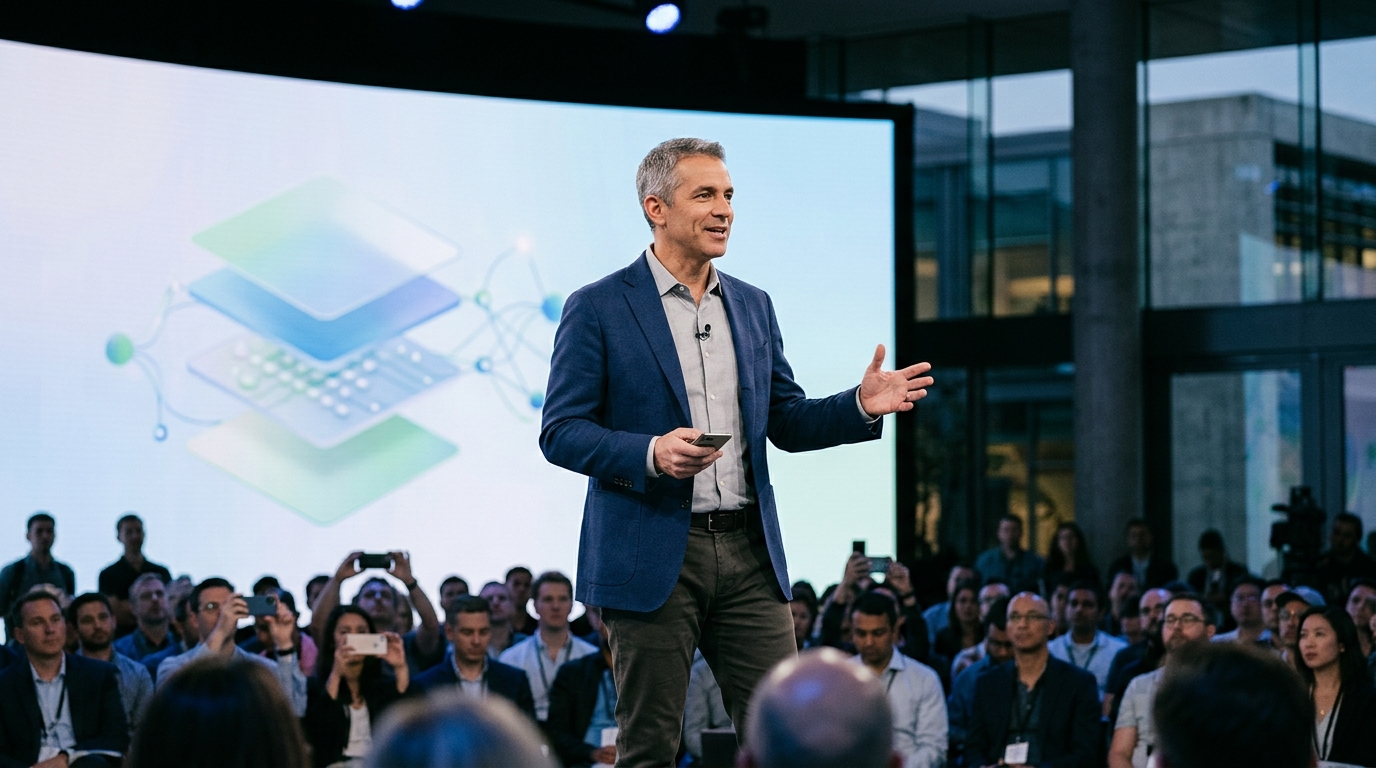
Apple’s annual Worldwide Developers Conference (WWDC 2026) will likely be remembered not for a new gadget, but for a fundamental shift in how we interact with software. The unveiling of the new Siri, supercharged by the advanced Apple Intelligence ecosystem, marks the transition from a passive digital assistant to an active orchestration layer. For the average consumer, this means better natural language understanding. For the enterprise world, however, it signifies a revolution in how workflows are executed.
The App Intent Architecture: Siri as Orchestrator
The heart of this transformation lies in the upgraded SiriKit and App Intents. Until last year, Siri could perform simple commands within apps only if developers had built specific, rigid bridges. Today, utilizing large language models (LLMs) running locally on-device, Siri can "read" the screen and understand the context of data across different applications simultaneously.
Imagine a sales manager asking Siri: "Summarize the latest messages from client X on Slack, compare them with pending orders in SAP, and send an email with my recommendations." What previously required manual switching between three apps and tedious data copying is now a single, seamless flow. Siri is no longer just an interface; it is the connective tissue between enterprise data silos.
Privacy and Private Cloud Compute: The Enterprise Key
The biggest hurdle for Generative AI adoption in the enterprise has always been data security. Apple answered this with Private Cloud Compute (PCC). When a request is too complex to process solely on-device, it is offloaded to servers running on Apple Silicon, with a cryptographic guarantee that data is never stored and remains inaccessible even to Apple itself.
"Privacy is not just a feature for us; it is the foundation upon which we are building the future of work," an Apple executive stated during the keynote.
This approach gives Apple a significant advantage over Microsoft and Google. While competitors rely on cloud models that often necessitate sending sensitive corporate data to third-party servers, Apple offers a "closed" yet scalable solution that satisfies even the strictest GDPR and EU AI Act regulations.
The Challenge for IT and Developers
Despite the promise, the transition to this new model won't be automatic. IT departments will need to re-evaluate their application architecture. For an app to be "Siri-ready," it must have deep integration with App Intents. This means developers are no longer just building Graphical User Interfaces (GUIs), but "Intent-based interfaces."
- Data Integration: Apps must allow Siri to access structured data without compromising security protocols.
- Workflow Automation: Siri's ability to perform chained actions requires precise mapping of each app’s functions.
- User Training: Shifting from "clicking" to "voice or text prompts" requires a new workplace culture and literacy.
Conclusion: The Death of the Traditional App?
Apple’s move suggests a future where the app as a standalone entity begins to recede. If I can do everything through Siri, why open the UI of Salesforce or Microsoft Teams? Apple is positioning itself as the ultimate mediator of digital life. In the enterprise sector, this puts it in direct conflict with Microsoft Copilot. The difference is that Apple controls the hardware, the operating system, and now the intelligence layer. For businesses, the choice between the cloud's flexibility and the security of Apple's local ecosystem will be the central dilemma of the coming years.