In an era where technology evolves faster than legislation, the Vatican is assuming a role that many might find unexpected: that of the moral regulator of high technology. The recent intervention by the Holy See, led by Pope Francis, is not merely a religious appeal but a structured diplomatic effort to impose limits on Artificial Intelligence (AI), particularly in the realm of Lethal Autonomous Weapons Systems (LAWS).
The Vatican's concern stems from the belief that transferring the decision of life and death to an algorithm strips humanity of its very essence. As global powers engage in a new arms race, this time weaponizing code and data, Rome's voice resonates as a warning against the dangers of a "sterile" war, where responsibility is diffused and morality is nullified.
The Doctrine of "Algorethics"
The term "Algorethics," introduced by the Vatican, is the cornerstone of its strategy. It is not a simple rejection of progress but a framework demanding that AI development be guided by values such as transparency, inclusion, and accountability. In the context of armed conflict, "Algorethics" mandates the existence of "meaningful human control" at every stage of the use of force.
The Vatican argues that machines lack the consciousness, empathy, or judgment required to apply the rules of International Humanitarian Law. An algorithm can recognize a shape, but it cannot understand the context of a surrender or the hesitation in a civilian's eyes. The fear is that automation will lower the threshold for entering a conflict, making war "easier" for governments as human casualties for the attackers are minimized through the use of robots.
Autonomous Weapons and the Accountability Gap
One of the most critical points in the Holy See's argument concerns the "accountability gap." Should an autonomous system commit a war crime, who bears the responsibility? The programmer? The commander who issued the activation order? Or the machine itself? This ambiguity creates a legal and ethical vacuum that could allow states and military organizations to evade the consequences of their actions.
- The lack of moral judgment in machines makes it impossible to distinguish between combatants and civilians in complex environments.
- The potential for unpredictable behavior in AI systems (the so-called "black box" effect) increases the risk of unintended escalation.
- The dehumanization of the adversary through screens and algorithms reduces the moral inhibitions of operators.
"No machine should ever choose to take the life of a human being. This decision must remain in the hands of humans, who also bear the weight of responsibility," Pope Francis has characteristically stated.
Vatican Diplomacy on the International Stage
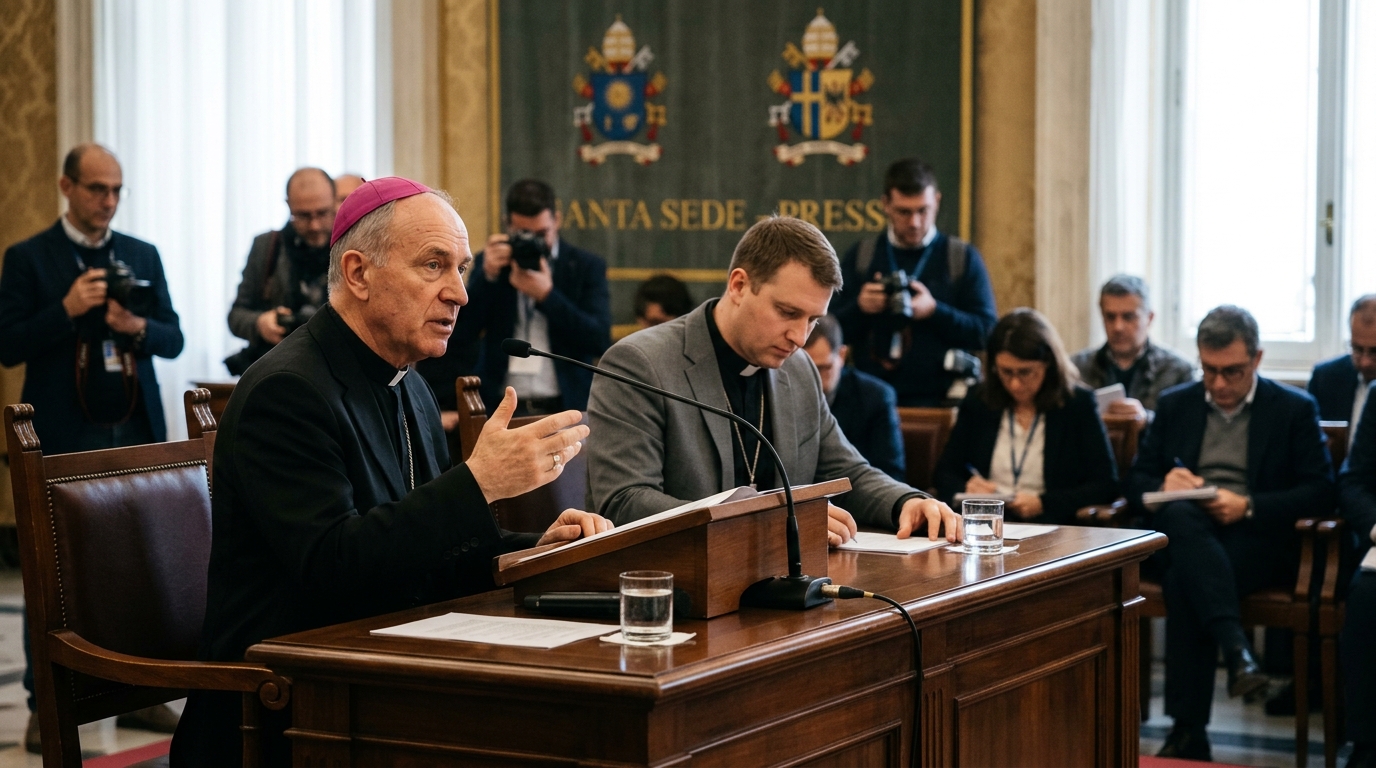
The Vatican's intervention is not limited to sermons. The Holy See actively participates in United Nations discussions in Geneva regarding the Convention on Certain Conventional Weapons (CCW). There, Vatican diplomats push for a legally binding treaty to ban fully autonomous weapons. Pope Francis's participation in the 2024 G7 summit in Italy was a historic milestone, marking the first time a head of the Catholic Church directly addressed the leaders of the world's most powerful economies on the issue of AI.
This strategy seems to be bearing fruit, as it creates moral pressure that political leaders find difficult to ignore. However, the challenges remain immense. States like the US, Russia, and China are investing billions in military AI, viewing it as essential for their national security. The Vatican is called upon to bridge the gap between ethical necessity and geopolitical reality, proposing a "technological humanism" that places technology at the service of peace rather than destruction.
Conclusion: A Battle for the Future of Humanity
The Vatican's stance on AI in warfare is not an attempt to return to the past, but a desperate effort to secure the future. As the lines between human and machine become increasingly blurred, the need for clear ethical boundaries becomes imperative. The Holy See reminds the world that technical progress without a moral compass inevitably leads to self-destruction. The battle for control over algorithms on the battlefield is, in reality, a battle to preserve human dignity in a digitized world.