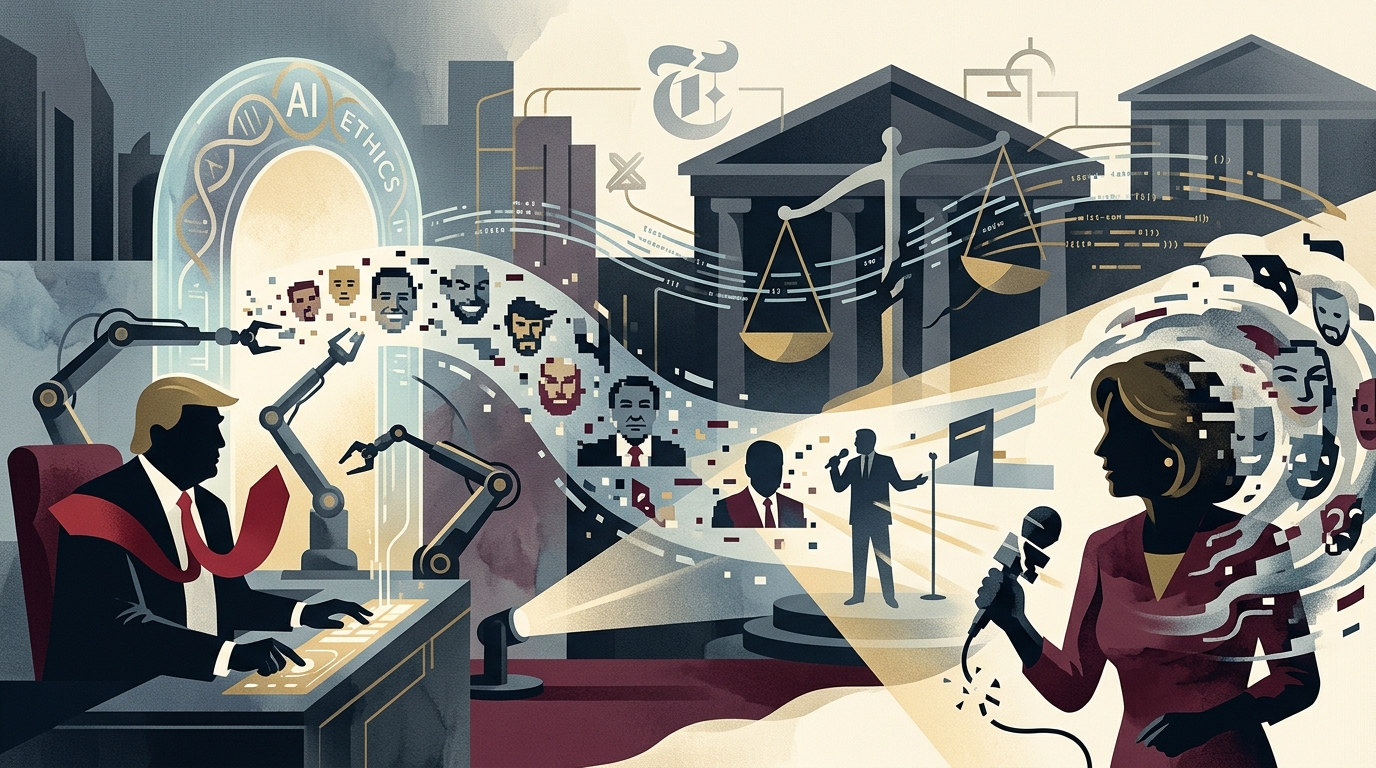
In a move that underscores the complete integration of generative artificial intelligence into the political arena, Donald Trump has chosen a particularly provocative way to bid farewell to Stephen Colbert. Following the announcement of Colbert's departure from CBS’s 'The Late Show,' Trump posted an AI-generated video depicting the popular host being literally tossed into a dumpster. This action is not merely another chapter in the long-standing feud between the two men; it marks a dangerous turning point in how global leaders utilize technology to diminish their critics.
The Weaponization of Deepfakes in Politics
Trump’s use of AI is not a novelty, but this specific post differs in intent and context. Here, the technology is not being used to mislead the public about a policy position, but to create a humiliating visual narrative that would be impossible to capture in reality. The video, while clearly artificial, carries an emotional weight that surpasses traditional caricatures or Photoshop. The realism of the movement and Colbert’s facial expressions in the AI clip aim at the complete deconstruction of the host's dignity.
Analysts point out that this tactic is part of a broader strategy of 'digital bullying.' When a sitting or former president employs such tools, it gives a green light to millions of followers to do the same, creating a toxic environment where satire is replaced by digital degradation. The ethical dimension is clear: should AI be permitted to produce content aimed solely at the defamation of a citizen, regardless of their public standing?
A Clash of Two Worlds: Satire vs. Propaganda
For over a decade, Stephen Colbert has been one of Trump’s most trenchant critics, using his CBS platform to deconstruct Trump's political rhetoric. Trump’s AI-powered response is an attempt to have the 'last word' on terms that Colbert cannot control. While Colbert’s satire relied on speech and performance, Trump’s counter-attack relies on technological might and visual violence.
- AI allows for the rapid production of content that bypasses traditional media gatekeepers.
- The emotional reaction of followers is amplified by the visual representation of 'victory' over an opponent.
- The distinction between humor and abuse is becoming increasingly blurred in the digital age.
CBS and Colbert’s team have not issued an official comment, yet the move has sparked a firestorm among tech ethics circles. The question arises whether social media platforms should allow such content, especially when it originates from figures with immense influence.
The Future of Public Discourse
The 'Trump vs. Colbert' case is just the tip of the iceberg. As video generation tools become more accessible and realistic, political communication risks transforming into a war of deepfakes. Instead of arguments, political leaders will be able to present their opponents in humiliating situations, further eroding public trust in institutions and the truth.
"Artificial intelligence is not just changing what we see, but how we perceive power. When ridicule is automated, democracy retreats," notes a digital ethics expert.
In conclusion, Trump’s move to 'trash' Colbert via AI is a warning of what is to come. Technology, instead of being used to solve complex problems, is becoming the new cudgel in a primitive political dispute. Society must decide whether to accept this new normalcy or set strict limits on the use of AI as a tool for personal vendetta.