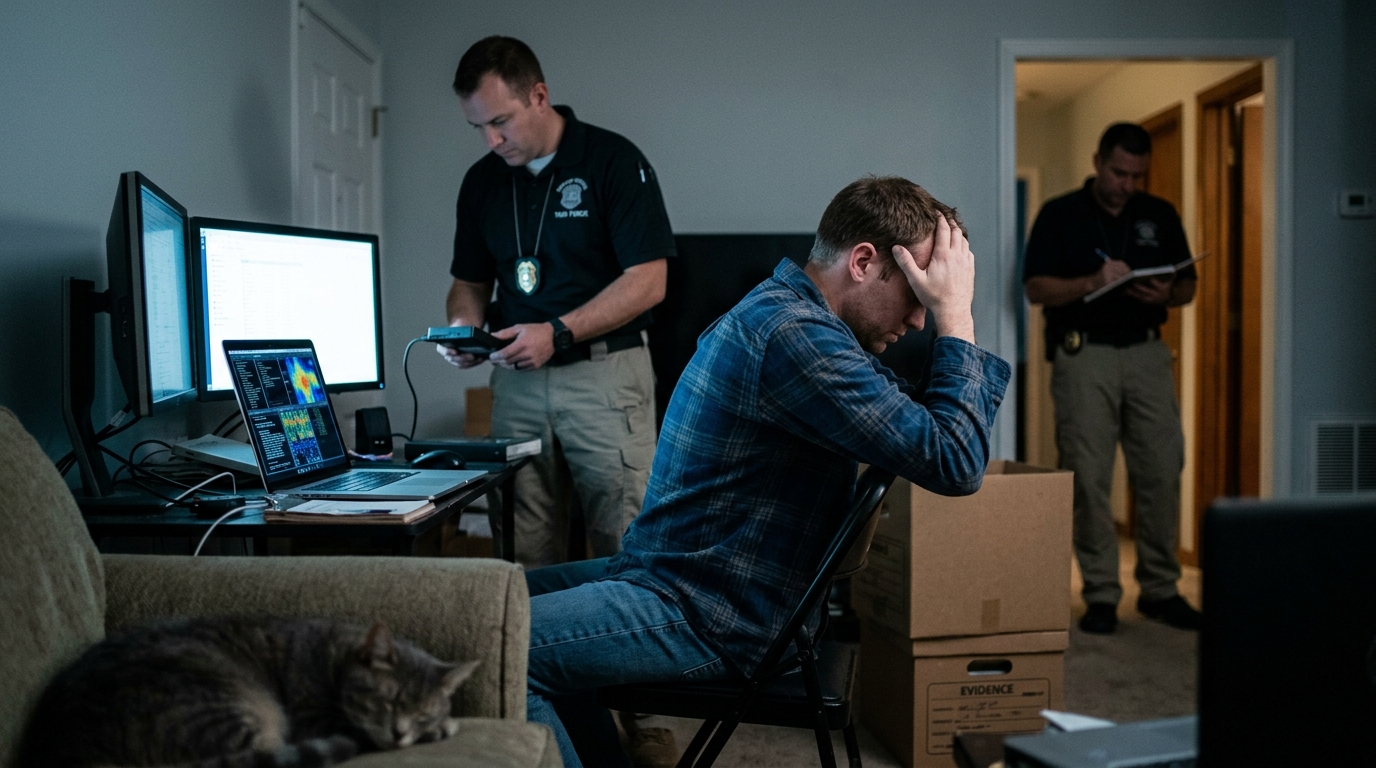
The arrest of a 32-year-old man in Atascosa County, South Texas, by the Department of Public Safety (DPS) is more than a localized criminal report; it is a grim manifestation of the ethical nightmare that experts have long warned about. The suspect is accused of utilizing generative artificial intelligence to transform images of real children into sexually explicit material, marking a terrifying escalation in the digital exploitation of minors.
Authorities allege that the individual employed sophisticated AI tools to "nude" or manipulate the likenesses of actual children into obscene depictions. This case highlights a critical vulnerability in our global digital infrastructure, where the democratization of high-powered AI models—often available through open-source channels—allows malicious actors to bypass the safety guardrails established by major tech corporations.
The Weaponization of Generative AI
Deepfake technology and diffusion models have reached a level of photorealism where the line between reality and synthetic creation is effectively blurred to the naked eye. In the South Texas incident, the use of real children as the source material adds a layer of profound violation. Unlike purely synthetic images generated from scratch, these involve the digital kidnapping of a child's identity, subjecting them to a form of perpetual abuse as the images can circulate indefinitely in the dark corners of the web.
"We are no longer dealing with victimless crimes or abstract data. This is the weaponization of a child's very likeness to facilitate dehumanization," notes a cybersecurity analyst specializing in digital forensics.
The ease with which an individual can now train an AI model—using techniques like LoRA (Low-Rank Adaptation)—with just a handful of photos harvested from social media is staggering. It renders every child with a digital footprint a potential target, necessitating a radical shift in how parents and society approach digital privacy and the sharing of childhood milestones online.
Legal Labyrinths and the Definition of Harm
Prosecuting AI-generated child abuse material (CSAM) presents significant legal hurdles. While traditional CSAM laws are robust regarding the depiction of actual children, the legal status of "synthetic" or "altered" material has historically been a gray area. However, because this case involves the manipulation of *real* subjects, it falls squarely within the crosshairs of existing statutes that prohibit the production of abuse material. Key challenges include:
- Updating federal frameworks, such as the PROTECT Act, to explicitly address AI-driven manipulation.
- The difficulty of victim identification when facial features have been subtly altered by algorithms.
- The jurisdictional nightmare of tracking content hosted on decentralized or foreign servers.
In Texas, the Computer Crimes Task Force is leading the charge in adapting to these technological shifts. Yet, the scale of the issue is global. While the European Union's AI Act attempts to mandate strict filtering and transparency, the speed of technological evolution consistently outpaces the slow grind of legislative reform.
The Moral Imperative for Technological Accountability
The central question is no longer whether AI technology is inherently dangerous, but how to mitigate its capacity for harm without stifling beneficial innovation. AI developers have a moral and increasingly legal obligation to embed robust safety protocols, such as invisible watermarking and non-circumventable content filters. However, the open-source nature of many models means that these safeguards can often be stripped away by those with the technical know-how.
The South Texas case must serve as a clarion call. Protecting children in the 21st century requires more than physical vigilance; it demands the protection of their digital identities. Without a concerted, multi-stakeholder effort involving governments, tech giants, and educators, generative AI risks becoming a primary tool for life-altering exploitation rather than a catalyst for human progress. The boundary between the physical and the digital is no longer a wall, but a thin, permeable membrane that requires constant defense.