For decades, the threat of machines 'stealing' jobs has been treated as a dystopian nightmare. From the 19th-century Luddites to today's Silicon Valley analysts, the fear remains the same: that human labor will become obsolete. However, as Artificial Intelligence (AI) permeates every facet of the production process, a provocative question emerges: Could this 'theft' be exactly what we need? Is the work ethic, as we know it, a relic of the industrial age that hinders human evolution?
The Work Ethic and the Paradox of Toil
Western society has been built on the idea that work provides value and meaning to life. The phrase 'What do you do?' is often the first question in an introduction, identifying an individual's existence with their productive capacity. Yet, this ethic is based on the necessity of survival in conditions of scarcity. If AI can generate the wealth required for everyone's well-being, the obsession with maintaining jobs that could be automated feels more like punishment than social contribution.
- Liberation from repetitive and soul-crushing labor.
- The possibility of focusing on art, philosophy, and social contribution.
- Re-evaluating time as the most precious commodity.
"Work is the last refuge of those who do not know what to do with their time," Oscar Wilde once said, and in the age of AI, this quote takes on a new, almost prophetic dimension.
From Survival to Self-Actualization
If AI takes on the burden of production, humanity faces an unprecedented challenge: how to manage its freedom. For the first time in history, the majority of people could live without the stress of survival. This requires a radical restructuring of the social contract. Universal Basic Income (UBI) is no longer a utopian idea but an ethical imperative. Taxing 'robots' or the surplus value generated by AI could fund a society where creativity and caring for others become the new forms of 'work.'
The Danger of Digital Feudalism
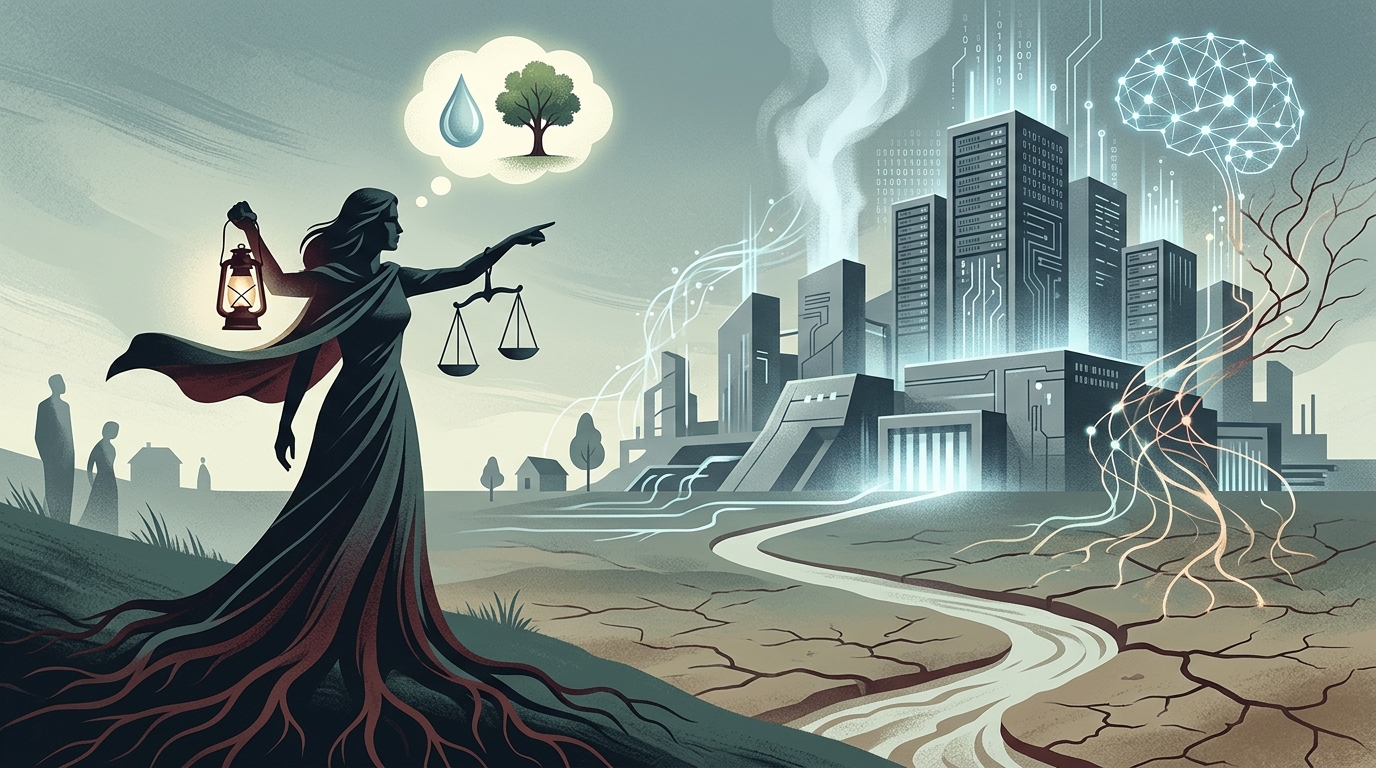
However, the transition is not without risks. If the wealth generated by AI is concentrated in the hands of a few tech giants, then the 'theft' of jobs will lead not to liberation but to a new form of serfdom. The ethical responsibility of governments is to ensure that the benefits of automation are distributed fairly. AI should not be a tool for maximizing profit for the few, but a common resource for humanity. The real threat is not the loss of work, but the loss of access to the resources the machines produce.
Conclusion: A New Renaissance?
Artificial Intelligence offers us a mirror: it forces us to ask who we are beyond our professional identity. If we can overcome the fear of unemployment and demand a fair distribution of automated wealth, we may be on the threshold of a new Renaissance. In this scenario, AI is not 'stealing' our jobs; it is giving us our lives back.