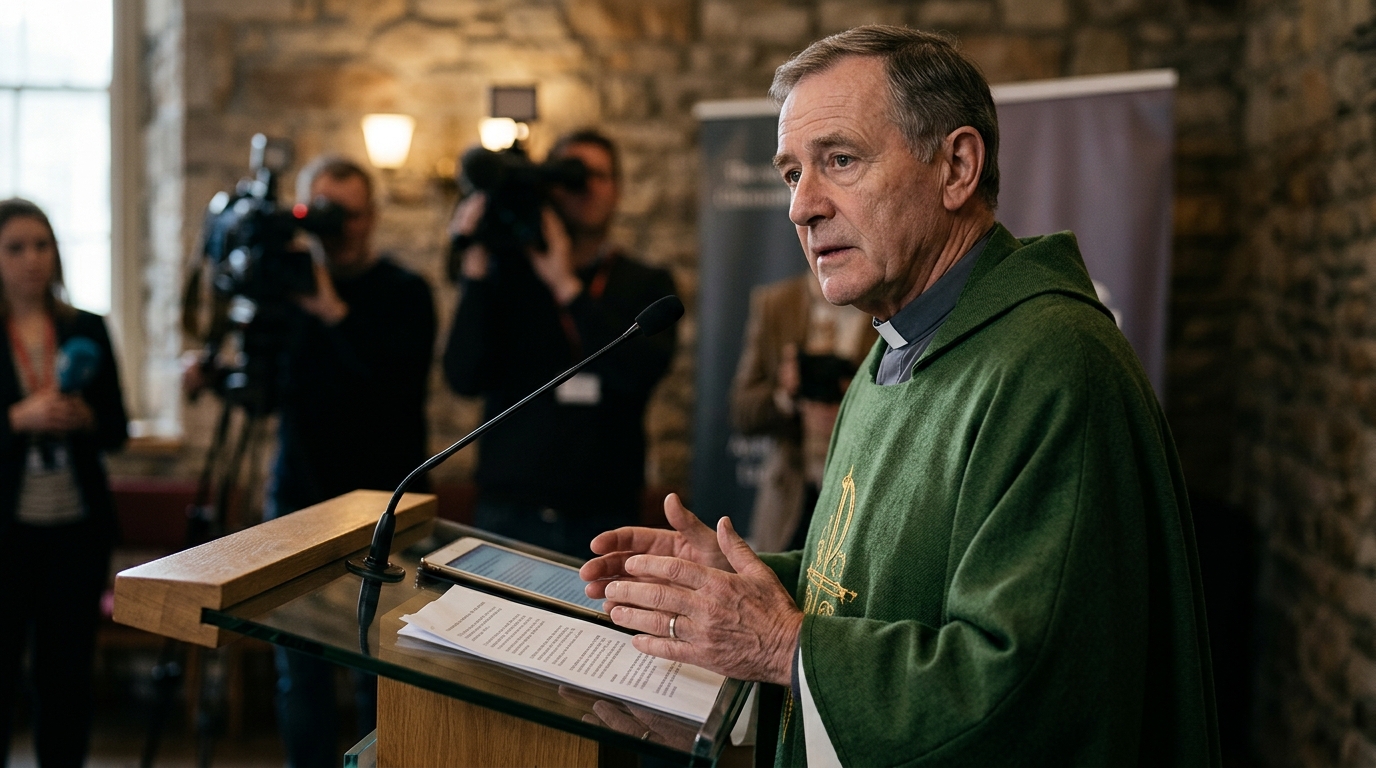
In an era where algorithms dictate everything from financial markets to our social interactions, the Vatican has intervened in a manner reminiscent of the great encyclicals of the past regarding nuclear weapons. Pope Leo, in his new theological document, does not limit himself to simple moral exhortation but lays the foundations for a new "Algor-ethics," arguing that delegating the decision over life and death to machines is an affront to divine creation.
The Sanctity of Decision and Mechanical Coldness
The document, titled "Imago Dei and the Shadow of the Algorithm," analyzes in depth the difference between human judgment and computational processing. According to the Vatican, human decision-making contains the elements of mercy, repentance, and moral responsibility—elements that are inherently impossible to encode in a line of code. The Pope emphasizes that war, though a failure of humanity, remains a human act. When responsibility is transferred to an AI "black box," war ceases to be a political or moral event and is transformed into an impersonal process of extermination.
The Pontiff's concern focuses on Lethal Autonomous Weapons Systems (LAWS), which he calls "soulless weapons." The theological approach argues that the absence of a human subject in the "kill chain" ruptures the moral fabric of society. "A machine cannot ask for forgiveness, nor can it perceive the sanctity of the enemy as an image of God," the document states, eliciting emotional responses and skepticism in global capitals alike.
The Geopolitics of Faith and Technology
This intervention is not only spiritual but also deeply political. The Vatican, with its vast diplomatic network, aims to pressure states leading in AI development—primarily the US, China, and Russia—to sign an international treaty limiting autonomous warfare technology. Pope Leo uses the language of "human dignity" to unite diverse voices, from human rights activists to scientists who fear the unchecked evolution of AI.
- The necessity for "meaningful human control" in every military operation.
- The danger of "algorithmic bias" that could lead to genocides through automated targeting.
- The moral obligation of scientists to refuse participation in offensive AI programs.
The document also warns of the "illusion of cleanliness" in warfare. The use of AI can make conflicts appear less costly in human lives for the aggressor, thereby reducing the political cost and making the initiation of war easier than ever. This "detachment" from the horrors of the front lines is, according to the Pope, the greatest temptation of the modern age.
Toward an International Regulatory Body
Concluding his text, Pope Leo proposes the creation of an international organization under the auspices of the UN, which would function as an "ethical supervisor" of technological developments. He does not call for a halt to progress, but for its subordination to universal human values. His position is clear: technology must be a tool for peace and not an autonomous player on the global chessboard.
"Peace is not the absence of war imposed by the power of machines, but the presence of justice cultivated by the hearts of men," the Pontiff concludes.
The international community's reaction is awaited with interest. While religious leaders worldwide tend to agree, defense industries remain silent, knowing that the Vatican's moral pressure could translate into stricter legislative frameworks affecting their profits and dominance on the battlefields of the future.