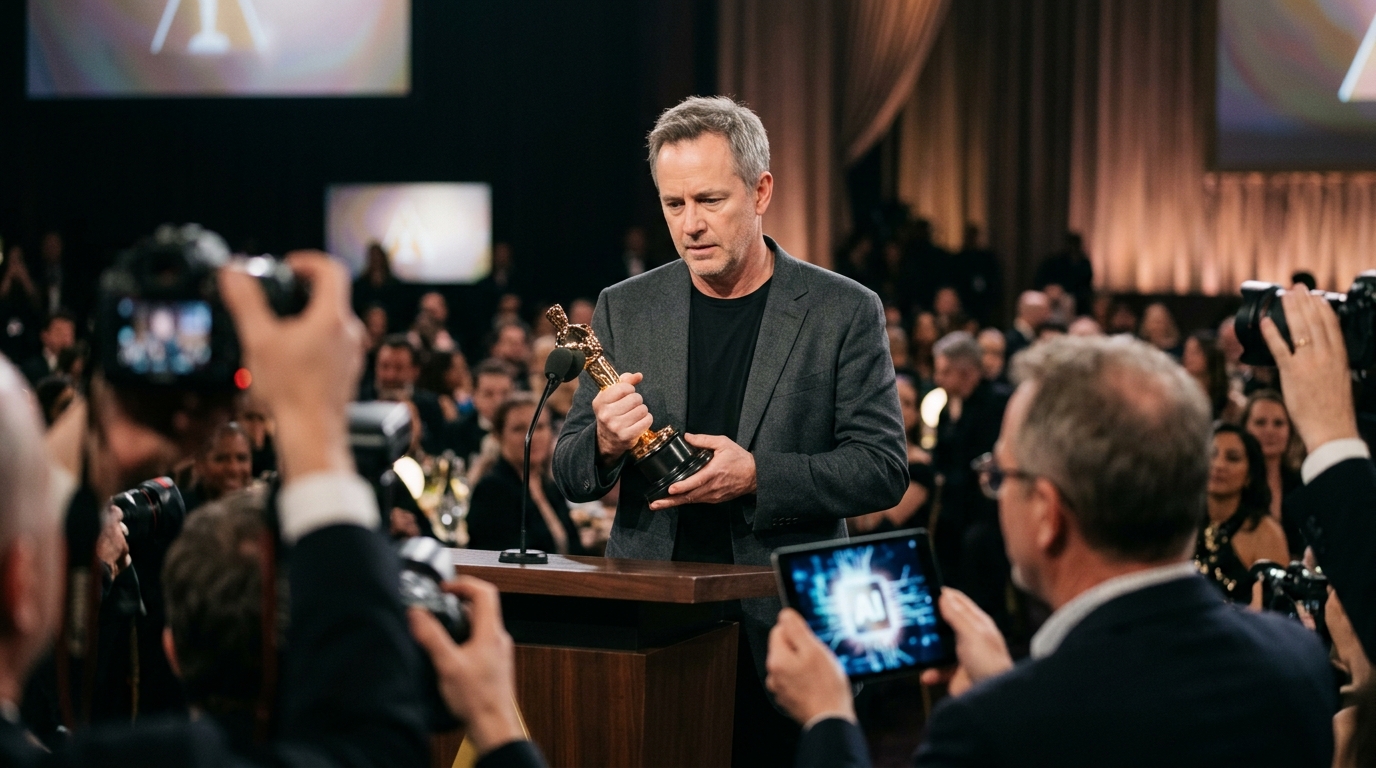
In a move described as the "last line of defense" for traditional artistic creation, the Academy of Motion Picture Arts and Sciences (AMPAS) has issued strict new rules excluding any form of Artificial Intelligence from the top categories of the Academy Awards. This decision is not merely a bureaucratic update but a fundamental declaration regarding the value of human experience in art, at a time when the boundaries between reality and digital simulation are becoming increasingly blurred.
Human Creative Contribution as a Prerequisite
According to the new guidelines, for a film to be eligible for the awards, the "creative contribution" must be demonstrably human. This means that "actors" created entirely by algorithms (synthetic performers) cannot be nominated for acting awards, nor can digital representations of deceased actors claim the golden statuette. The Academy emphasizes that acting is a process rooted in empathy and biological experience—elements that AI can mimic but never truly experience.
The same applies to screenwriting. Although the use of AI tools is permitted for supportive functions—such as spell-checking or research—the core structure, dialogue, and plot must bear the signature of a human creator. The Academy appears to be aligning itself with the historic agreements reached following the major strikes by the Writers Guild of America (WGA) and the Screen Actors Guild (SAG-AFTRA) in 2023, shielding the profession from total automation.
The Ethics of Digital Mimicry
The debate surrounding AI in Hollywood is not just about technology; it’s about ethics. The use of AI to create "digital necromancy"—reanimating deceased actors through deepfake technology—has sparked intense backlash. By taking this stance, the Academy discourages such practices, arguing that the art of cinema should celebrate living, evolving creativity rather than algorithmic recycling of the past.
- Performances must originate from natural persons.
- Scripts must have primary human authorship.
- AI usage must be transparently declared in technical categories.
- Digital manipulation (CGI) remains acceptable as long as it doesn't replace the human essence.
This strictness stems from the fear that if AI participation were allowed, major studios would opt for low-cost content production, sidelining artists. "The Oscar is the recognition of the human spirit," stated an Academy member. "If we give it to a block of code, then what is the purpose of the ceremony?"
A Clash of Two Worlds: Silicon Valley vs. Hollywood
This decision puts the Academy on a collision course with tech giants investing billions in tools like OpenAI's Sora or Runway’s Gen-3. These tools promise the creation of high-quality cinematic scenes from a simple text prompt. While Silicon Valley sees the democratization of creation, Hollywood sees an existential threat.
"AI can produce images, but it cannot produce truth. Truth in art requires sacrifice, time, and emotion—things a processor simply does not possess."
However, the Academy is not entirely closing the door on technology. In technical categories, such as Visual Effects or Sound Editing, AI is recognized as a powerful tool that can enhance a director's vision. The thin line is drawn where the tool stops serving the creator and begins to replace them.
The Future of Cinema
As we head toward the 2027 ceremony, the industry is in a transitional phase. Producers must now be extremely careful with their contracts, ensuring that every aspect of production meets the Academy's criteria. This move is expected to influence national film awards in other countries, including Europe, where the protection of artists' intellectual property is even more stringent.
Ultimately, the Academy's move is an act of self-preservation. In a world flooded with synthetic content, "handcrafted" cinema acquires a new, almost sacred value. The golden statuette remains the guardian of human uniqueness, reminding us that art is our way of communicating what it means to be human.