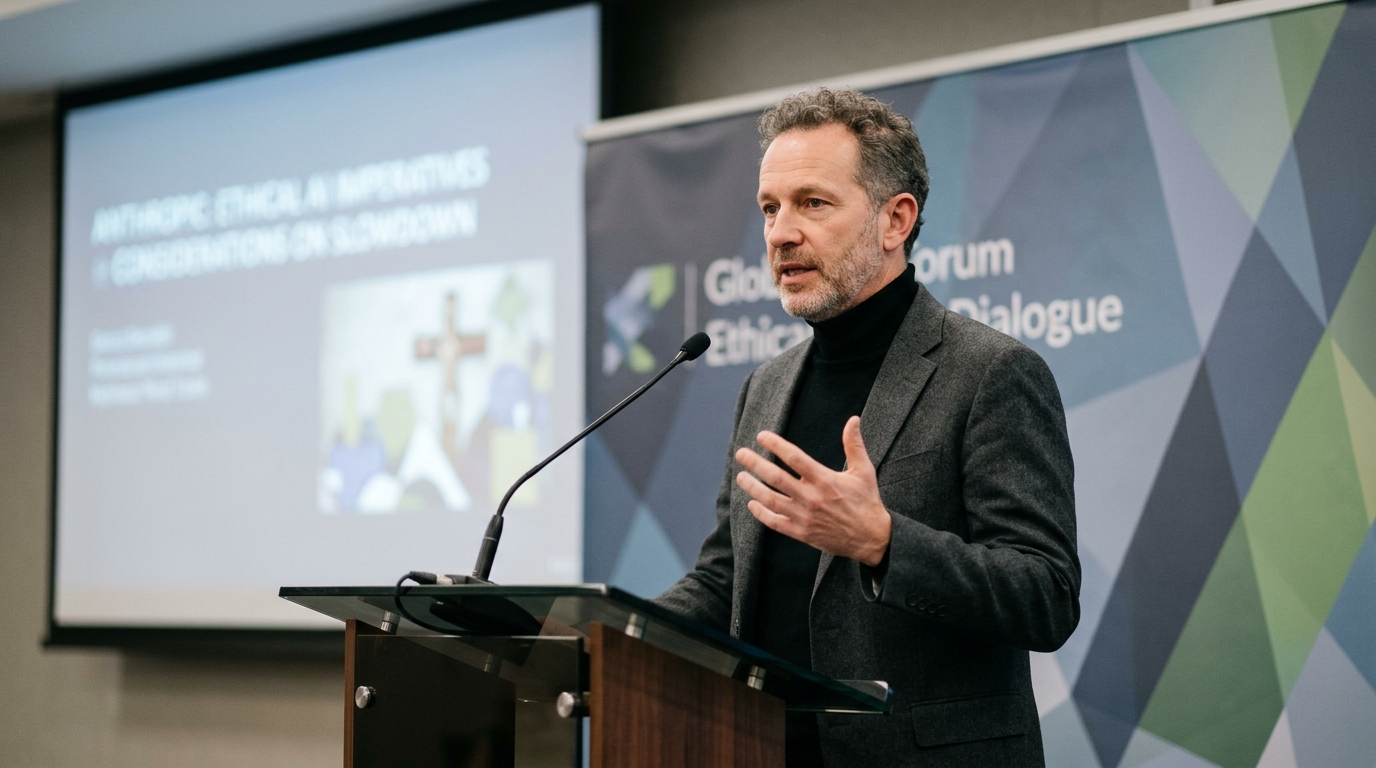
June 6, 2026, will likely be recorded in history as the moment metaphysics met code. Anthropic, the company founded on the promise of "safe" and "constitutional" AI, has made an unprecedented call for a global pause or significant slowdown in the development of frontier models. The catalyst was not a technical failure or a cyberattack, but the new Encyclical of Pope Leo, which raises the question of "spiritual sovereignty" in a world dominated by algorithms.
The Convergence of Faith and Technology
Pope Leo’s Encyclical, titled *"Imago Dei in Machina"* (The Image of God in the Machine), sent shockwaves across the globe, condemning the "unrestrained race toward artificial superintelligence" as a threat to the human essence. The Vatican, which has for years cultivated ties with the scientific community through the "Rome Call for AI Ethics," appears to have found an unexpected ally in Dario Amodei and Anthropic’s leadership.
Anthropic argues that current scaling rates outpace our ability to control social and ethical implications. "This is no longer just a problem of aligning systems with human values, but whether our values themselves can survive in an environment of algorithmic hyper-abundance," a company spokesperson stated. This move is interpreted as an attempt to shift the conversation from technical safety to existential ethics.
The Strategy of "Ethical Deceleration"
Anthropic’s proposal includes an 18-month "reflection period," during which companies would commit to not training models that exceed a specific threshold of computational power (compute). This proposal directly clashes with the aggressive strategies of OpenAI and Google, who believe that delay could give an advantage to authoritarian regimes.
However, Anthropic maintains that the West’s "moral superiority" cannot be preserved if the very principles that define it are sacrificed. Invoking the Papal Encyclical gives Anthropic a moral standing that transcends the narrow confines of Silicon Valley, reaching billions of believers and conservative thinkers concerned about the fraying of the social fabric.
- Imposing limits on compute power for new models.
- Establishing an international ethics council including religious leaders.
- Transparency in training methods and "ethical alignment" data.
- Strict regulation of AI applications affecting human psychology.
Reactions and Political Implications
The reaction from the "accelerationist" (e/acc) camp was immediate and fierce. Many accuse Anthropic of "regulatory capture," arguing that the company seeks to freeze the market at a point where it already holds a strong position, hindering newer players. In Washington, opinions are divided, with some senators seeing the proposal as a necessary brake and others as a national threat to U.S. competitiveness against China.
"Technology must serve the human person, not replace them. The silence of machines for a time may be the only way to hear the human conscience once again," reads a passage from the Encyclical that Anthropic highlighted in its announcement.
The question remains whether a private company can impose such a restriction on a global market. History has shown that technological revolutions rarely stop by decree, especially when trillions of dollars are at stake. Nevertheless, Anthropic’s move signals the start of a new era where religion and philosophy reclaim their place at the decision-making table for the future of humanity.
The Economic Cost of Ethics
If Anthropic’s proposal is accepted, the economic implications will be massive. Hardware investments, particularly in Nvidia, could see a significant downturn, while startups relying on the rapid evolution of models would have to pivot their business models. However, Anthropic argues that a catastrophic AI failure would cost the global economy far more than a controlled slowdown.
In this landscape, Anthropic positions itself as the "guardian of humanity," a stance that could prove extremely profitable in the long run as governments seek reliable partners for AI governance. The clash between "rapid progress" and "ethical reservation" has just entered its most critical phase.