OpenAI, the organization that began as a non-profit beacon for the "safe and beneficial" development of Artificial Intelligence, is now undergoing the most critical phase of its metamorphosis. In mid-2026, the company's image bears no resemblance to the idealistic startup of 2015. With the recent release of its new guiding principles, the leadership under Sam Altman is cementing a pivot that many analysts deemed inevitable, but ethics advocates find deeply troubling.
The First Reversal: From Non-Profit Oversight to 'Benefit Corporation'
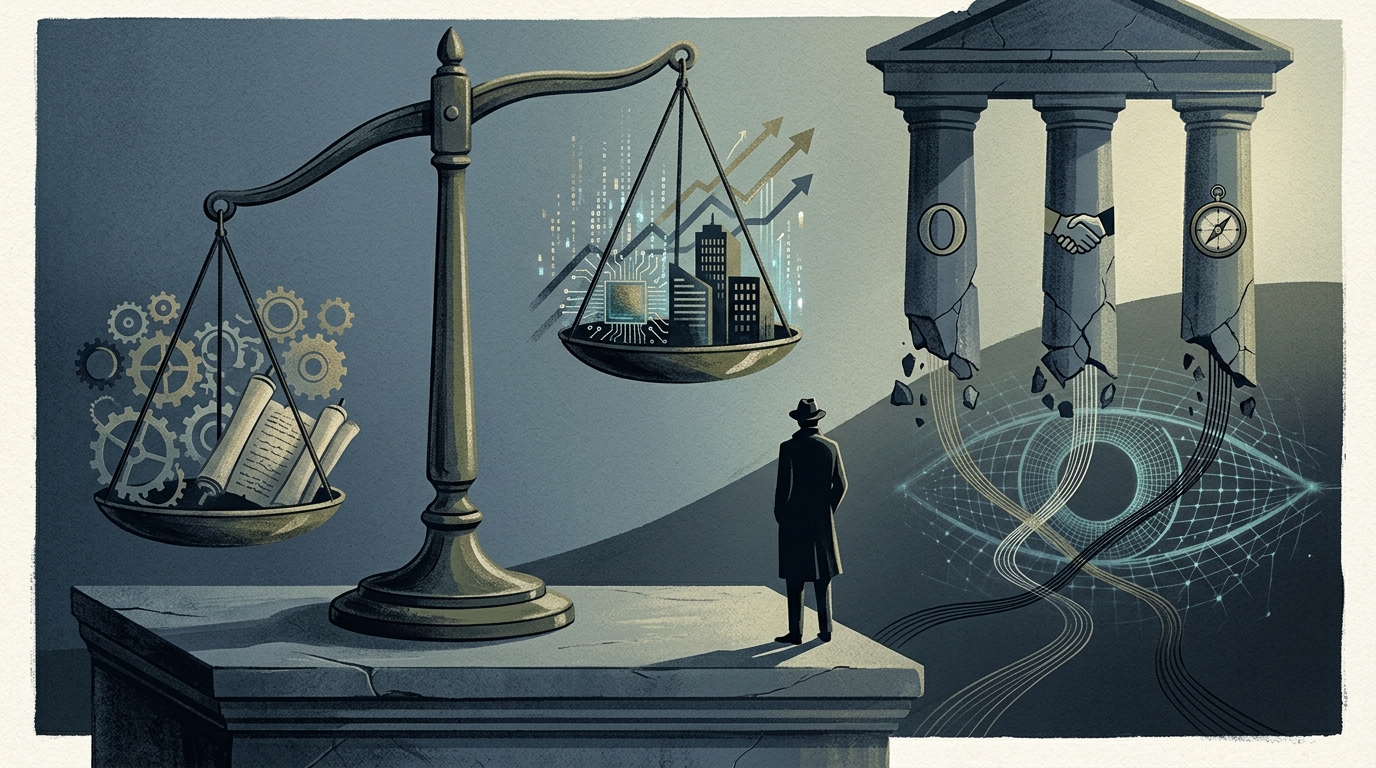
The most significant structural change concerns governance. OpenAI is definitively moving away from the model where a non-profit board held absolute power to "pull the plug" if the technology became dangerous. In its new principles, the company defines itself as a "Public Benefit Corporation" (B-Corp). While this title suggests a commitment to the public good, in reality, it allows the company to operate under traditional market terms, satisfying investors like Microsoft and Nvidia without the fear of a sudden shutdown for ethical reasons.
This shift resolves the "Altman Paradox" witnessed in late 2023. Now, profit and growth are not secondary goals but are intertwined with the company's mission. This change was deemed necessary to attract the billions of dollars required for massive new data centers, but it leaves an open question: who watches the watchers?
The Second Reversal: The Retreat of 'Absolute Transparency'
The name "Open"AI has become a historical anachronism. In its new principles, the company emphasizes "responsible release" rather than "open access." The shift toward closed-source software and proprietary models is now justified by two arguments: national security and preventing misuse by state actors. However, the criticism is fierce. Without access to code and training data, the scientific community cannot verify the company's claims regarding the safety of its models.
- Restricting access to researchers outside the OpenAI ecosystem.
- Strictly protecting algorithms as vital "trade secrets."
- Focusing on partnerships with the US Department of Defense, a move previously off the table.
This "siloing" of knowledge creates an oligopoly on Artificial General Intelligence (AGI), where a select few will hold the keys to the most powerful technology humanity has ever known.
The Third Reversal: Safety as a Process, Not a Barrier
The third major change involves the philosophy of "alignment." Following the departure of top scientists like Ilya Sutskever and Jan Leike, OpenAI has reshaped its safety principles. The new approach does not focus on the proactive prohibition of dangerous capabilities but on "dynamic monitoring" during use. In other words, the company is adopting a "deploy and iterate" logic.
"We cannot build safe AI in a vacuum. We must let it interact with the world to understand the risks," the new manifesto states.
This approach is risky. Critics argue that if AGI is truly as powerful as predicted, the first mistake could be the last. OpenAI, however, seems to be betting on speed, believing that the greatest risk is not a "rogue AI," but the West losing its lead to authoritarian regimes.
Conclusion: A New Realism or a Lost Opportunity?
OpenAI’s new principles reflect a harsh geopolitical and economic realism. The company is no longer a Silicon Valley experiment but a central pillar of American power. This "pivot" shows that the road to AGI leads through stock exchanges and military alliances, leaving behind romantic declarations about technology belonging equally to all of humanity. Sam Altman’s bet is that the concentration of power is the necessary price for survival. Whether this price is too high for our democratic values remains to be seen in practice.