In the twilight of traditional political communication, a new form of propaganda is emerging—more potent and dangerous than anything witnessed before. The recent release of a video generated entirely by Artificial Intelligence (AI), depicting Donald Trump as a global icon of popularity, is not merely another campaign stunt. It is the preamble to an era where reality becomes optional, and a leader’s image can be synthetically engineered to satisfy the deepest desires of the electorate.
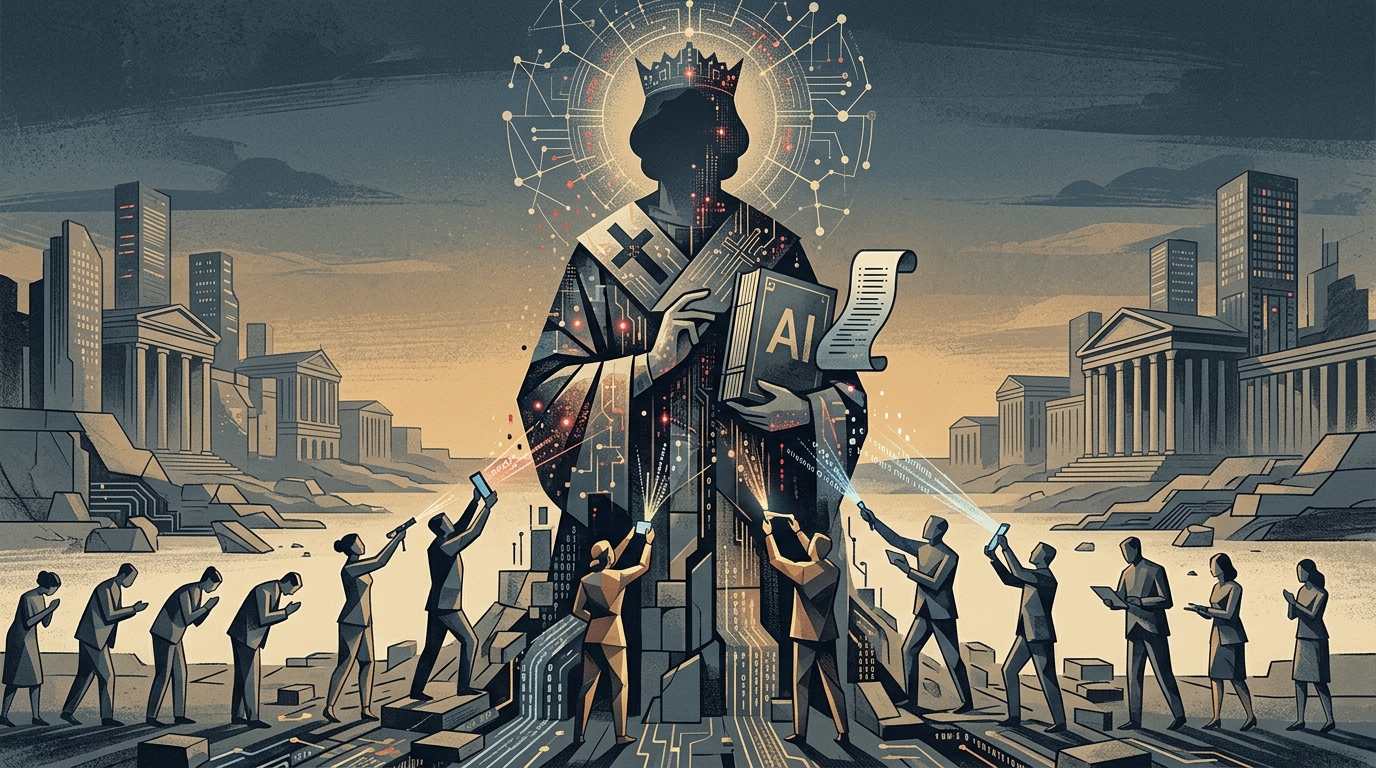
The controversial video, circulating widely on social media platforms, shows the former U.S. President being greeted with fervor in various parts of the world, from European capitals to developing nations in Asia. The imagery is hyper-realistic: the movement of the crowds, the lighting, and even Trump’s facial expressions possess a level of detail that makes it nearly impossible for the average user to distinguish falsehood from truth. This is a "digital hagiography" designed to target emotion rather than reason.
The Construction of Myth in the Age of Deepfakes
The use of AI in politics is not new, but the level of sophistication observed in 2026 has surpassed all previous benchmarks. Technology now allows communication strategists to create narratives based not on facts, but on "potential truths." In Trump’s case, the video does not attempt to persuade on a specific policy position. Instead, it seeks to establish a sense of global dominance and acceptance, bypassing the diplomatic tensions or legal battles that accompany his actual trajectory.
As digital ethics analysts point out, the problem lies not only in the content being false but in the "erosion of trust." When voters are bombarded with content that looks real but is fabricated, the very concept of witness and documentation collapses. "If everything can be real, then nothing is real," notes a professor of political communication at Harvard University.
The Ethics of the Image and the Risk of Manipulation
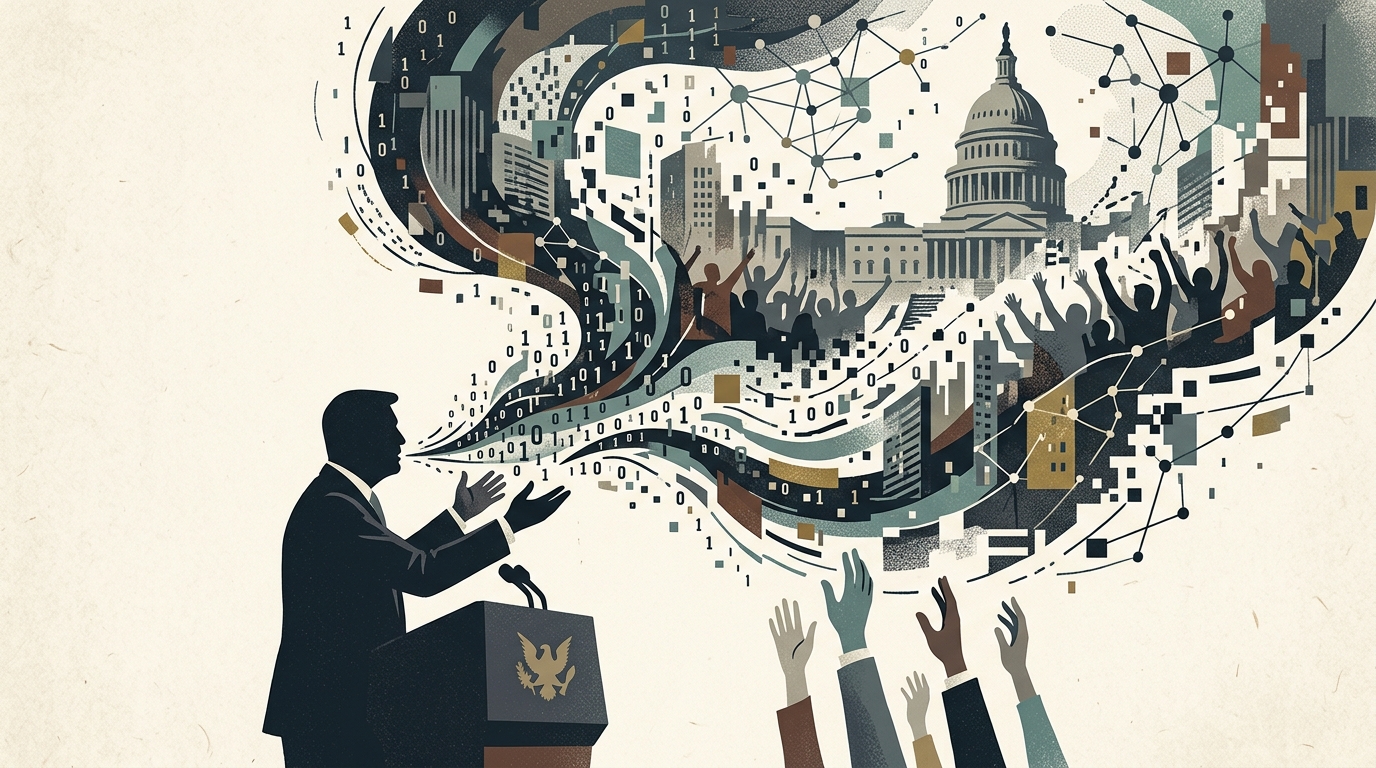
The ethical dimension of this phenomenon is staggering. AI enables the production of content at scale, meaning thousands of such videos can be generated daily, tailored to the tastes and biases of different demographic groups. What we are seeing with Trump is the "mass personalization" of propaganda. A voter in Ohio might see a video of Trump saving jobs in a factory, while a voter in Florida sees him protecting the borders—all without the candidate ever having to step foot in those locations.
"Artificial Intelligence is not just changing how we communicate; it is changing how we perceive democracy itself. Democracy requires a common ground of facts. AI dissolves it."
Furthermore, there is the risk of the "liar’s dividend." As the public becomes aware of the existence of deepfakes, politicians can begin to dismiss genuine, incriminating videos as "AI-generated products." This double threat—the acceptance of the lie and the rejection of the truth—represents the greatest challenge to social cohesion in the coming years.
Regulatory Gaps and Platform Responsibility
Despite efforts by the European Union with the AI Act and similar discussions in the U.S., legislation lags behind technological evolution. Social media platforms, such as X (formerly Twitter) and Facebook, struggle to balance free speech with the fight against misinformation. In the case of the Trump video, algorithms often promote such content because it generates high engagement, regardless of its validity.
The need for clear labeling of AI-generated content is imperative. However, labeling alone may not be enough. The psychological impact of an image is often stronger than any verbal warning. As we head toward the next major election cycles, the ability of citizens to develop critical thinking against digital stimuli will be the last line of defense for democracy.
Conclusion: Toward a Synthetic Politics?
The Trump video is a flare in the night. It warns us that politics is transforming into a form of high-tech entertainment, where the winner is not necessarily the one with the best ideas, but the one with the best algorithms. The challenge for us as a society is to decide whether we want leaders of flesh and blood or digital idols reflecting our own illusions. The answer to this question will define the future of the global political stage.