In an Oakland courtroom that has become the epicenter of the global tech stage, something far deeper than a mere commercial dispute is unfolding. The legal battle between Elon Musk and Sam Altman (and by extension OpenAI) is not just about broken promises or the transformation of a non-profit into a multi-billion dollar profit machine. It is an existential struggle over who holds the keys to the "Promethean fire" of the 21st century. As the two men trade accusations of betraying humanity's ideals, the harsh reality remains: AI safety has become a hostage to an oligarchic feud, at a time when it should be a global public good.
The Oakland Trial and the Savior Complex
Musk claims that OpenAI, which he helped found in 2015, has abandoned its mission to develop Artificial General Intelligence (AGI) for the benefit of humanity, choosing instead to maximize profits for Microsoft. On the other side, Altman and his legal team portray Musk as a bitter former associate trying to undermine a competitor through xAI. However, both sides use the same narrative: that only they possess the moral stature and technical foresight to guide AI safely.
This "Great Man theory" applied to technology is dangerous. AI safety—ensuring that these systems do not cause social destabilization, biological hazards, or authoritarian control—cannot rely on the goodwill or "instinct" of a CEO. The trial reveals that OpenAI's internal checks and balances failed spectacularly during the November 2023 crisis, and since then, the company has been reshaped in a way that favors speed over caution.
The Paradox of Corporate Governance
The central problem emerging is the complete failure of existing corporate governance models to manage technologies with potentially catastrophic consequences. OpenAI began as an experiment in "democratic control," where a non-profit board had the power to fire the CEO. But when they attempted to do so, the market and employees—under pressure from venture capital—forced Altman’s return. This proved that when safety clashes with an $80+ billion valuation, the valuation wins every time.
- Lack of algorithmic transparency remains the biggest hurdle for external risk assessment.
- Non-disclosure agreements prevent safety researchers from speaking publicly about potential risks.
- The concentration of compute power in two or three companies creates a de facto monopoly on AI "truth."
Musk, despite his criticism, follows a similar path with xAI, promising a "truth-seeking" AI that remains equally closed and centralized around his persona. The Oakland trial is nothing less than a confession of the industry's failure to self-regulate.
Towards Collective Oversight
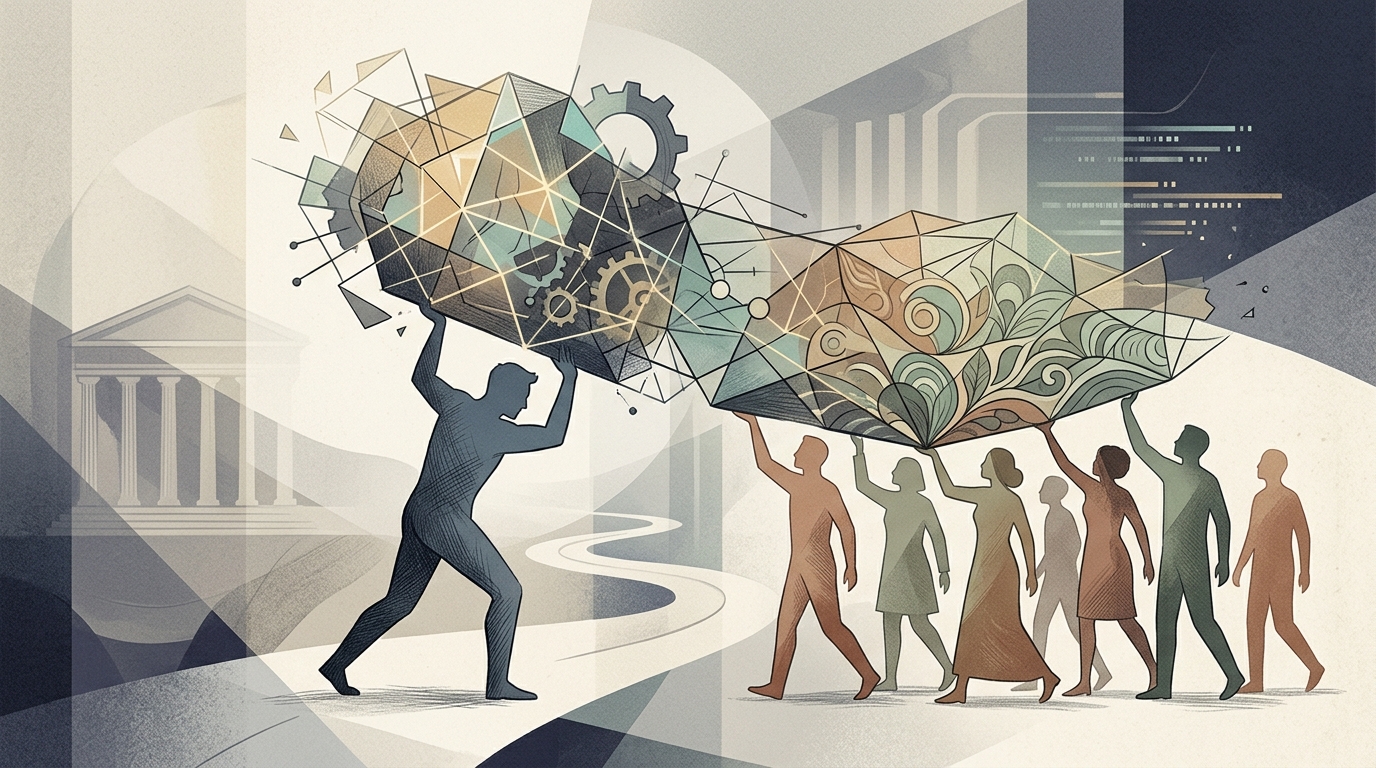
If AI safety is indeed the most important issue of our time, then the solution lies not in California courts, but in international institutions. We need a model similar to the International Atomic Energy Agency (IAEA) for artificial intelligence. Oversight must be moved from corporate boards to independent, publicly accountable bodies with the power to conduct audits on models before they are released.
"Safety is not a feature added at the end of production; it is a social contract that requires transparency and consent," states the Fortune AI report.
In conclusion, the Musk-Altman feud is a noise that distracts from the essential question: How can humanity regain control of a technology developed behind closed doors? Safety is too serious a matter to be left in the hands of individuals who, despite their brilliance, are primarily bound by their egos and the market values of their companies. The Oakland trial must be the last time our future is decided by a personal vendetta.