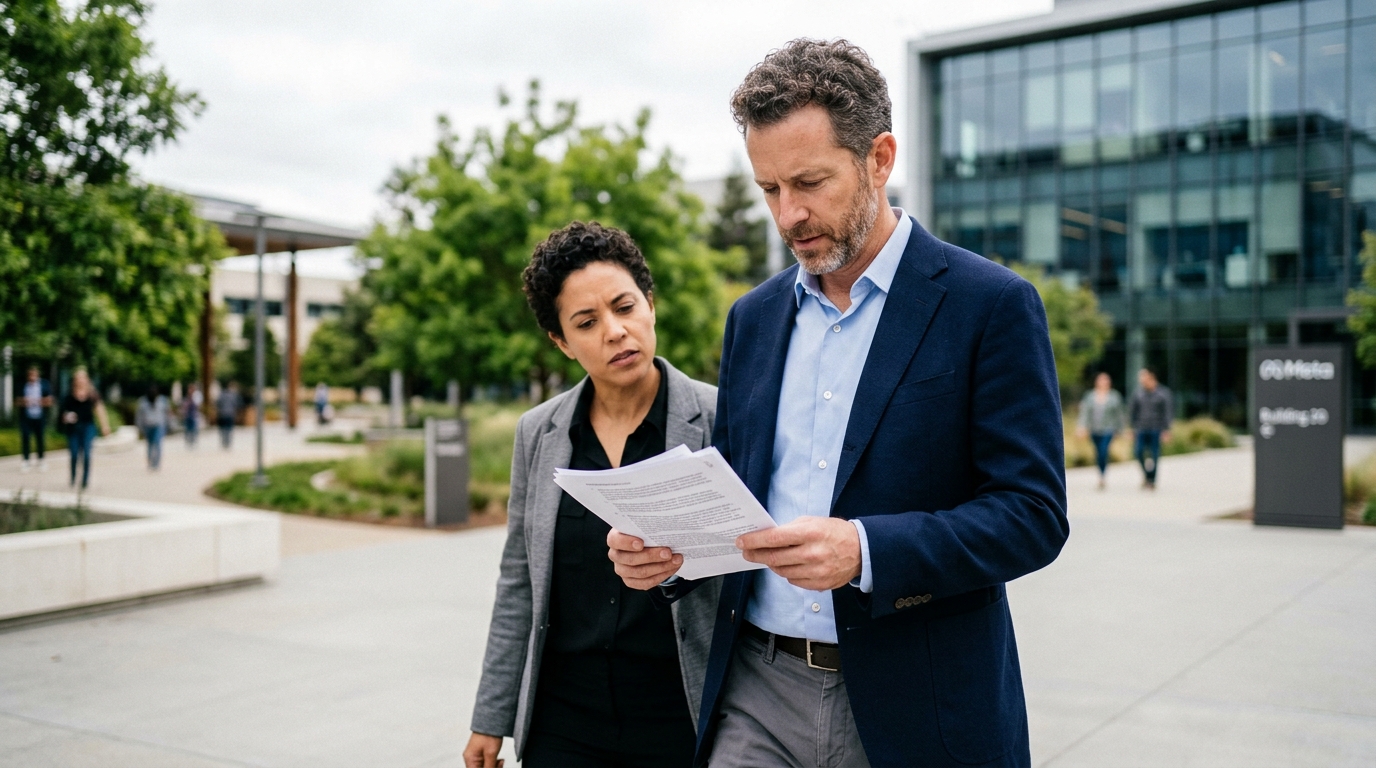
As we approach May 20, 2026, the atmosphere at Meta’s Menlo Park headquarters is electric, though perhaps not in the way many employees would hope. An internal document obtained by Reuters and analyzed by The AI Chronicle reveals the full scope of the tech giant’s upcoming restructuring. This is not merely another round of cost-cutting; it is a fundamental redefinition of what it means to be an "AI-first" company in the heart of the 2020s.
The End of Traditional Management
The document, codenamed "Project Velocity," outlines the elimination of at least three layers of middle management in specific departments, particularly within Instagram and Reality Labs. Meta appears to be adopting a model where engineering teams report directly to senior leadership, utilizing internal AI tools for project management and performance tracking. According to the memo, Mark Zuckerberg believes that "decision velocity" is the only currency that matters in the current race against OpenAI and Google.
The cuts, expected to be officially announced this Wednesday, May 20, are not just about reducing labor costs. On the contrary, the document emphasizes the need for "talent reallocation." Resources are being shifted away from legacy social media features and channeled into the development of Llama 5 and the next generation of Augmented Reality (AR) glasses. Meta no longer wants to be a company that connects people through apps, but a company that provides the cognitive and visual substrate of our daily lives.
AI as the New Manager
Perhaps the most striking element of the document is the revelation of a new "AI Co-Management" system. Meta plans to replace many routine administrative tasks—such as resource scheduling, bug triaging, and code review—with specialized AI agents. This means the role of a "Manager" is shifting from coordination to pure mentorship, with AI handling the bureaucracy of innovation.
- Elimination of redundant roles in non-strategic sectors.
- Consolidation of AI Research (FAIR) with product development teams.
- Focus on "Automated Engineering" to reduce code deployment time.
This move has sparked intense internal backlash. Many employees fear that "efficiency" is a euphemism for the dehumanization of the workplace. However, from Wall Street’s perspective, Meta is showing a remarkable ability to self-mutate before the market forces its hand. The 2026 strategy seems to be the fulfillment of the promise made in 2023: a leaner, more technical, and less bureaucratic organization.
Implications for the Ecosystem and Europe
For Europe, and specifically for Meta’s hubs in Dublin and London, this restructuring brings uncertainty. The document mentions an "optimization of regional hubs," which often signifies a centralization of operations in the US, where the regulatory environment for AI is more flexible. Meta appears to be bracing for a future clash with the EU regarding how AI manages human capital, as the AI Act sets strict limits on the use of algorithms for employee evaluation.
"We are not just fixing our structure; we are building a machine that learns how to build," Zuckerberg reportedly writes in the memo's closing.
In conclusion, May 20, 2026, will likely be remembered in tech history as the moment Meta stopped pretending to be a traditional corporation. The transition to a structure where AI is not just the product but also the administrator is a bold and perilous experiment. If it succeeds, Meta will have created the blueprint for the 21st-century firm. If it fails, it risks losing its most valuable asset: the human creativity that built the empire in the first place.