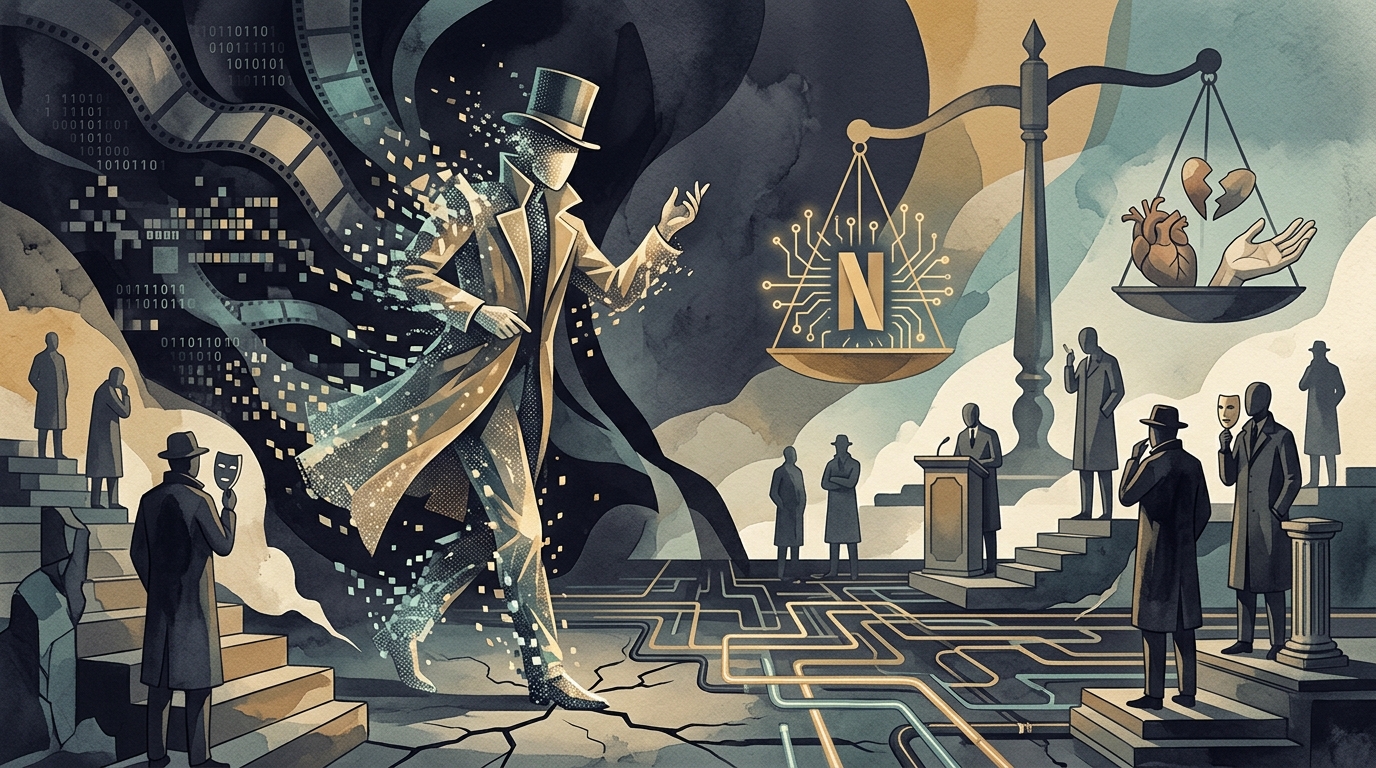
The news that Netflix has used artificial intelligence to digitally resurrect the voice of the late Gene Wilder, nearly a decade after his passing, is more than just a technological headline. It marks the dawn of a new era in the entertainment industry, where death is no longer the definitive end of a career. The star of 'Willy Wonka & the Chocolate Factory,' whose warmth and unique humor left an indelible mark on generations of viewers, is 'lending' his voice once again to a new project, sparking a wave of reactions ranging from admiration to profound revulsion.
A Legend Returns Through Algorithms
The technology employed is based on sophisticated Generative AI models, trained on hundreds of hours of audio material from Wilder's films, interviews, and recordings. The result is a voice that possesses not only the timbre but also the specific inflections and pauses that made the actor unique. Although his family and estate executors gave their consent, the public remains divided. Is this a heartfelt tribute or 'digital grave robbing' for the sake of ratings?
Wilder's case is not the first, but it is perhaps the most emblematic in this era of AI's full maturity. We have previously seen digital recreations of Peter Cushing in Star Wars or Anthony Bourdain's voice in documentaries, but in 2026, the fidelity is now terrifyingly accurate. AI's ability to generate new lines the actor never spoke, with emotion that feels authentic, blurs the lines between reality and simulation.
Legal Gray Zones and Heir Consent
The legal framework surrounding 'digital twins' remains fluid, despite efforts by actor unions like SAG-AFTRA to establish strict rules. The primary argument from proponents is that the consent of heirs legitimizes the process. However, the question remains: Would the artist himself have wanted his voice used in a project he never oversaw? Wilder was known for his selectivity and perfectionism. The posthumous use of his voice strips the artist of the right to choose, turning their talent into an eternal commercial product.
- The ethics of consent: Who owns the 'soul' of a deceased person's voice?
- Impact on new actors: If legends of the past can 'work' forever, is there room for new talent?
- The quality of art: Can an algorithm truly replicate the human spark and improvisation?
The Uncanny Valley and Artistic Authenticity
Despite technological perfection, many viewers report a sense of unease, known as the 'Uncanny Valley.' There is something inherently disturbing about hearing a voice you know has been silent for years. Film critics argue that art is a product of a specific moment in time and a specific human experience. Detaching the voice from the artist's body and soul risks turning the performance into a hollow imitation.
"Gene Wilder's voice had a fragility that cannot be encoded into bits and bytes. What we see on Netflix is a sonic mirror, not the source of the light itself," a prominent critic noted.
On the other hand, Netflix argues that this technology allows new generations to connect with Wilder's greatness, keeping his memory alive in a way that old archives simply cannot. This debate is expected to intensify as streaming platforms constantly seek new ways to leverage audience nostalgia.
Hollywood’s Future in a World Without Death
As we move further into 2026, 'digital resurrection' will likely become a standard practice. Rumors are already circulating about entire films starring actors who have long since passed. This creates a new economy of nostalgia, where the personality rights of an individual become more valuable than the work they produced during their lifetime. The challenge for society and legislators is to find the balance between technological progress and respect for human dignity, even after death.