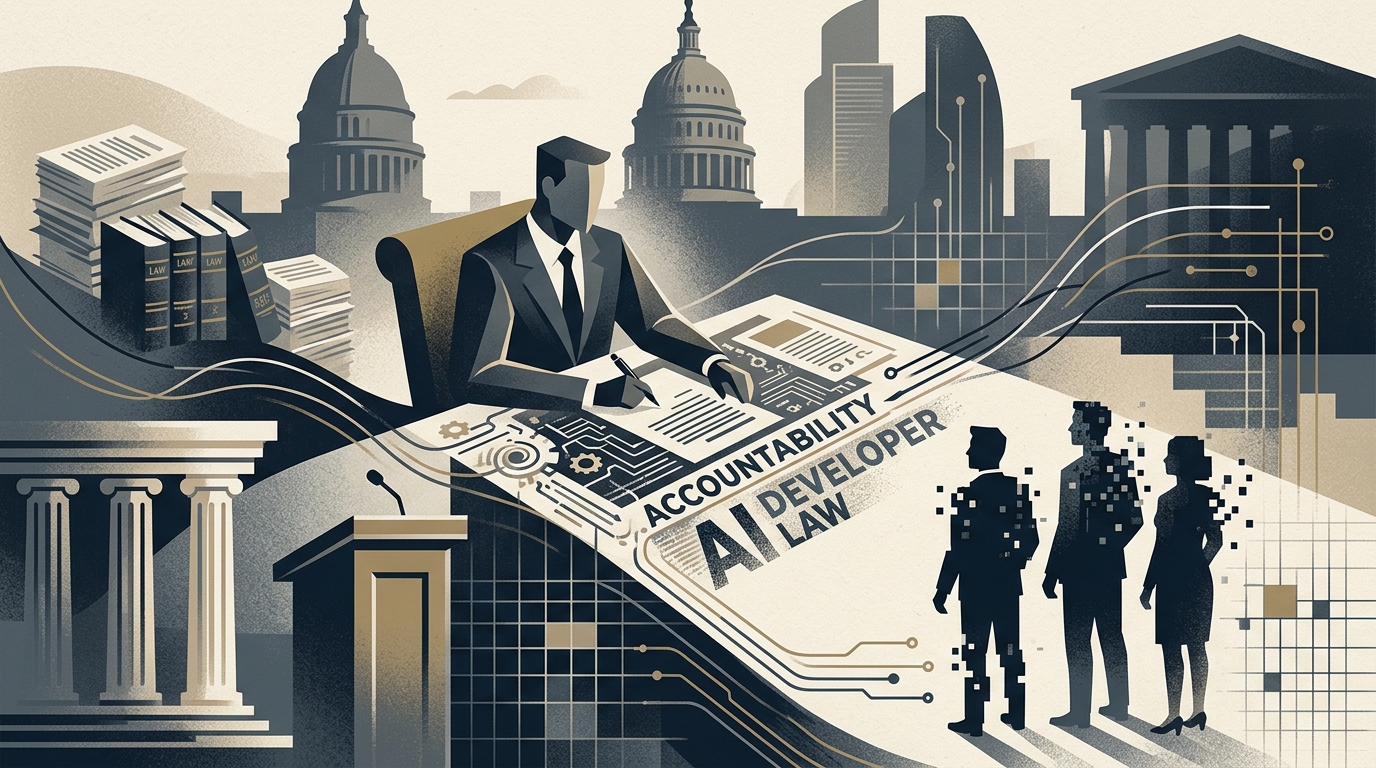
In a move destined to recalibrate the power dynamics between technology giants and the workforce, Illinois Governor J.B. Pritzker has signed a groundbreaking piece of legislation that holds AI developers and employers accountable for the use of automated systems. House Bill 3773, which amends the Illinois Human Rights Act, directly targets algorithmic discrimination, setting a formidable new precedent for how artificial intelligence is integrated into the modern workplace.
The End of the 'Black Box' in Recruitment
For years, the application of AI in hiring has functioned as a 'black box.' Candidates were often filtered out by automated systems without ever understanding the criteria or whether the decision was rooted in biases baked into the underlying code. With this new law, Illinois now mandates that employers explicitly notify employees and job applicants if AI is being utilized to make decisions regarding hiring, promotions, or terminations.
Transparency, however, is only one facet of the law. The legislation strictly prohibits the use of AI that has a 'discriminatory effect' on protected classes based on race, gender, religion, or age. This means corporations can no longer hide behind the complexity of their algorithms. If an AI system demonstrates a statistical disparity that unfairly disadvantages a specific group, the legal burden now falls squarely on the enterprise and, in certain contexts, the software developers themselves.
The BIPA Legacy and a New Era of Liability
Illinois is no stranger to aggressive tech regulation. The state’s Biometric Information Privacy Act (BIPA) has already triggered billions of dollars in settlements from companies like Facebook and Google. Pritzker’s latest move is seen as the natural evolution of this regulatory tradition. Unlike other states that have opted for soft guidelines or voluntary frameworks, Illinois is choosing the path of statutory enforcement.
- Mandatory disclosure of AI usage to all job applicants.
- Prohibition of algorithmic bias in critical employment decisions.
- Right to legal recourse for human rights violations triggered by AI.
- Increased scrutiny on the training data used for employment models.
This legislative intervention arrives at a time when the U.S. federal government is struggling to establish a unified regulatory framework. As Illinois leads the charge, it creates a de facto standard for national corporations, as it is often more cost-effective to comply with the strictest state law than to maintain fragmented systems across different jurisdictions.
Challenges for Developers and the Innovation Paradox
While civil rights advocates have lauded the move, the tech industry has voiced significant concerns. Developers argue that 'eliminating all adverse impact' is technically daunting, as algorithms often mirror pre-existing societal inequalities found in historical data sets. There is a palpable fear that the threat of constant litigation could stifle innovation, potentially forcing companies to retreat to less efficient, manual processes to avoid liability.
"Technology should work for us, not against us. With this law, we are ensuring that progress does not come at the expense of fairness and equity," Governor Pritzker stated during the signing ceremony.
On a global scale, this move aligns with the spirit of the European Union’s AI Act, though it is more surgically focused on the labor sector. The trend is unmistakable: the era of unchecked AI deployment is drawing to a close, replaced by an epoch where ethics and accountability are non-negotiable components of the source code.