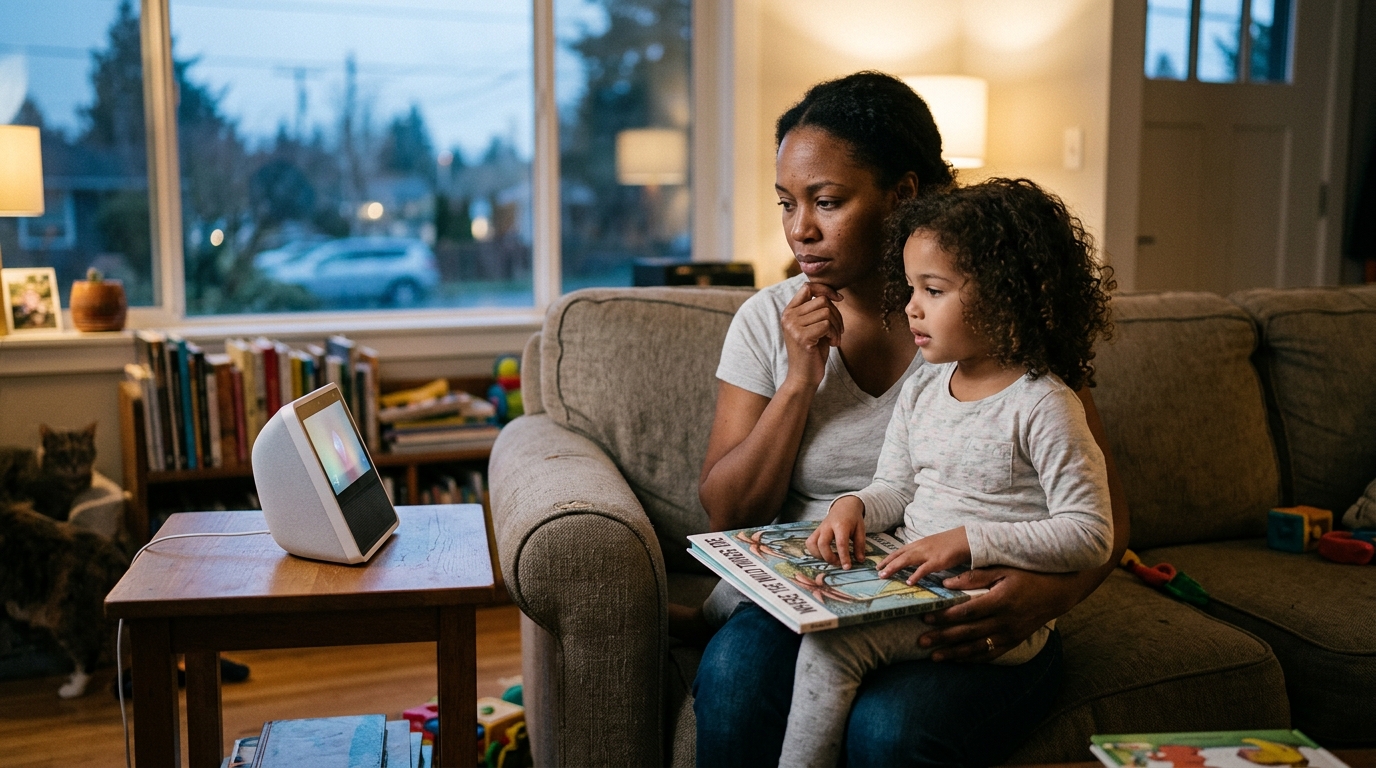
In an era where Artificial Intelligence (AI) is tasked with writing code, composing music, and diagnosing diseases, its entry into the most sacred space of domestic life—the child’s bedroom at bedtime—seems like a natural progression. With the advent of sophisticated speech models capable of mimicking the warmth of a human voice or even cloning the voice of an absent parent, the promise is enticing: "No child shall ever go without a story." However, this technological convenience masks a profound pedagogical and ethical void that no amount of algorithmic processing can fill.
The Illusion of Efficiency
Parenting in the 21st century is characterized by constant pressure to optimize time. Parents, exhausted by the demands of the modern workforce, find in AI a willing "digital assistant." But reading a story is not merely a transfer of information or an exercise in auditory comprehension. It is an act of "joint attention." When a parent reads to a child, the process is punctuated by questions, hugs, laughter, and personal anecdotes. "Remember when we saw a squirrel in the park too?" a father might ask. This connection to lived experience is what builds memory and emotional intelligence.
AI, however advanced, operates in a contextual vacuum. It can read words with perfect inflection, but it cannot sense the sudden tension in a child's body when a wolf appears in the story, nor can it slow its pace to offer comfort. Reading is a dialogue, not a monologue. Replacing this interaction with a machine transforms an active emotional experience into passive content consumption.
The Standardization of Imagination and the Privacy Problem
Another danger concerns the very nature of storytelling. AI models are trained on vast datasets, which often leads to a "middle-of-the-road" creativity. Stories generated or read by algorithms tend to lack the quirks, local idioms, and cultural authenticity that a human narrator brings. Furthermore, there is the issue of commodification. When a device "listens" to a child reacting to a story, that data becomes valuable raw material for tech giants.
"A parent's voice is a child's first bridge to the world of meaning. If we outsource that to algorithms, we are surrendering the foundation of trust."
The use of AI in reading also raises serious questions regarding the privacy of minors. "Smart" assistants are not just playback devices; they are sensors. Collecting data on a child's preferences, emotional reactions, and vocabulary from preschool age creates a digital footprint that will follow them forever, often without the full understanding or consent of the parents.
The Pedagogical Value of "Failure"
Parents often feel guilty because they are bored of reading the same book for the hundredth time or because their voice sounds tired. However, child psychologists argue that this human imperfection is valuable. The child learns that the parent is a human being with limits, yet chooses to be there regardless. AI never gets tired, never gets bored, and this "superhuman" patience deprives the child of the lesson of empathy toward others.
Moreover, the ability of AI to generate endless stories on demand can lead to saturation. The value of a book also lies in its finitude—the fact that the story ends, followed by silence and sleep. Algorithmic content generation threatens to turn reading into an endless "scroll" of words instead of images, addicting the developing brain to a constant stream of stimuli.
Conclusion: Technology as a Tool, Not a Surrogate
Artificial Intelligence has a place in education, perhaps as a tool for children with learning disabilities or for language acquisition. But the ritual of bedtime reading must remain a human-only zone. This is not technophobia; it is the recognition that some things do not require an "upgrade." The warmth of a voice that falters from exhaustion but continues because a child asked for one more page is an experience no neural network can simulate. Choosing to read to our children ourselves is an act of resistance against the digitalization of love.