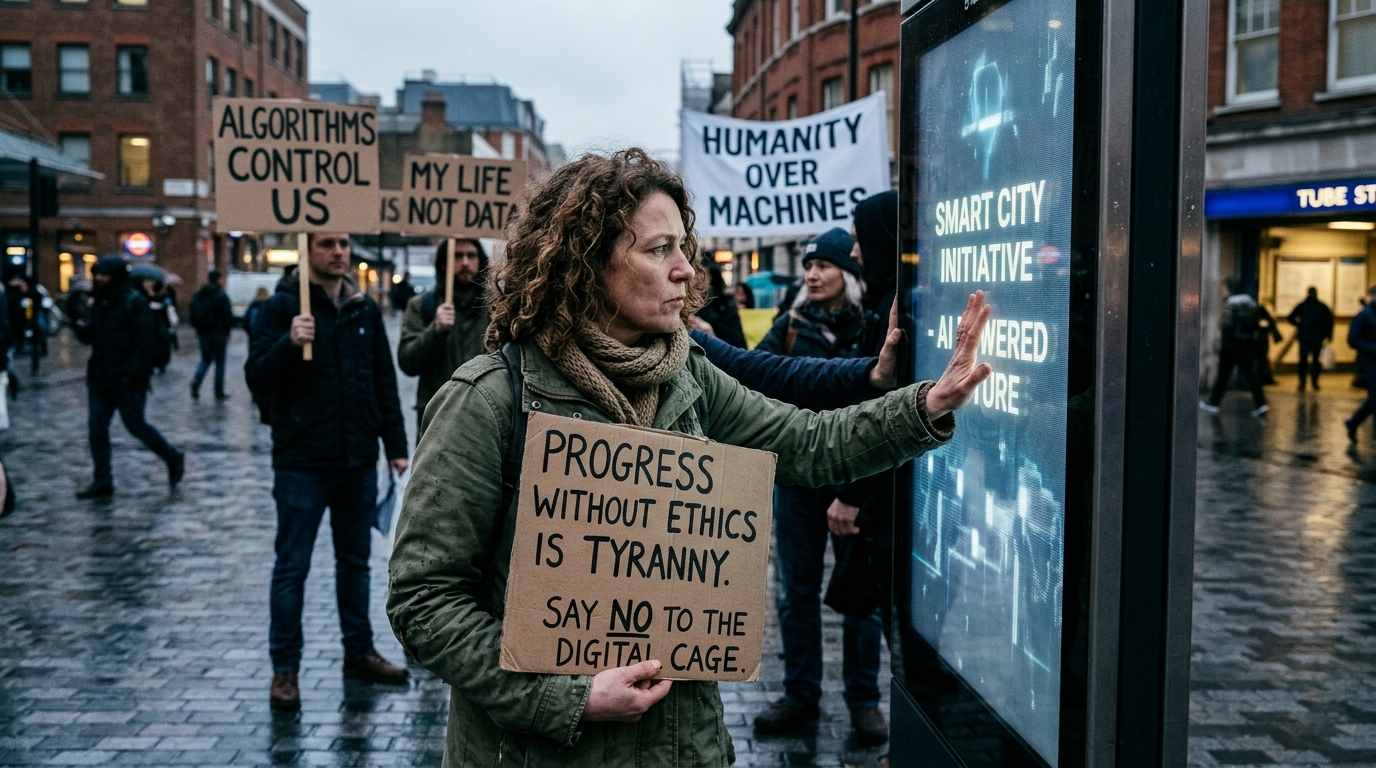
When Artificial Intelligence (AI) made its dynamic entry into the workplace a few years ago, the promise was clear: machines would take over repetitive tasks, freeing humans to focus on creativity and strategic thinking. However, in 2026, the reality is proving much more complex and darker. According to recent researcher reports published by WJAR, a new phenomenon termed 'AI Brain Fry' is emerging as the primary culprit behind an unprecedented surge in occupational burnout rates.
The Cognitive Trap of 'Augmented' Productivity
'AI Brain Fry' is not just a catchy media headline; it describes a very specific state of cognitive overload. Workers today are not merely using AI; they are in a constant state of monitoring and verifying its outputs. Researchers point out that the process of checking AI 'hallucinations' and attempting to integrate automated workflows into human processes requires greater mental effort than traditional manual labor.
As Dr. Elena Papadopoulou, an expert in occupational psychology, explains, "The brain is not designed to function as a constant corrector of a faster, but often inaccurate, partner. This constant vigilance for machine error creates a level of stress that depletes neural resources much faster than normal work." The "illusion of ease" offered by AI is, in reality, a mechanism that shifts the burden from execution to supervision—a process that is often more mentally taxing.
The Productivity Paradox and the Pressure for 'More'
One of the key factors contributing to burnout is the shift in expectations. With the advent of Generative AI tools, corporate management assumed that productivity should increase exponentially. If an employee needed eight hours for a report and now AI produces it in ten minutes, the demand is not for the employee to rest, but to produce ten reports a day.
- Elimination of 'Dead' Time: Previously, small breaks during the day (e.g., waiting for a response or contemplating a solution) acted as decompression valves. Now, AI eliminates these times, imposing an unrelenting pace.
- Alienation from the Final Product: When the machine does 90% of the work, the employee loses the sense of ownership and satisfaction, leading to 'moral fatigue.'
- Fear of Replacement: The constant need to prove one's 'utility' over AI creates a permanent underlying layer of anxiety.
"We are no longer creators, but janitors of the digital waste produced by algorithms," a data analyst noted in the study.
Ethical Dimensions and the Need for New Rules
The discussion regarding 'AI Brain Fry' is now moving into the realm of ethics and labor law. Is it ethical to require a human to keep pace with the speed of a processor? The European Union is already considering guidelines for the 'Right to Human Slowness,' recognizing that our biological nature has limits that technology does not respect.
Companies that will survive in the long term are not those that exhaust their staff through AI, but those that establish 'disconnection protocols.' This includes mandatory non-AI work hours per day to allow the brain to recover. The ethical use of AI is not just about data and algorithmic bias, but about protecting human consciousness itself from digital erosion.
Conclusion: Toward a Sustainable Coexistence
The 'AI Brain Fry' is the warning shot of a society running faster than it can handle. The solution is not the rejection of technology, but the re-evaluation of the value of human effort. We must understand that productivity is not measured solely by the volume of data produced, but also by the quality of thought and the mental health of those who produce it. If we do not set boundaries today, the burnout of 2026 will be just the beginning of a deeper identity and health crisis on the global labor map.