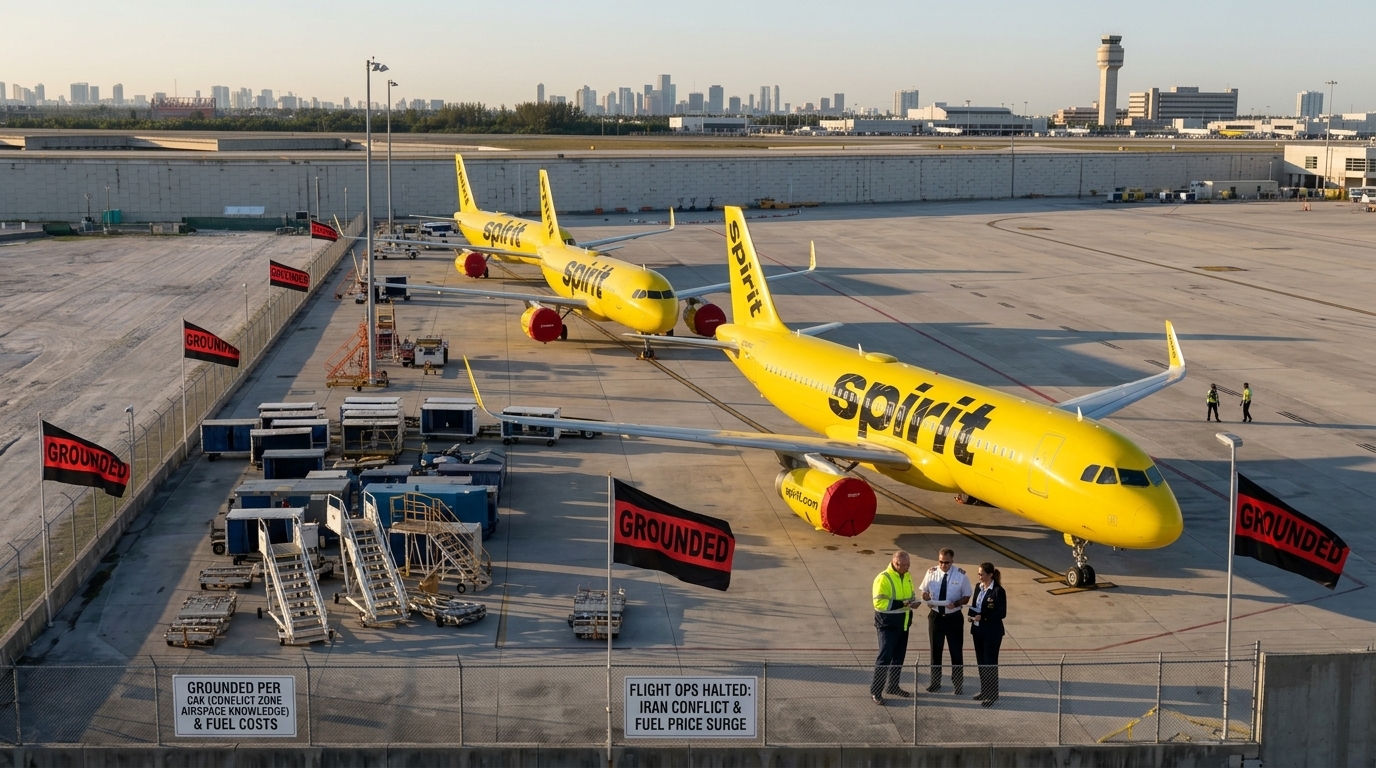
Saturday, May 2, 2026, will be etched in aviation history as the day the dream of affordable flight collapsed under the weight of global instability. At 3:00 AM ET, Spirit Airlines, the pioneer of ultra-low-cost carriers (ULCC) in the United States, announced an immediate and permanent cessation of all operations. After 34 years of service, the airline that revolutionized travel for millions of Americans was grounded, leaving thousands of passengers stranded and the industry in a state of paralysis.
The Fatal Collision: Oil and Geopolitics
The collapse of Spirit was not a mere business failure; it was the direct fallout of escalating tensions in the Middle East. The Trump administration’s decision to engage in a full-scale confrontation with Iran triggered an unprecedented crisis in the global energy market. Within weeks, the price of jet fuel doubled, shattering the financial foundations of the aviation sector. For a company like Spirit, which operated on razor-thin margins and relied heavily on high-volume, low-fare traffic, this spike was the proverbial final nail in the coffin.
Analysts point out that Spirit was already in a precarious position. Following the blocked merger with JetBlue in 2024 and persistent issues with Pratt & Whitney engines that sidelined part of its fleet, the airline had been desperately attempting to restructure its debt. However, the "war economy" imposed by developments in the Persian Gulf left no room for error. A 100% increase in fuel operating costs rendered every flight a loss-making endeavor, regardless of how many seats were filled.
Chaos at the Gates and the Industry Vacuum
The scenes at major hubs in Florida, Michigan, and New Jersey were chaotic on Saturday morning. Spirit’s website was replaced by a stark landing page at spiritrestructuring.com, instructing travelers to stay away from airports. Air traffic control transcripts captured the confusion as pilots mid-flight were informed of the shutdown, with some ordered to return to their origins or complete their final taxi to a permanent halt.
- Thousands of flights canceled without prior warning.
- Job losses for over 12,000 employees nationwide.
- Immediate fare hikes by the "Big Four" legacy carriers (Delta, American, United).
- Massive uncertainty regarding refunds for millions of ticket holders.
Spirit’s bankruptcy affects more than just budget travelers. It creates a dangerous vacuum in the market that legacy carriers are expected to exploit, leading to higher prices and reduced competition. The "democratization of the skies"—a promise Spirit upheld despite criticism over its service quality—now feels like a relic of a more stable era.
The Political Dimension: America First or America Grounded?
Criticism of the White House has been swift and severe. While the administration’s rhetoric focuses on national security and projecting American power abroad, the domestic consequences are becoming painfully clear. Spirit Airlines is the first major corporate victim of a foreign policy that failed to account for the fragility of global energy supply chains. Opposition leaders are already calling it "economic suicide," arguing that destroying a domestic industry giant is an unacceptable price for a reckless military engagement.
"We didn't just lose an airline; we lost the ability for the average American family to visit relatives or take a vacation," said an aviation analyst on CNBC. "When geopolitics collides with everyday economics, the citizen always picks up the tab."
As the engines of Spirit’s Airbus fleet go silent, the debate over energy independence and market stability intensifies. This collapse may be the first in a series of bankruptcies within the transportation sector if oil prices remain at these stratospheric levels. May 2, 2026, will be remembered as the moment geopolitical reality forced a hard landing on American optimism.