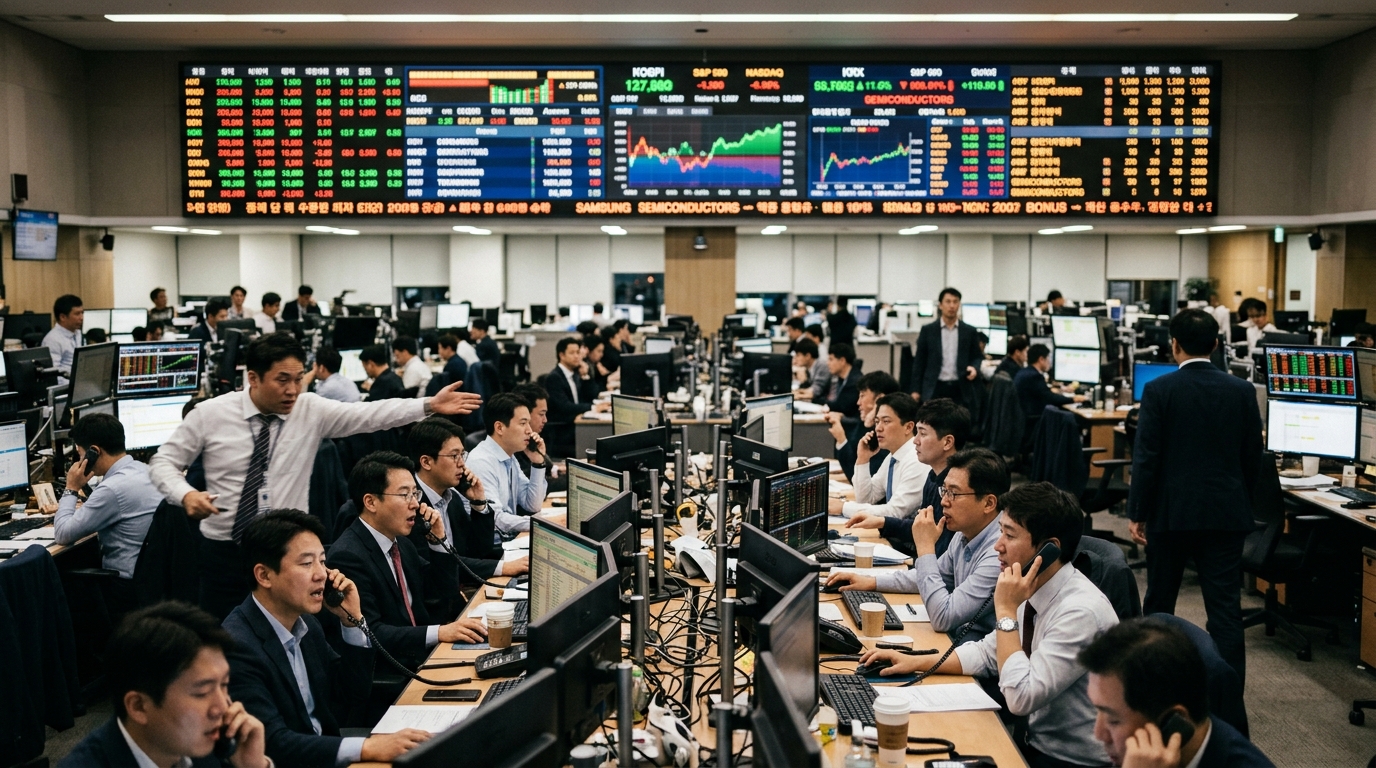
In the heart of Seoul, behind the glass towers of the chaebols, a new form of class struggle is emerging—not between capital and labor, but between the workers themselves in the age of Artificial Intelligence. Samsung Electronics, the titan that forms the backbone of the South Korean economy, is facing an unprecedented internal crisis. The management's decision to offer astronomical bonuses—reaching up to 50% of annual salaries—exclusively to employees in the semiconductor division (DS Division), has acted as a detonator for a broader social explosion.
The Golden Eldorado of Semiconductors
The cause of this financial generosity is none other than the explosive demand for High Bandwidth Memory (HBM) chips, which serve as the 'fuel' for Nvidia’s GPUs and large language model training systems. As Samsung struggles to regain lost ground against SK Hynix in the HBM sector, retaining specialized personnel has become a matter of national security for the firm. However, this 'AI premium' has created a two-tier internal hierarchy.
Employees in the home appliances and mobile divisions, who for decades were the face of Samsung to the consumer, now see themselves relegated to 'supplementary' departments. Despite Galaxy device sales remaining robust, their profit margins do not compare to the staggering returns of AI chips. The result? A furious backlash that led to the first major threat of a general strike in the company's history, narrowly averted through last-minute concessions.
Bonus Politics and the Social Contract
The crisis at Samsung is not merely a corporate issue; it reflects the difficulty of modern economies to fairly distribute the profits generated by automation and AI. In South Korea, where company loyalty was once absolute, the new generation of workers (Generation MZ) demands transparency and equity. The traditional structures of the chaebols, built on hierarchy and self-sacrifice, are crumbling in the face of the individualized value offered by high-tech specialization.
- The shift toward HBM chips has made the semiconductor division the sole engine of growth.
- Unions, such as the National Samsung Electronics Union (NSEU), are gaining power they never possessed before.
- Bonus inequality is creating an internal 'brain drain' from traditional divisions toward the chip sector.
"We aren't just asking for money; we are asking for the recognition that the company is one body. If one hand is fed and the other starves, the body will collapse," a union representative stated.
A Global Warning
What is happening in Seoul is a harbinger of what will follow in Silicon Valley, Taiwan, and Europe. As AI concentrates wealth in specific infrastructure sectors, companies will be forced to decide: Will they reward only the 'chosen few' who develop AI, or will they maintain social cohesion within their organizations? The Samsung case suggests that the latter is the only viable long-term option, but the cost of achieving it is immense and could undermine competitiveness in a ruthless global race.
Samsung management argues that bonuses are essential to prevent losing talent to Intel or TSMC. However, the resentment of the remaining 200,000 employees is a ticking time bomb. If AI is to bring a new industrial revolution, Samsung is the first major battlefield for how the spoils of this revolution will be shared.