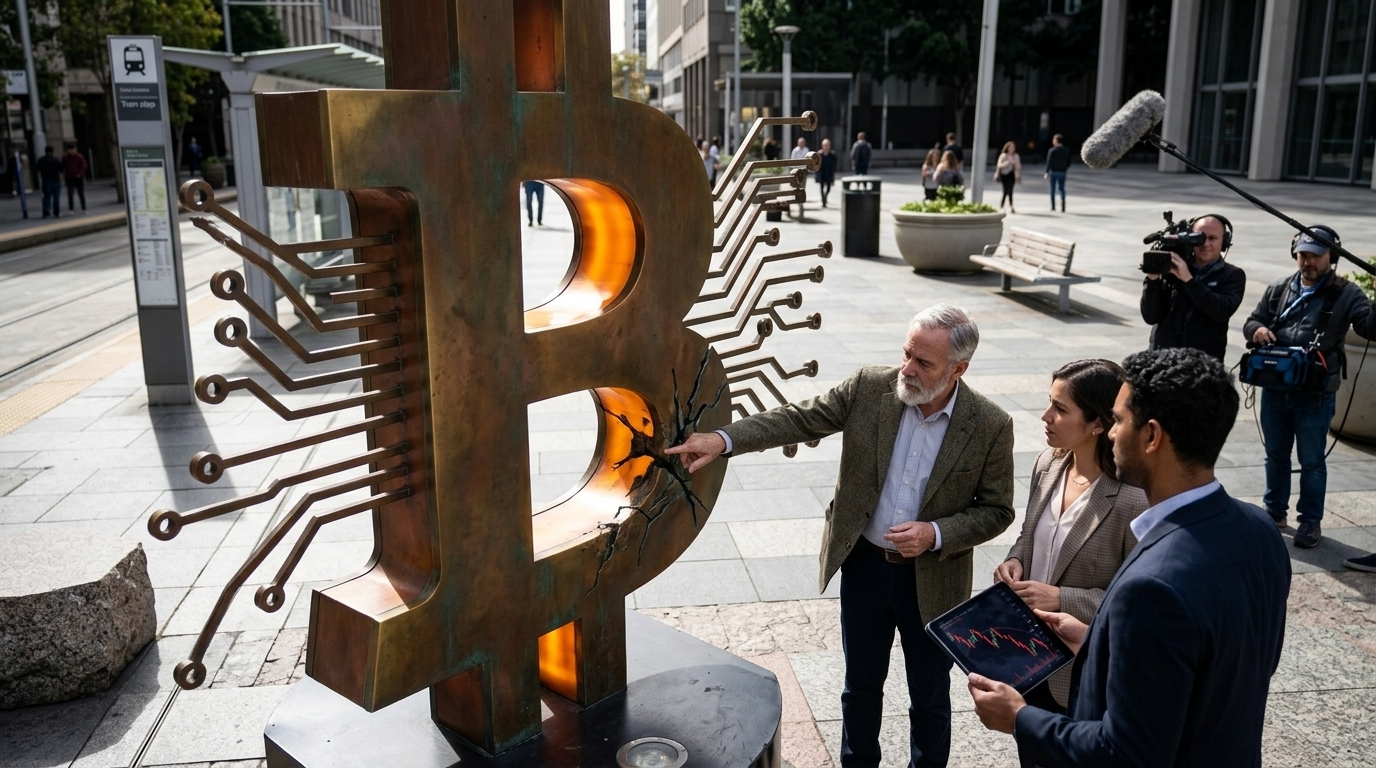
In today's technological landscape, the word "memory" no longer refers merely to data storage but to the vital artery feeding machine intelligence. As we navigate the second half of 2026, the semiconductor market has undergone a tectonic shift. Companies once viewed as secondary suppliers to PC makers are now the pillars of the global economy, with market capitalizations soaring past the $1 trillion threshold. The recent ascent of Broadcom and TSMC—while Nvidia continues its dominance—underscores a critical truth: Artificial Intelligence is only as good as its ability to retrieve data at lightning speed.
The Memory Wall and the HBM Solution
For decades, the chip industry faced the so-called "memory wall." While processors (CPUs and GPUs) grew exponentially faster, the speed at which memory could feed them data remained largely stagnant. This gap created a bottleneck, throttling the performance of Large Language Models (LLMs). The solution arrived in the form of High Bandwidth Memory (HBM), a technology that vertically stacks memory chips directly on or adjacent to the processor.
SK Hynix and Micron have emerged as the protagonists of this specialized market, but the companies capitalizing on this need at a trillion-dollar level are those integrating these solutions into complete ecosystems. Broadcom, for instance, has become indispensable for networking and managing data flow within AI data centers, while TSMC remains the only "foundry" capable of manufacturing these complex systems at scale. Their entry into the $1 trillion club is not just a stock market success; it is a confirmation that AI infrastructure is now the most valuable real estate in the world.
The $60 Strategy: Accessibility for the Retail Investor
With shares of Nvidia, Broadcom, and ASML trading at prices that often prohibit entry for the average investor, the search for alternative routes has become imperative. The reference to "$60" is not about buying individual shares of these giants—which would be impossible at that price point—but rather investing in Semiconductor Exchange-Traded Funds (ETFs).
- SOXQ (Invesco PHLX Semiconductor ETF): Featuring a low expense ratio and a share price that remains accessible, it offers exposure to the entire value chain, from design to manufacturing.
- SMH (VanEck Semiconductor ETF): Although its share price is higher, many investors utilize fractional shares through modern brokerage platforms to gain exposure with as little as $60.
This approach allows the investor not to bet on a single "horse" but on the entire racetrack. In a market as volatile as technology, diversification through an ETF that includes the leaders in AI memory and processing represents the most prudent strategy for long-term wealth building.
"Investing in AI today is not about who builds the best chatbot, but who owns the tools and materials of the digital construction site."
Geopolitics and Future Challenges
Despite the euphoria, the road ahead is not without obstacles. The concentration of production in Taiwan (via TSMC) remains one of the greatest systemic risks to the global economy. Any geopolitical instability in the region could derail the AI revolution within days. Furthermore, the power consumption of data centers utilizing these high-performance memory chips has begun to draw scrutiny from environmental groups and regulators.
However, demand for HBM and advanced semiconductors is projected to grow at an annual rate of over 30% through 2030. As we transition from model "training" to real-time "inference," the need for even faster and more efficient memory will continue to push the valuations of these companies to new heights. For the astute observer, the current moment is not the end of the rally, but the consolidation of a new industrial order.