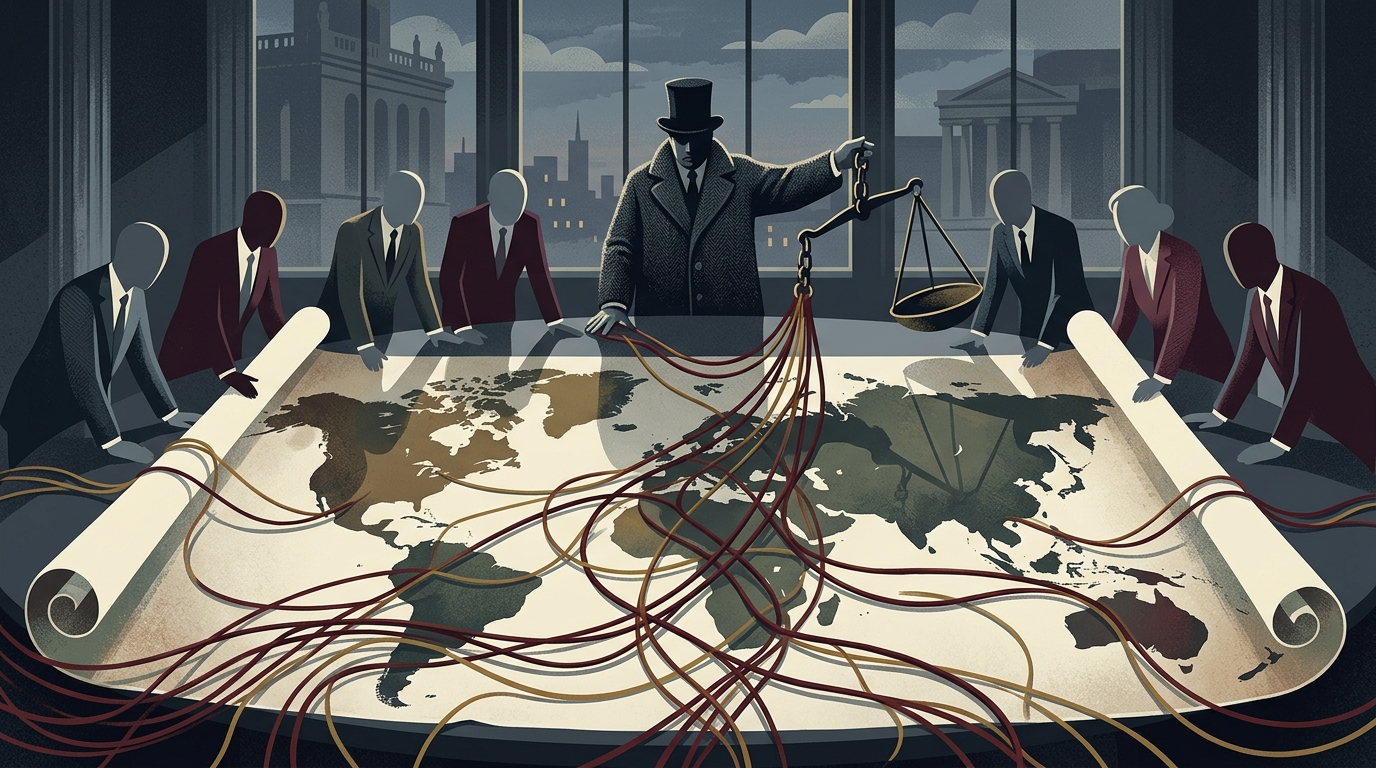
In a move that further escalates the technological "cold war" between Washington and Beijing, the United States has taken drastic steps to halt the supply of advanced Nvidia artificial intelligence chips to Chinese companies operating outside of Chinese territory. This decision, revealed through recent reports and confirmed by Reuters sources, aims to close a critical loophole that allowed Chinese tech giants to access cutting-edge American technology via their subsidiaries in Singapore, the United Arab Emirates, and Europe.
Beyond Borders: Targeting the "Cloud" and Subsidiaries
Until recently, export restrictions focused primarily on the geographical location of the recipient. However, the U.S. government discovered that Chinese technology firms, such as ByteDance, Tencent, and Alibaba, were using their international operations to order chips like Nvidia’s H100 and A100. These chips were then either used in data centers outside China to train AI models owned by Chinese entities or were illicitly transferred into mainland China.
The U.S. Department of Commerce, through the Bureau of Industry and Security (BIS), argues that this move is essential for national security. The fear is that advanced AI could be utilized by the Chinese military to develop autonomous weapons systems, enhance cyber warfare capabilities, and suppress human rights through sophisticated surveillance systems. By targeting the corporate identity rather than just the physical destination, the U.S. is signaling a shift toward a more granular and aggressive enforcement strategy.
Nvidia’s Precarious Position
Nvidia, which dominates the AI semiconductor market with a share exceeding 80%, finds itself once again in the crosshairs. Despite the company’s efforts to develop "stripped-down" versions of its chips (such as the H20 and L20) that comply with previous regulations, the new rules appear to tighten the margins significantly. The company has warned investors that stricter controls could lead to a permanent loss of opportunities in the Chinese market, which has historically represented 20-25% of its data center revenue.
- The new rules require a specific license for selling chips to Chinese companies, regardless of where they are headquartered.
- Stricter oversight is being imposed on Cloud Service Providers (CSPs) to ensure they are not "renting" computing power to Chinese military entities.
- Nvidia is being forced to re-engineer its supply chain to track the end-user with unprecedented precision.
The Global Tech Schism
This decision does not only affect China and the U.S. but also third-party nations aspiring to become AI hubs. Countries like Singapore and the UAE have invested billions in building data centers. The imposition of U.S. rules within these territories creates diplomatic friction, as these nations feel their sovereignty is being undermined by American extraterritorial jurisdiction. Simultaneously, Washington is pressuring allies like the Netherlands (ASML) and Japan to adopt similar measures, creating a unified front against Beijing’s technological rise.
This fragmentation of the global supply chain is leading to what many call the "splinternet" or a bifurcated tech ecosystem. On one side, a Western-aligned infrastructure led by U.S. hardware and software standards; on the other, an emerging Chinese-centric ecosystem that prioritizes domestic resilience over global interoperability.
Enforcement Challenges and the Future of AI Sovereignty
Beijing has condemned these moves as "technological bullying" and a violation of free trade principles. However, China's response is not limited to rhetoric. The country has dramatically accelerated investments in domestic semiconductor production. Companies like Huawei, with its Ascend chip series, and Biren Technology, are striving to fill the void left by Nvidia. While China still lags in manufacturing technology (lithography), being cut off from the West serves as a catalyst for achieving technological self-sufficiency.
"This is no longer a commercial dispute; it is about defining who will control the operating system of the 21st century," say geopolitical analysts.
In conclusion, the U.S. move to block Nvidia shipments to Chinese firms abroad represents the latest and perhaps most daring step in the effort to contain Chinese AI power. The consequences will echo across the global value chain, reshaping alliances and innovation for decades to come. Whether the U.S. can successfully police the global flow of silicon remains to be seen, but the era of borderless technology is clearly coming to an end.