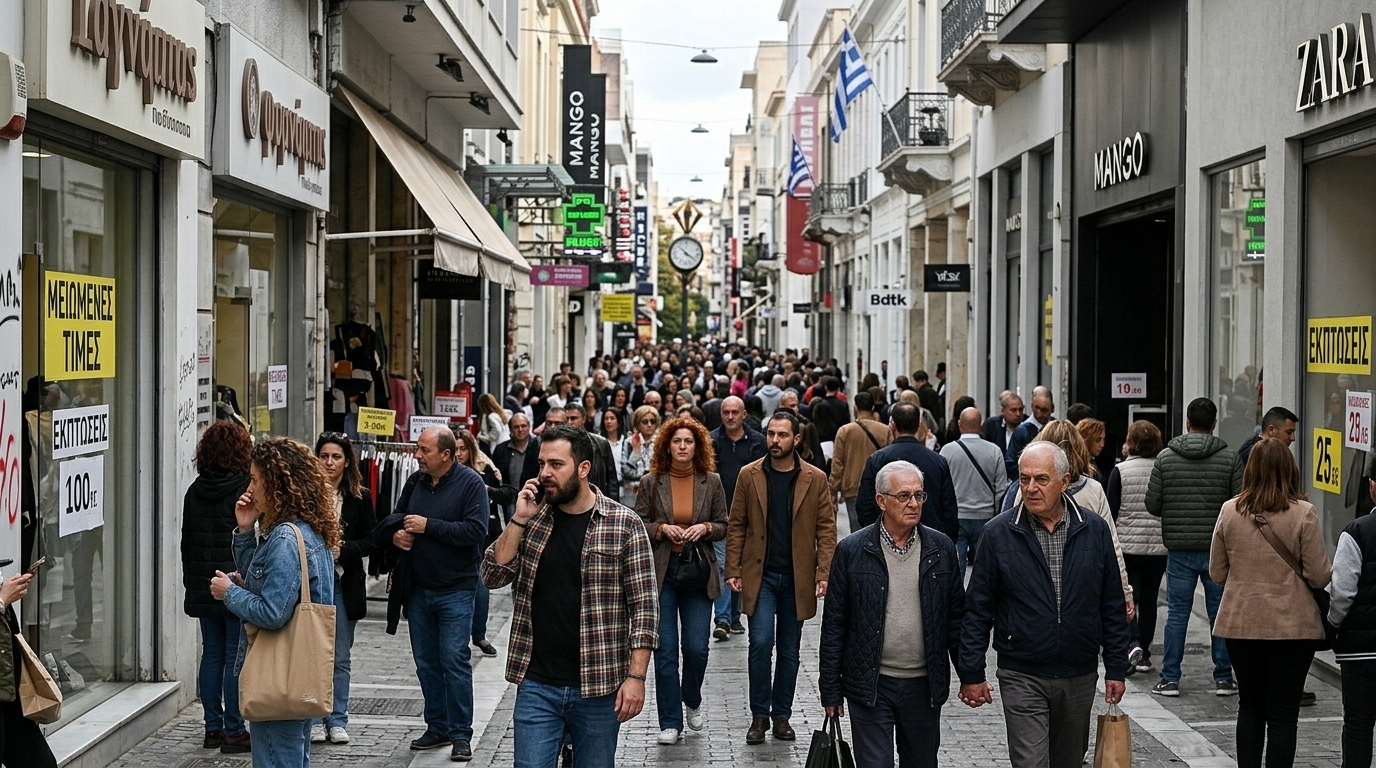
The Greek market, which for several years found itself in the vortex of persistent inflation, appears to be entering a phase of corrective stabilization. According to the latest data from the Market Control Authority (DIMEA) and the Ministry of Development, the implementation of the Legislative Act (ΠΝΠ) to combat unfair profiteering has yielded spectacular results, with the rate of price increases for basic consumer goods slowing down by up to 50 times compared to the previous year.
The Anatomy of De-escalation
Data analysis indicates that state intervention, although initially met with market skepticism, functioned as a powerful deterrent against further hikes. Specifically, in categories such as personal hygiene products, detergents, and essential foodstuffs, the price increases observed in the last quarter are almost negligible compared to the explosive climate of 2024 and 2025. The imposition of a cap on gross profit margins, which is not allowed to exceed 2021 levels, forced businesses to overhaul their pricing strategies.
Audit mechanisms have conducted thousands of checks, imposing millions of euros in fines in cases where profit margin violations were identified. This 'hunt' for profiteering seems to have borne fruit, as major supermarket chains and suppliers now prefer compliance over public shaming and heavy financial penalties. DIMEA reports that business compliance has reached 90%, a figure unprecedented by Greek standards.
From Price Hikes to 'Permanent Price Reductions'
One of the most interesting findings of the report is the market's shift toward permanent price reductions. Instead of temporary 'buy one get one free' offers, many companies are now choosing to lower the nominal shelf price of products. This is partly due to the legislative regulation that prohibits promotional activities for three months on products that have undergone a price increase. Thus, businesses are 'locked' into a low-price strategy to maintain their market share.
- Price reductions on over 2,000 product codes.
- Stabilization of baby formula prices following the imposition of a specific cap.
- Increased competition between private labels and branded products.
The pressure exerted by the Ministry of Development is not limited to audits but extends to transparency. The e-Katanalotis platform has been upgraded, allowing citizens to compare prices in real-time, strengthening the consumer's power to choose the cheapest point of sale.
The Challenge of Sustainability and the International Environment
Despite the positive signals, analysts warn that the battle has not been definitively won. 'Greedflation' may have been checked, but external factors remain unpredictable. Energy prices and raw material costs on international markets continue to exert pressure. However, the Greek government appears determined to maintain these measures as long as the cost-of-living crisis persists.
"This is not a temporary intervention, but a structural change in how market control operates in Greece," Ministry sources state.
In conclusion, the dramatic slowdown in price increases provides significant relief for households, but true success will be judged by whether prices remain low once emergency controls and Legislative Acts cease to exist. The market must self-regulate within an environment of healthy competition, away from the cartel practices that characterized the past.