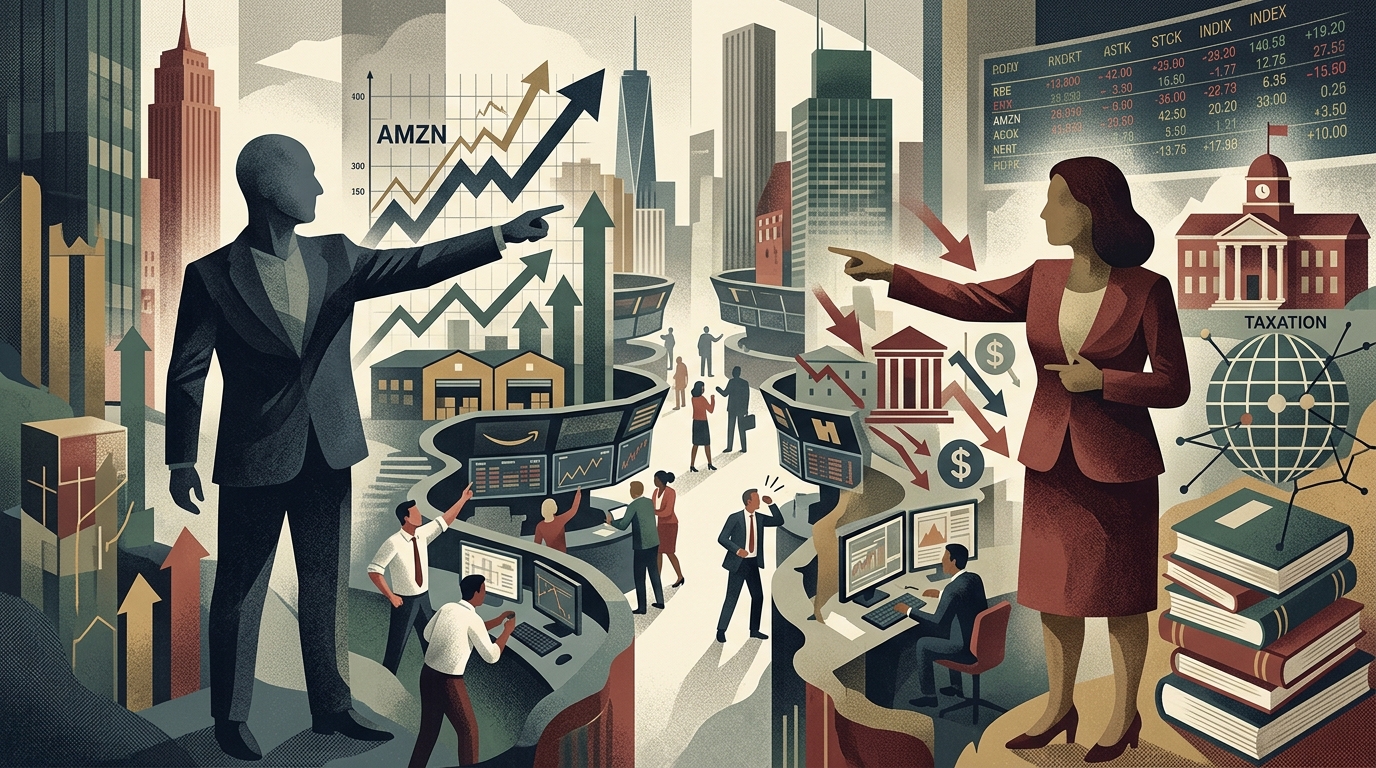
The recent digital skirmish between Jeff Bezos, the billionaire founder of Amazon, and Zohran Mamdani, a socialist state assemblyman and New York City mayoral candidate, was more than just a Twitter spat. It serves as a concentrated expression of a profound ideological rift in modern American society: the clash between hyper-efficient corporate logistics and the cumbersome, yet vital, machinery of public administration.
The 'Six Weeks' Analogy: Critiquing the State Machine
The controversy ignited when Mamdani posted a proposal to increase taxes on New York's wealthiest residents to fund public schools and infrastructure. Bezos, in a rare public intervention regarding local politics, responded with a sharp comparison: "If Amazon functioned with the same efficiency as New York City public schools, your packages would arrive in six weeks." This statement acted as a catalyst for a broader debate on whether public goods can—or should—be evaluated through the lens of market efficiency.
Bezos argued that the issue isn't a lack of funding, but rather the mismanagement and bureaucracy that stifle innovation in education. Conversely, Mamdani retorted that Amazon delivers packages quickly only because it "exploits its workers," whereas schools must manage human souls and social inequalities, not just cardboard boxes. This exchange highlights the divide between Silicon Valley's belief in data-driven problem-solving and the progressive left's view of state intervention and wealth redistribution as the primary remedies for social ills.
The 'Amazonification' of Public Services: Model or Nightmare?
Bezos's critique taps into a genuine sense of frustration among citizens regarding the quality of public services. In New York City, the spending per student is among the highest in the world, yet standardized test results often remain stagnant. The Amazon founder indirectly suggests that the principles of "customer obsession" and operational excellence could transform education. However, critics point out that a school is not a fulfillment center. NYC schools serve children from immigrant families, students facing food insecurity, and those with special needs. "Efficiency" in this context is not measured by delivery times, but by social integration and psychological support.
"Education is not a product delivered to your doorstep. It is a collective investment in the future that cannot be governed by the laws of logistics," stated a representative from the teachers' union.
On the other side, free-market advocates argue that the influx of private capital and the adoption of private-sector management models (such as charter schools) are the only ways to break the monopoly of failure. Bezos, through his own "Bezos Academy" preschools, is attempting to prove his model works by providing free, high-quality early education to low-income communities using his specific management philosophies.
Taxation and the Social Contract in the 21st Century
The second pillar of this conflict concerns taxation. Mamdani and the "Tax the Rich" movement argue that the immense accumulation of wealth by individuals like Bezos deprives the public coffers of the resources needed to improve schools. Amazon has been repeatedly accused of using legal but ethically questionable accounting maneuvers to minimize its tax burden. Bezos, however, maintains that his company creates millions of jobs and invests billions in infrastructure, providing a greater multiplier effect than simple taxation.
This debate brings to the surface a fundamental question: What is the role of a billionaire in a democracy? Are they visionaries showing the way toward efficiency, or "robber barons" undermining public institutions to protect their own interests? New York City, as the global capital of finance, is the perfect stage for this battle. The outcome of Mamdani's political career and Bezos's continued involvement in public discourse will largely determine whether the future of public administration remains truly "public" or evolves into a high-speed subscription service.
Conclusions and Future Outlook
The Bezos-Mamdani feud is a reminder that technology and wealth do not exist in a vacuum. As AI and automation reshape the global economy, the need for a functional educational system becomes more urgent than ever. Whether one agrees with Bezos regarding bureaucracy or with Mamdani regarding social justice, it is clear that the status quo is failing. The solution likely lies in the middle: adopting technological innovation to improve services without sacrificing the human-centric nature of education at the altar of speed.