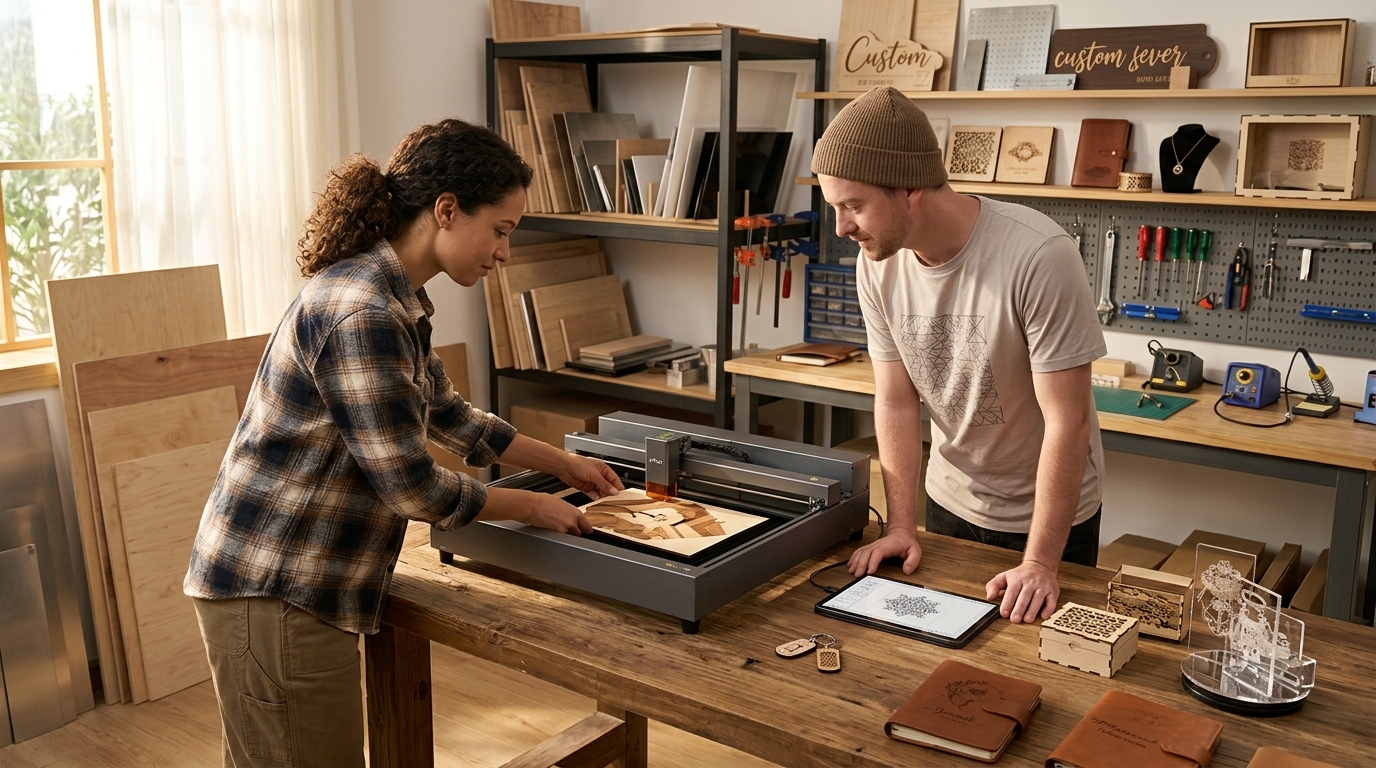
At the dawn of the third decade of the 21st century, the concept of the "factory" is undergoing a radical transformation. It is no longer confined to massive industrial facilities on the other side of the world; instead, it is shrinking to fit on a desktop. The recent announcement of the xTool M2 is not merely news for DIY enthusiasts; it is a signal of the further convergence between digital design and physical manufacturing. The xTool M2 promises to bridge the gap between simple crafting and professional production, offering a modular platform that can print, cut, and engrave with precision that once required equipment costing thousands of dollars.
The Modular Nature of Creativity
The primary feature that sets the xTool M2 apart from its predecessors and competitors, such as Glowforge or Cricut, is its modular architecture. The device is not limited to a single function. At its core lies the ability to swap heads, with the most impressive addition being the CMYK inkjet printing head. This allows users to apply full-color designs directly onto materials like wood, fabric, leather, and paper before the laser head takes over to cut the shape with absolute precision.
This integration solves one of the biggest pain points for small-scale creators: alignment. Traditionally, if one wanted to create a colored wooden keychain, they would have to print the design on paper, glue it to the wood, and then attempt to cut it on the laser—often with disappointing results due to misalignment. The M2 promises an "all-in-one" solution where the software recognizes the material's position and executes both processes in a single workflow. This dramatically reduces waste and production time, elements that are critical for any small business.
The Creator Economy and the Etsy Effect
The rise of platforms like Etsy and Shopify has created a massive demand for personalized products. The xTool M2 targets exactly this audience. With the ability to process a wide range of materials—from felt and acrylic to stainless steel (via engraving)—the machine becomes a miniature production hub. For an artist anywhere in the world, the ability to produce small batches of unique items without the overhead of mass production is liberating.
However, the challenge remains the cost of consumables. While the machine itself is positioned at an affordable price point for the "prosumer," CMYK inks and replacement laser heads represent the hidden costs that every aspiring entrepreneur must calculate. Furthermore, the xTool Creative Space software, though significantly improved, must compete with established standards like Adobe Illustrator or LightBurn, offering an experience that is both simple for the novice and powerful for the professional.
Technological Superiority and Safety
The M2 is not just about aesthetics; it incorporates advanced diode laser technology. While CO2 lasers remain the "heavy hitters" of the industry for cutting thick materials, xTool's diode technology has reached power levels (up to 40W in some configurations) that allow for cutting 10-15mm thick wood in a single pass. The addition of color printing on top of this power makes the M2 a hybrid tool with no direct rival in its category.
Safety is another pillar in which the company is investing. Lasers are dangerous tools, and their use in a home environment requires strict protocols. The M2 features a fully enclosed housing with laser-light filtering and ventilation systems to remove fumes. This is particularly important when processing materials that release toxic gases during combustion, such as certain types of plastics or treated wood. xTool seems to understand that for desktop manufacturing to go mainstream, the device must be as safe as an office printer.
Conclusion: The Future of Local Production
The xTool M2 represents a shift towards decentralized production. As global supply chains become more volatile and consumers seek authenticity, tools like this enable value creation at a local level. This is not just a "toy" for hobbyists, but a serious micro-manufacturing tool. Its success will be judged by its durability over time and the support of the creator community, but the vision is clear: the factory of the future is already here, and it fits on your desk.