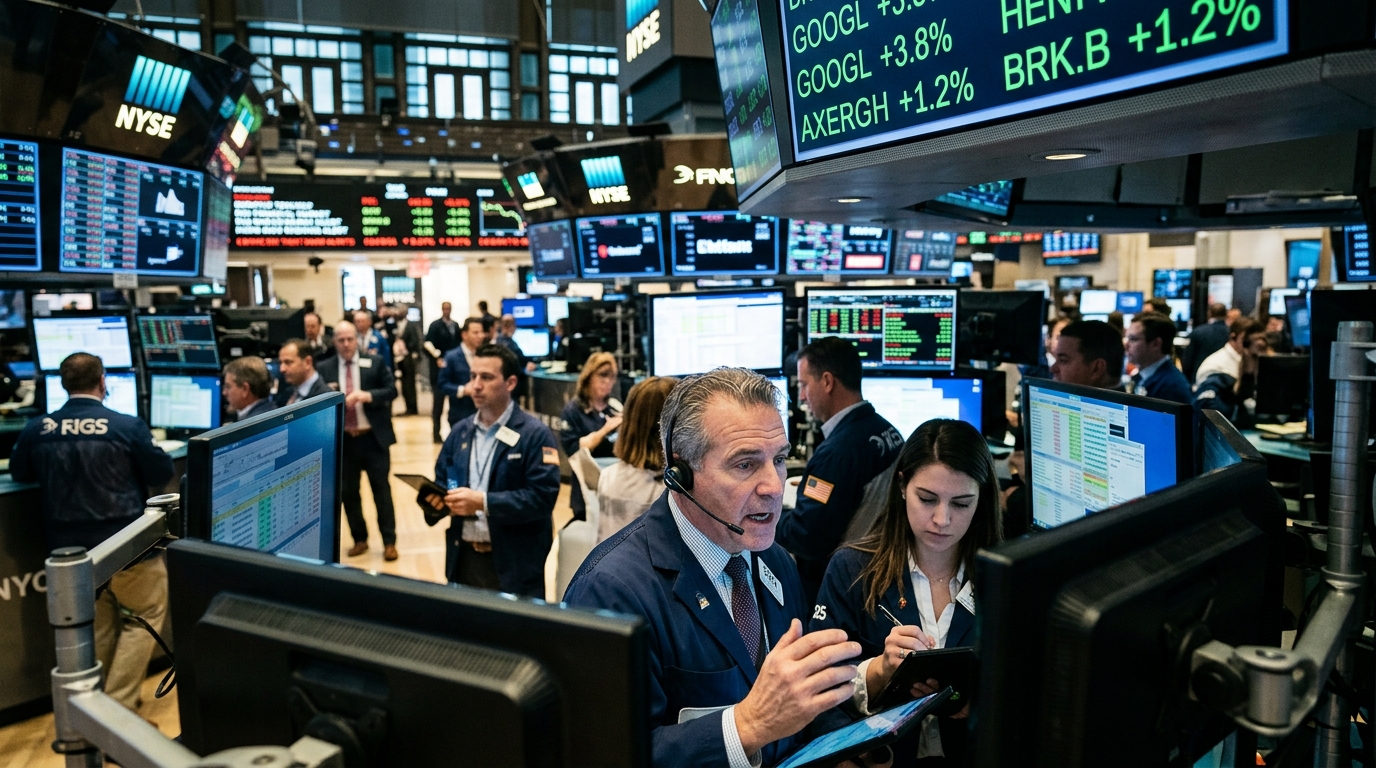
In a move that reverberated across global financial markets, Berkshire Hathaway, the investment powerhouse led by Warren Buffett and his successor Greg Abel, announced an additional $10 billion stake in Alphabet, Google’s parent company. This maneuver, occurring at a time when debates over an 'AI bubble' are intensifying, serves as a potent vote of confidence not just for Alphabet, but for the long-term viability of the AI ecosystem as a primary driver of global wealth.
The Evolution of Value Investing
For decades, Warren Buffett famously avoided the technology sector, citing the lack of a 'moat'—a sustainable competitive advantage that protects long-term profits. However, the shift that began with Apple has now culminated with Alphabet. By mid-2026, Berkshire appears to view Alphabet not as a speculative software firm, but as a foundational infrastructure of the modern economy, akin to the railroads or energy utilities that the 'Oracle of Omaha' has traditionally favored.
This investment underscores the conviction that Alphabet has successfully integrated artificial intelligence into its core revenue streams. With the Gemini models now dominating enterprise solutions and Google Search remaining the world’s primary data well, Alphabet possesses what Buffett values most: the ability to generate massive free cash flow while reinvesting in technologies that are nearly impossible for smaller competitors to replicate due to the prohibitive cost of compute and specialized hardware.
AI as the New Digital Utility
Analysts suggest that Berkshire sees Alphabet as a 'digital utility.' In a world where productivity is increasingly tied to algorithmic efficiency and data processing, Alphabet controls the pipelines through which information flows. The recent expansion of Google’s data centers across Europe and Asia, coupled with its leadership in quantum computing, creates an ecosystem that enterprises find nearly impossible to exit.
- Google Cloud’s dominance in securing multi-billion dollar government contracts.
- The integration of AI into YouTube, which boosted ad revenue by 15% in the last fiscal year.
- Strategic partnerships with semiconductor giants to develop proprietary Tensor Processing Units (TPUs).
These factors position Alphabet as a safe harbor in a volatile geopolitical climate. Despite ongoing antitrust pressures from the EU and the US, Berkshire is betting that Alphabet is both 'too big to fail' and too essential to be dismantled in a way that would destroy its underlying value.
Market Implications and the Competitive Landscape
This move is expected to force other institutional investors to re-evaluate their positions. If Berkshire, known for its conservative and meticulous approach, believes Alphabet at its current valuation represents a significant opportunity, it suggests the market may still be underestimating the long-term compounding returns of AI infrastructure. However, critics warn that this concentration of capital into a handful of tech giants creates systemic risks.
"Artificial intelligence is no longer a promise of the future; it is the engine of the present. Whoever controls the infrastructure controls the economy," noted a senior Wall Street strategist.
In conclusion, Berkshire Hathaway is not merely buying shares; it is securing a stake in the future of human intelligence and digital governance. For Alphabet, Buffett’s backing is the ultimate validation that its transition from a search engine to an AI-first sovereign entity has been successfully executed.