In January 2024, a landmark report by Cognizant sent shockwaves through the corporate world by predicting that 90% of US jobs would be disrupted by Generative AI by 2032. Today, on June 1, 2026, we find ourselves living in that reality six years ahead of schedule. The “Great Disruption” is no longer a distant forecast; it is the current state of the global economy, with AI permeating sectors that were once considered untouchable by digital automation.
The Collapse of the Timeline
The speed at which AI evolved from simple text generation to autonomous agents (Agentic AI) has caught even the most optimistic analysts off guard. Cognizant’s original estimate assumed a gradual adoption curve, allowing businesses and employees time to pivot. However, the combination of plummeting compute costs and a corporate obsession with hyper-efficiency led to a violent acceleration.
Ollie O’Donoghue, Head of Research at Cognizant, notes that the very definition of job security has been rewritten. “It’s no longer about whether AI will replace a human, but how AI decomposes every job into its constituent parts,” he says. Current data suggests that while about 9% of the workforce faces total displacement, the remaining 91% are seeing their roles so fundamentally altered that their previous training is becoming obsolete.
The Plumber’s Dilemma: The End of Manual Immunity
Perhaps the most startling revelation of 2026 is the impact of AI on blue-collar trades. For years, the prevailing wisdom held that jobs requiring physical dexterity and on-site problem-solving—like plumbing or electrical work—would be the final frontier for automation. This myth has been shattered.
“The plumber still fixes the pipe, but AI is now the one doing the inspection and the diagnosis,” O’Donoghue explains.
Using advanced IoT sensors, computer-vision-equipped drones, and predictive algorithms, maintenance firms can now identify a leak before a drop of water even hits the floor. AI analyzes acoustic patterns in pipes or pressure fluctuations to issue a precise work order. Consequently, the “master tradesman,” once paid for their intuition and diagnostic expertise, is being transformed into a “task executor” following algorithmic instructions. The value has shifted from the *brain* (now AI) to the *hands*, and historical economic trends show that manual execution is consistently compensated at lower rates than diagnostic expertise.
Economic Aftershocks and the New Order
Reaching Cognizant’s 2032 milestone in 2026 has sent ripples through global markets. While global productivity has surged by 25% over the last 24 months, the distribution of this wealth remains deeply skewed. Companies that aggressively integrated AI early on are seeing record margins, while the middle class faces an existential identity crisis.
- Deskilling: AI is a great leveler. A novice equipped with an AI diagnostic tool can perform nearly as well as a veteran, eroding the wage premium traditionally associated with years of experience.
- Knowledge Automation: Lawyers, financial analysts, and software engineers now see 70-80% of their workload handled by autonomous agents in seconds.
- New Roles: While positions like “AI Experience Designers” and “Algorithmic Ethics Overseers” have emerged, they are high-skill niches that do not absorb the volume of workers being displaced from traditional sectors.
Conclusion: The Need for a New Social Contract
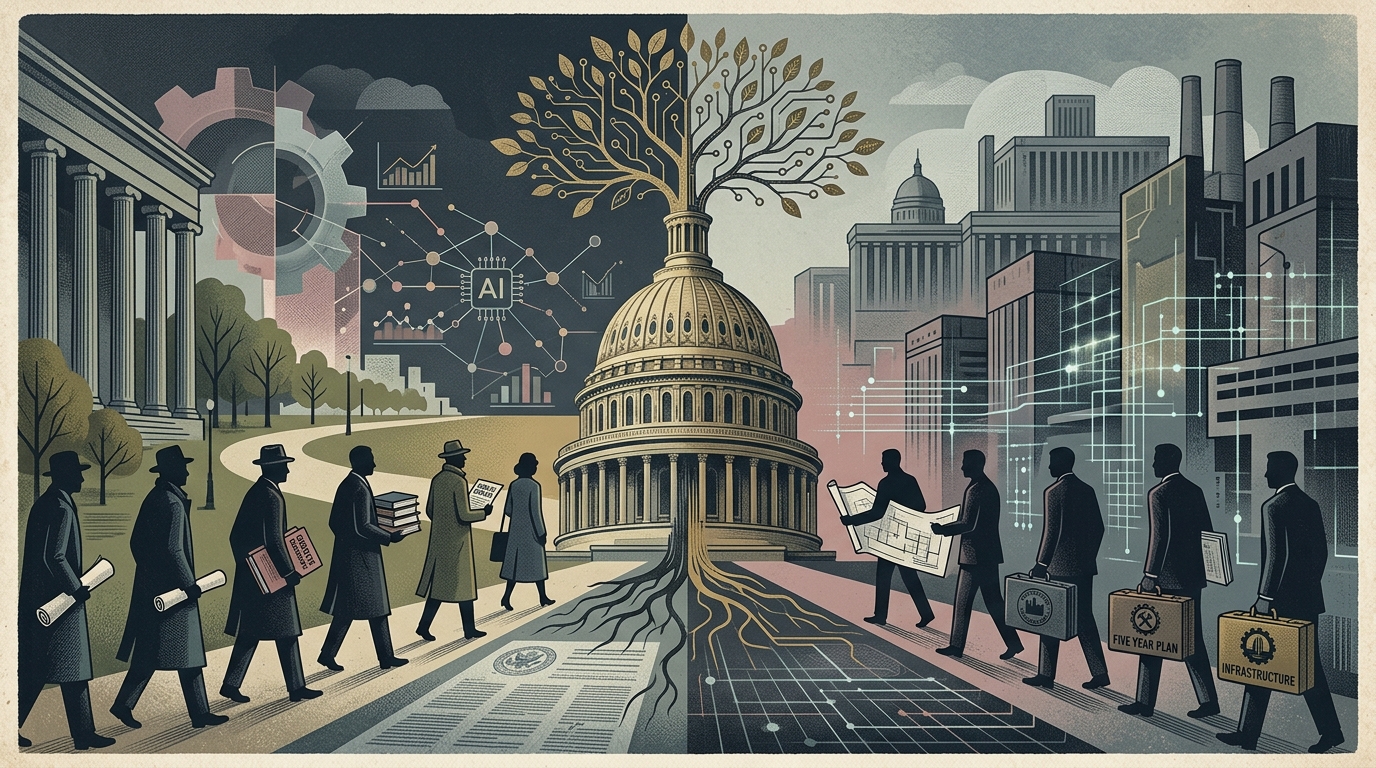
This acceleration is forcing governments to rethink education and social safety nets. In the EU, debates are intensifying over an “Automation Tax” to fund universal retraining programs. Cognizant’s prediction wasn’t just a forecast; it was a warning that went largely unheeded. As we navigate 2026, it is clear that in the age of AI, adaptability is no longer a competitive advantage—it is a baseline requirement for survival in a world where ‘nobody is safe’ from the reach of the machine.