In the political landscape of the United States in 2026, Artificial Intelligence (AI) has shifted from a futuristic vision to a daily economic reality. However, the legislative response remains agonizingly slow or focused on the wrong targets. Amidst this inertia, Vermont Senator Bernie Sanders remains the lone voice—though technically an Independent caucusing with the Democrats—who insists on framing the AI issue as a matter of class struggle and workers' rights.
Sanders' approach is not about the "existential threat" of a super-intelligent machine that could wipe out humanity, a topic many of his colleagues prefer because it doesn't infringe upon corporate interests. Instead, Sanders focuses on the "here and now" danger: the replacement of workers, the suppression of wages, and algorithmic surveillance in the workplace.
The Workplace Technology Accountability Act
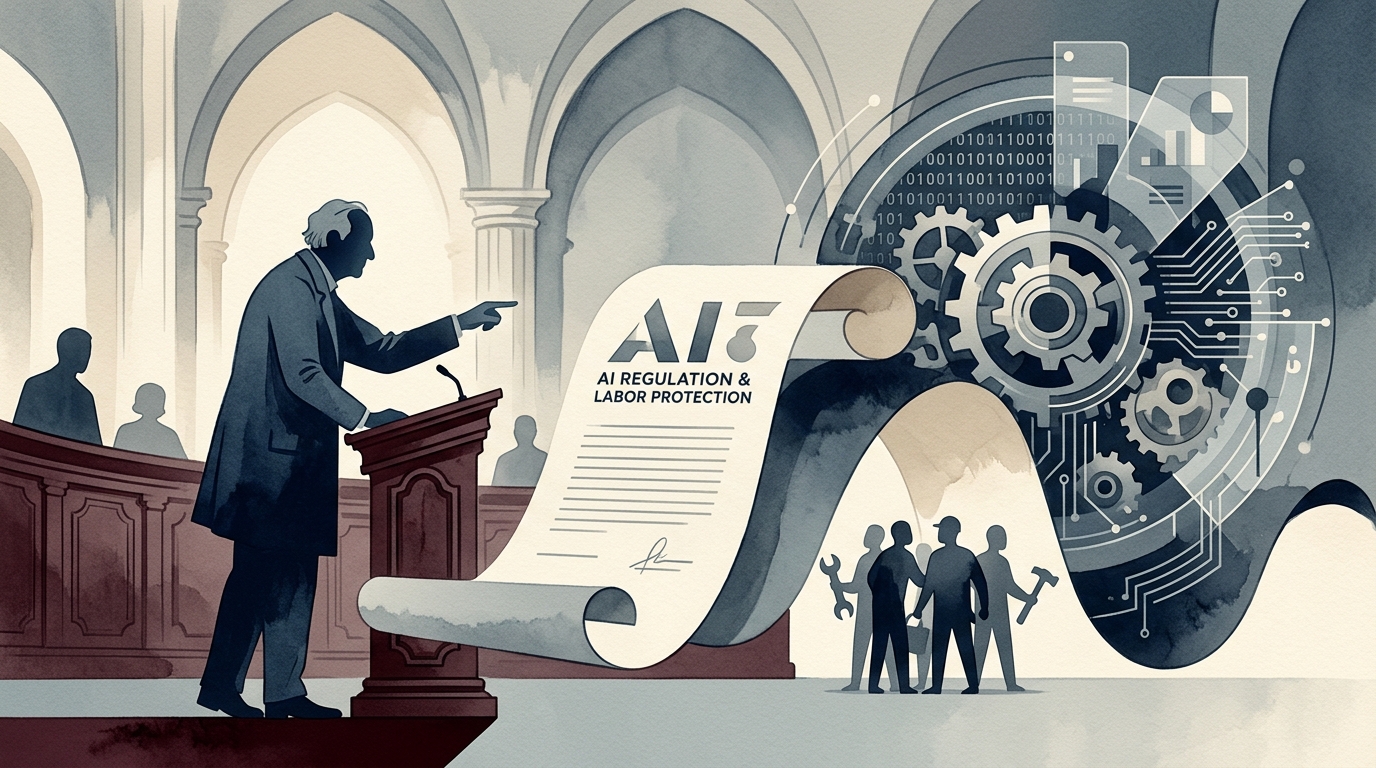
The centerpiece of Sanders' legislative push is the "Workplace Technology Accountability Act." This is a bill that seeks to place strict limits on how employers use AI to monitor, evaluate, and ultimately fire workers. According to Sanders, using algorithms to make life-altering decisions for people without any human intervention or transparency is a form of modern tyranny.
- Limiting real-time electronic monitoring of employees.
- Requiring impact assessments before implementing new AI systems.
- Ensuring that increased productivity from AI translates into higher wages and fewer working hours.
Sanders argues that if machines are going to do our work, then workers should benefit from that wealth, rather than being driven into unemployment and poverty. His proposal for a 32-hour work week with no loss in pay is directly linked to the AI revolution.
Democratic Silence and Corporate Influence
It is noteworthy that, despite their rhetoric about protecting the middle class, many Democratic lawmakers avoid supporting Sanders' radical proposals. Gizmodo and other analysts point out that the close relationship between the Democratic Party and Silicon Valley creates a conflict of interest. Big Tech companies prefer regulation that focuses on "safety" and "ethics"—often vague concepts—rather than laws that would limit their profitability or empower unions.
"Artificial Intelligence is not a natural disaster. It is a choice by corporations on how to use technology. If that choice leads to the impoverishment of the working class, then the government must intervene," Sanders recently stated.
This stance puts him at odds with the Washington establishment, which seems to hope that the market will self-regulate. However, history has shown that without a strong legislative framework, technological revolutions tend to widen inequalities rather than bridge them.
Algorithmic Management: The New Frontier of Oppression
One of the most concerning phenomena Sanders examines is "algorithmic management." In sectors such as logistics, transportation, and customer service, workers no longer report to humans, but to software. This software determines their routes, break times, and even their termination if they fail to meet targets set by an opaque code.
Sanders warns that if rules are not set now, this model will expand across the entire economy. The battle for AI, for Sanders, is actually the age-old battle for control over the means of production, disguised in a modern cloak. His insistence on "governing" AI, rather than simply admiring or fearing it, makes him a unique, though often isolated, figure on Capitol Hill.