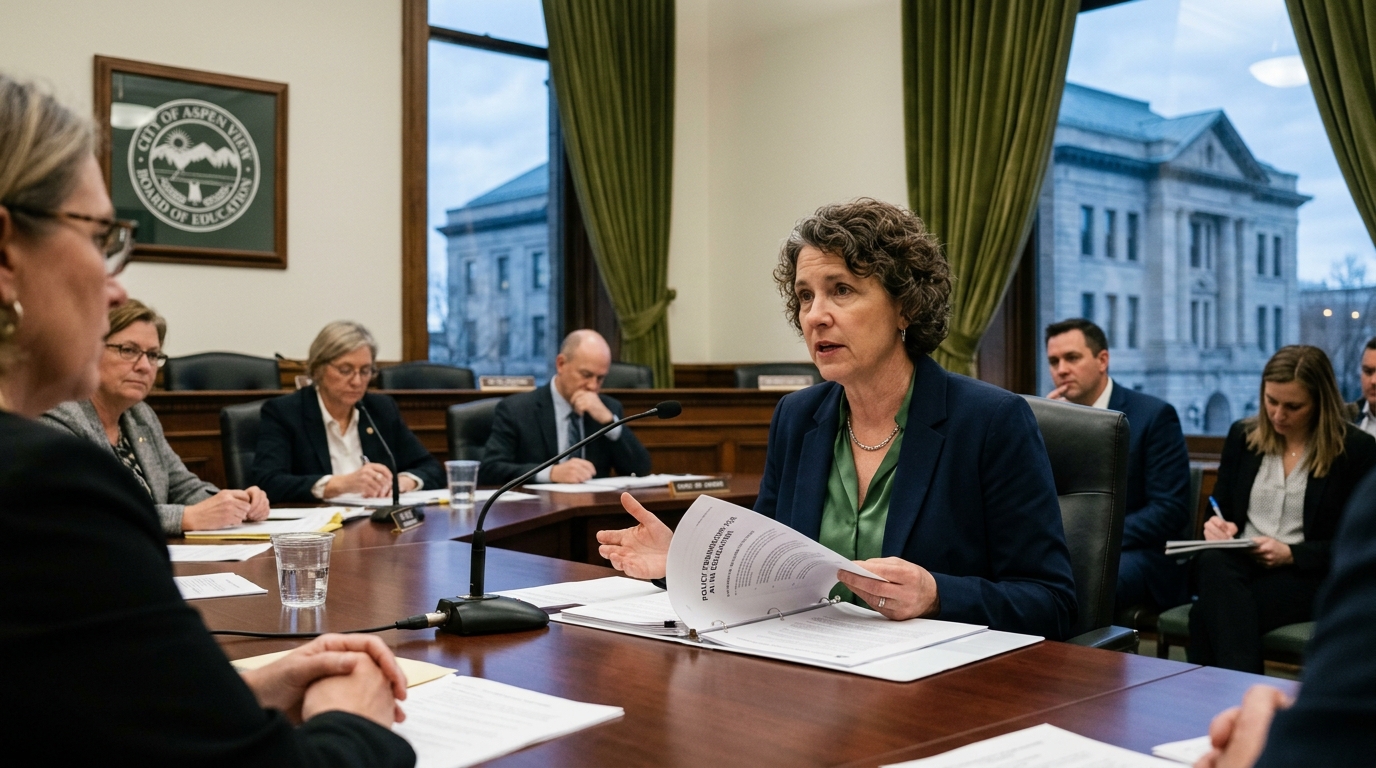
In an era where Artificial Intelligence (AI) is fundamentally reshaping every facet of human endeavor, the education sector finds itself at the epicenter of a historic transition. Aspen View Public Schools (AVPS) in Alberta, Canada, recognizing the inescapable presence of Large Language Models (LLMs) like ChatGPT, has moved forward with the implementation of Administrative Procedure 142 (AP 142). This policy framework does not seek to ban the technology but rather to integrate it safely and ethically into the educational process.
The Philosophy of Procedure 142
The new directive from AVPS serves as a response to the growing uncertainty prevailing in classrooms. Instead of a knee-jerk prohibition—which has historically proven ineffective, as seen with calculators or the internet—AVPS has opted for a 'pedagogy of integration.' AP 142 clearly defines that Artificial Intelligence should function as a supplement to, rather than a substitute for, human critical thinking.
The framework distinguishes between two primary categories of use: 'AI-assisted' work and 'AI-generated' work. The former is encouraged as a tool for brainstorming or structural refinement, while the latter is subject to strict limitations and requires full disclosure of sources. Transparency emerges as a central pillar of the new policy, mandating that students declare when and how they have utilized algorithmic tools.
Academic Integrity in the Digital Age
One of the most significant challenges AP 142 addresses is the redefinition of plagiarism. In the past, plagiarism was the copying of existing text. Today, AI produces original but non-human content. AVPS makes it clear that submitting work produced entirely by AI without proper authorization from the educator is considered academic misconduct. However, the emphasis is on education: teachers are encouraged to design assignments that require personal experience, local context, and critical analysis—elements that current machines struggle to reproduce authentically.
- Mandatory disclosure of AI usage in all written assignments.
- Training for educators in identifying synthetic content patterns.
- A shift toward assessing the learning process rather than just the final output.
Data Privacy and Ethical Risks
Beyond academic integrity, AP 142 places significant weight on data security. Students and parents are often unaware that interactions with AI tools are used to train future models, potentially compromising the privacy of minors. The AVPS policy prohibits the input of personal student information into public AI platforms and requires the district to use only tools that comply with Alberta’s Freedom of Information and Protection of Privacy Act (FOIP).
"Artificial Intelligence is not just a tool; it is a new form of literacy that our students must master to thrive in tomorrow's workforce," the district leadership emphasizes.
In conclusion, the move by Aspen View Public Schools serves as a roadmap for educational institutions worldwide. Rather than turning a blind eye to the technological storm, they are creating a protected environment where innovation goes hand-in-hand with ethical responsibility. The success of this initiative will depend on the continuous professional development of teachers and the system's ability to adapt to the rapid evolution of algorithms.