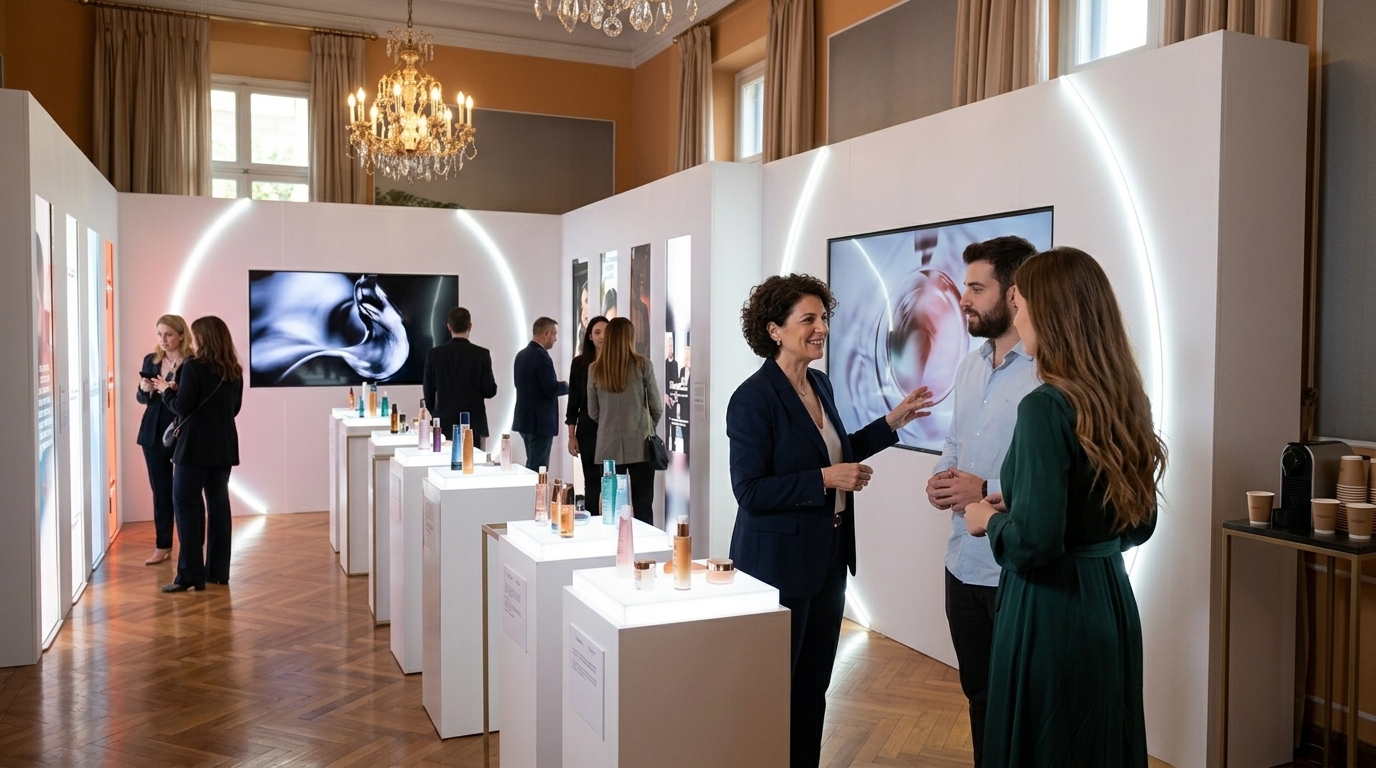
L’Oreal Hellas, marking 56 years of dynamic presence in the Greek market, is no longer just a cosmetics company; it has evolved into a leading player in the Beauty Tech sector. In its recent strategic presentation, the company unveiled a vision anchored in three core pillars: innovation, people, and sustainability. In an era where technology and environmental consciousness are reshaping consumer behavior, L’Oreal Hellas aims to lead this transition by combining scientific excellence with social responsibility.
The Digital Revolution and Beauty Tech
The concept of "Beauty Tech" lies at the heart of L’Oreal’s strategy. This is not merely a marketing buzzword but a profound structural shift in how the public interacts with beauty products. Through the use of Artificial Intelligence (AI) and Augmented Reality (AR), the company now offers personalized experiences that once seemed like science fiction. From apps that analyze skin conditions via a simple selfie to virtual make-up try-ons, technology allows consumers to make data-driven decisions rather than guesses.
In Greece, the adoption of these technologies has been rapid. L’Oreal Hellas consistently invests in digital tools that enhance both e-commerce and the physical retail experience. Using algorithms to predict trends and optimize the supply chain ensures that the company remains agile in a constantly changing economic environment. However, innovation is not limited to software; it extends to biotechnology and "Green Sciences," where research focuses on creating formulas that are both effective and eco-friendly.
Sustainability: The "L’Oreal for the Future" Program
Sustainability is no longer optional but a central element of business survival. The "L’Oreal for the Future" program sets ambitious targets for 2030, focusing on limiting the environmental footprint. L’Oreal Hellas has already made significant progress, with its facilities adopting circular economy practices and rational resource management. Reducing CO2 emissions, using recycled plastics in packaging, and protecting biodiversity are daily commitments.
Particular emphasis is placed on water management, a critical resource for Greece. The company promotes technologies that reduce water consumption both during the production process and during product use by consumers. Furthermore, the social dimension of sustainability is expressed through support programs for vulnerable social groups and the promotion of women's empowerment in science. The L’Oreal-UNESCO "For Women in Science" award is an institution that highlights the research work of Greek female scientists, strengthening the position of women in the academic and professional arenas.
The Human Element at the Core of Strategy
Despite its technological prowess, L’Oreal Hellas recognizes that people remain the most important success factor. With a workforce characterized by diversity and expertise, the company invests in continuous training and skill development. In the new work environment, creativity and empathy are considered as vital as technical knowledge. The company culture encourages initiative and bottom-up innovation, allowing employees to co-shape the future of beauty.
L’Oreal's leading position in the Greek market is no accident. It is the result of a balanced approach that respects a 56-year tradition while daring to experiment with tomorrow. The company's ability to adapt to local specificities while maintaining global quality standards makes it a benchmark for Greek business. As we head toward the end of the decade, the challenge will be to maintain this balance in a world that demands increasing transparency and ethical responsibility.
- Focus on Beauty Tech using AI for personalized solutions.
- Commitment to 2030 through the sustainability program.
- Continuous investment in human capital and corporate culture.
- Strengthening female presence in science and research.