In the ever-evolving world of technology, history tends to repeat itself in an almost ritualistic fashion. Every time Apple redefines the laptop category—as it did with the recent launch of the MacBook Neo—the rest of the industry reacts with a mixture of awe and aggression. Today, in mid-2026, we find ourselves at the heart of this reaction. Dell, Microsoft, HP, and Lenovo have all aimed their arrows at Cupertino, unveiling machines that promise to dethrone the Neo. However, a deeper analysis reveals that the road to the top is paved not just with powerful hardware, but with a philosophy that many PC manufacturers still struggle to adopt.
The ARM Revolution and the PC Response
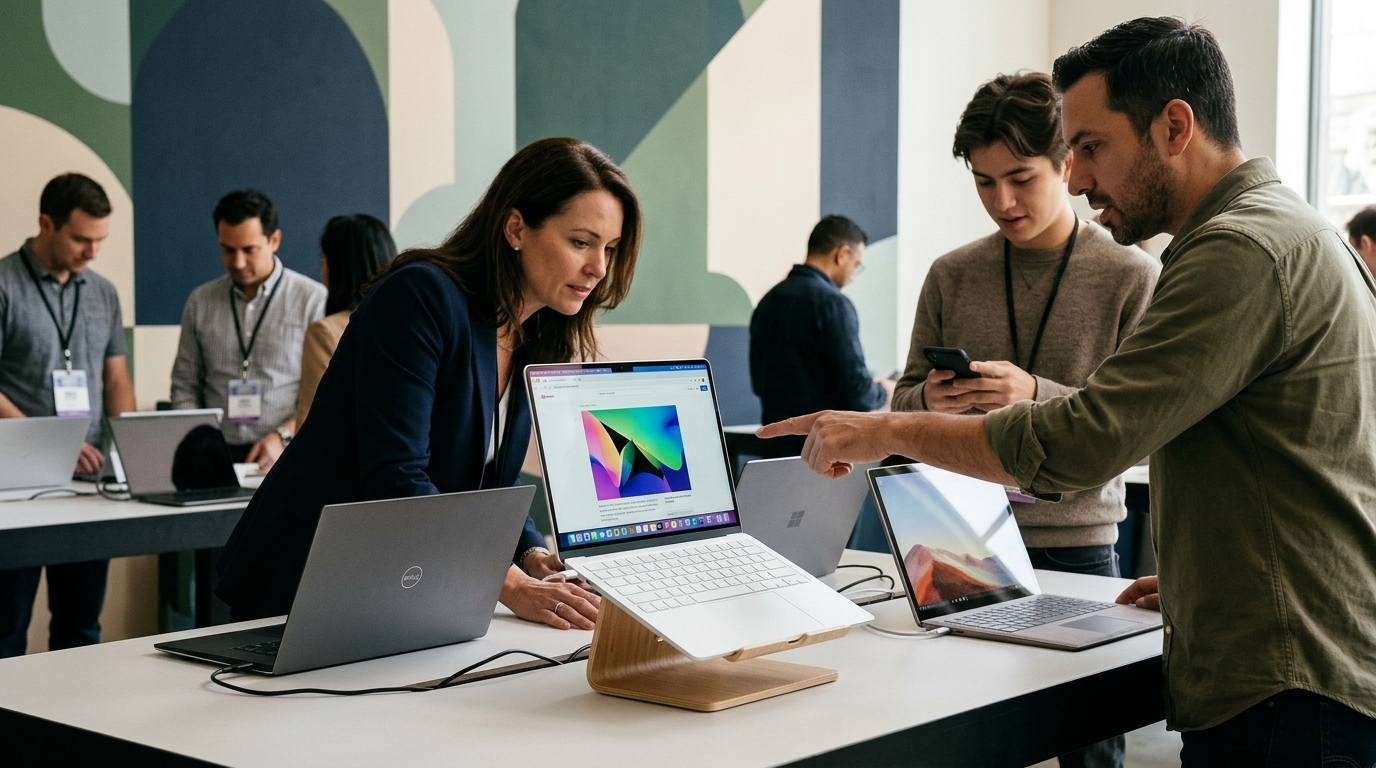
The MacBook Neo wasn't just a processor upgrade; it was the culmination of Apple’s vision for a computer that operates more like an iPhone than a traditional PC—instant responsiveness, silent operation, and a battery that seems to defy the laws of physics. The Windows side’s response has largely relied on the new generation of ARM processors from Qualcomm and Intel, which finally offer the performance-per-watt that the modern user demands. Dell, with its new XPS line, attempted to mimic the Neo's aesthetic, adopting minimalist lines and a seamless glass surface for the trackpad. But as many analysts point out, exterior looks are only half the battle.
The problem for PC manufacturers remains fragmentation. While Apple controls the chip, the operating system, and the chassis, Microsoft must collaborate with dozens of hardware partners. This creates a gap in the user experience. For example, while the MacBook Neo offers a seamless experience switching between AI applications thanks to its unified Neural Engine, on Windows, the experience depends on whether the specific manufacturer has optimized their drivers for that hardware. It is a classic case where the whole is less than the sum of its parts.
The AI PC Stakes
2026 is the year the term "AI PC" stopped being a marketing gimmick and became a reality. The MacBook Neo set the bar high by integrating local large language models (LLMs) that run directly on macOS, offering privacy and speed without needing a cloud connection. Microsoft responded with the evolution of Copilot+, embedding AI deeper into the Windows core. The difference, however, lies in implementation. New Neo competitors, like the Surface Laptop 7, try to outmuscle Apple in raw NPU (Neural Processing Unit) power. But history has taught us that users don't buy TOPS (Tera Operations Per Second); they buy solutions to problems.
- Dell is betting on design and a Tandem OLED display to attract content creators.
- Microsoft focuses on absolute ecosystem integration with Office and AI tools.
- Lenovo tries to bridge the gap with hybrid devices that transition from laptop to tablet with unprecedented ease.
Despite these efforts, the MacBook Neo remains the benchmark. The reason isn't just speed, but the sense of cohesion. When you open a Neo, everything works exactly as you expect. In the PC world, even in 2026, users often face software incompatibilities or unpredictable battery behavior during standby. These "small" issues are what keep Apple at the top of the premium category.
Learning the Wrong Lessons from Cupertino
One of the most interesting points in the Wired report is the observation that competitors often learn the wrong lessons from Apple. Instead of focusing on essential simplicity and reliability, many manufacturers copy Apple’s most controversial decisions: removing ports, making repairs difficult, and charging exorbitant prices for memory upgrades. The MacBook Neo succeeded not because it removed ports, but because its user experience was so superior that users were willing to make compromises. When a Dell or HP PC removes functionality without offering the corresponding software magic, the result is simply a less useful computer.
"The obsession with being a 'MacBook killer' often leads to products that lack their own identity," notes tech analyst Mark Sullivan. "The Neo wins because it knows what it wants to be. Everyone else is still trying to catch up."
In conclusion, the laptop wars of 2026 are no longer about Gigahertz or Gigabytes. They are about a device's ability to become an invisible partner in the user's daily life. The MacBook Neo has a massive lead in this area, not because it has the best hardware in the world, but because its hardware faithfully serves its software. Until PC manufacturers understand that experience is not a list of technical specifications, the Neo will continue to be the target that no one can quite hit.