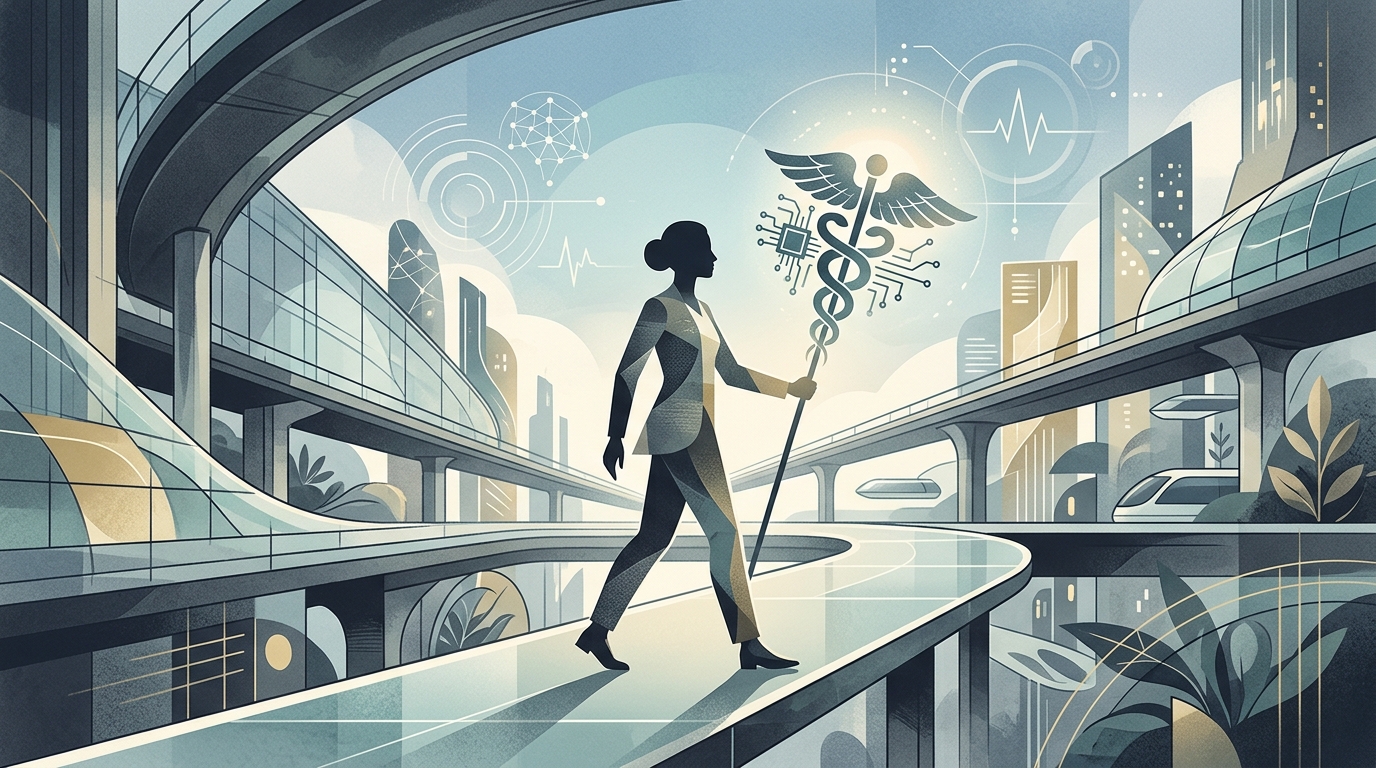
For decades, the public discourse surrounding automation was dominated by a grim prophecy: technology would eventually render human labor obsolete. However, as we navigate through 2026, the reality unfolding in high-skill workplaces—ranging from law and medicine to architecture and software engineering—tells a far more nuanced and optimistic story. As recently highlighted in a poignant analysis by the Wall Street Journal, Artificial Intelligence (AI) is not acting as a mere substitute, but as a formidable 'force multiplier' for those who already possess deep domain expertise.
The Shift from Execution to Orchestration
The fundamental shift we are witnessing is not the elimination of the need for experts, but a transformation of their core function. The seasoned professional is moving away from the 'manual labor of the mind'—data collection, drafting, or literature reviews—and is becoming an 'orchestrator' of cognitive processes. AI now handles approximately 80% of the preparatory workload, allowing the human professional to focus on the critical 20% that demands nuanced judgment, ethical weighing, and strategic foresight.
This 'symbiotic intelligence' allows a lawyer, for instance, to analyze thousands of pages of case law in seconds, identifying contradictions that would have taken a team of associates weeks to uncover. The result isn't a redundant lawyer, but one capable of providing significantly more complex and precise counsel, thereby elevating the overall quality of the professional service provided to the client.
Navigating the 'Jagged Frontier' of Productivity
One of the most compelling phenomena identified in academic research (notably by Harvard and MIT) is the 'Jagged Frontier.' AI is remarkably adept at certain complex tasks while failing spectacularly at others that seem deceptively simple. Today’s expert is defined by their ability to recognize exactly where this frontier lies. Expertise is no longer just about knowing the answer; it is about knowing how to validate the machine's output.
- Creative Amplification: AI facilitates rapid prototyping, enabling experts to iterate through more ideas in less time than ever before.
- Cognitive Offloading: By delegating repetitive tasks to the machine, professionals reduce mental fatigue and minimize human error in routine processes.
- Democratization of Complexity: Tools that once required specialized coding or statistical knowledge are now accessible via natural language prompts.
However, this evolution brings significant challenges. There is a tangible risk of 'cognitive atrophy,' where junior professionals, by over-relying on AI, might never develop the foundational understanding required to become experts themselves. Education and mentorship must adapt, teaching not just the mastery of tools, but the art of critical skepticism and rigorous verification.
Social and Professional Ethics in the AI Era
As AI makes expertise more efficient, profound questions arise regarding the value of human labor. If a task that once required ten hours is now completed in ten minutes, how should it be billed? The labor market is shifting toward a model where value is derived not from time spent, but from the accountability and validity of the final result. The human remains the ultimate guarantor—the 'ethical circuit breaker' against the hallucinations of the machine.
"AI will not replace doctors, but doctors who use AI will replace those who do not."
In conclusion, the AI era does not signal the end of human supremacy; it marks its renaissance. The ability to synthesize technological power with human experience, empathy, and context is the new superpower of the 21st century. Expertise is not dying; it is transforming into something more strategic, more creative, and ultimately, more human.