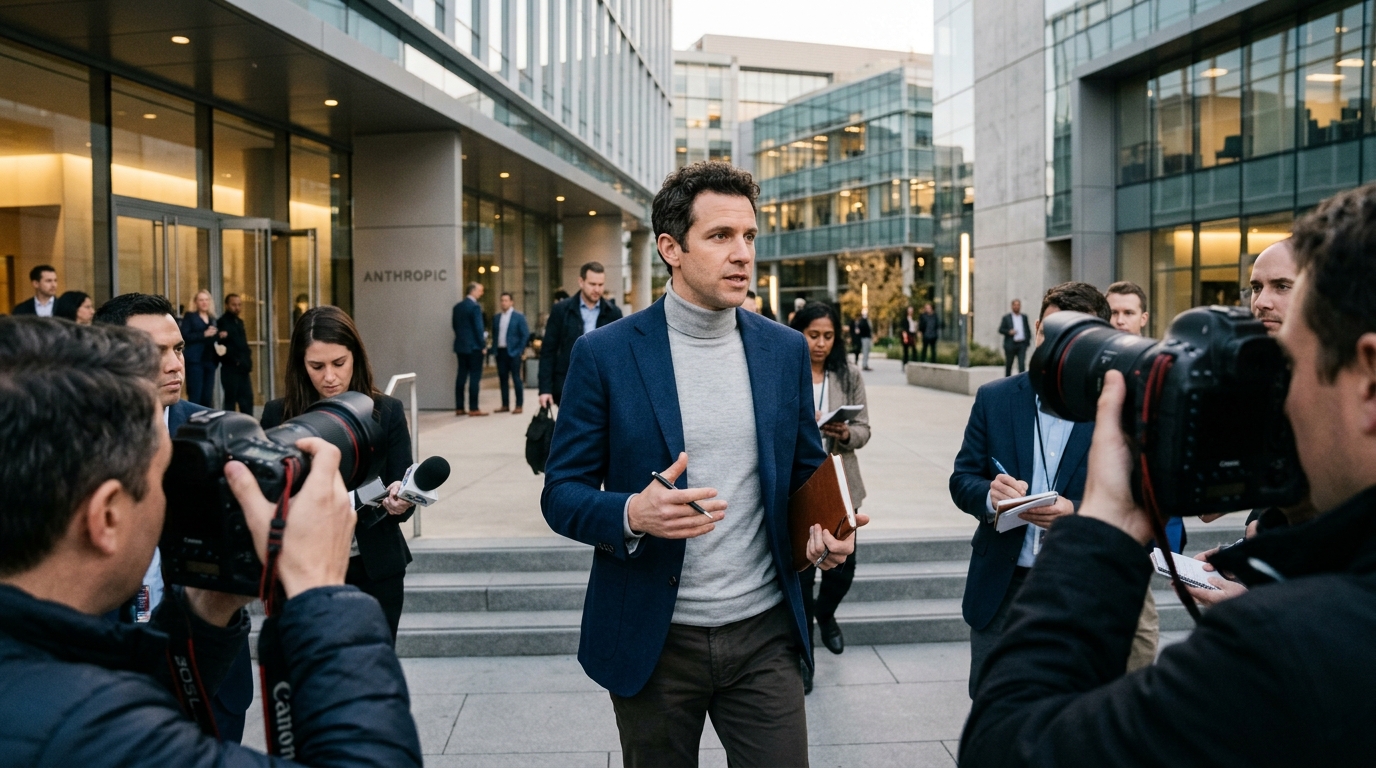
In a move poised to reshape the landscape of the technology industry, Anthropic, the AI research company founded by former OpenAI executives, has confidentially filed paperwork with the U.S. Securities and Exchange Commission (SEC) for an initial public offering (IPO). This news, arriving amid a period of significant market volatility, underscores the relentless momentum of generative artificial intelligence toward full-scale commercialization and the desperate need for massive capital to sustain competition with giants like Microsoft and Google.
The Shift from Safety to Scale: Anthropic's Evolution
Anthropic was founded in 2021 by siblings Dario and Daniela Amodei, who left OpenAI due to concerns over the company's increasing commercialization and its perceived drift from original safety principles. Anthropic branded itself as a "Public Benefit Corporation," emphasizing "Constitutional AI"—a method of training models based on a specific set of rules and values to prevent harmful outputs and ensure alignment with human interests.
However, the reality of developing frontier models, such as Claude 3.5 and its successors, requires billions of dollars in specialized hardware and electricity. The transition from a research-heavy lab to a publicly traded entity represents the final stage of this evolution. The move toward Wall Street indicates that even the most idealistic players in the AI space cannot escape the gravity of public capital markets. Anthropic’s core challenge will be maintaining its safety-first ethos while satisfying shareholder demands for aggressive growth and quarterly returns.
The Amazon and Google Proxy War
Anthropic's IPO is not just about its own balance sheet; it is a critical chapter in the broader cloud computing wars. Amazon and Google have poured billions into Anthropic, with Amazon serving as the company's primary cloud provider. A successful IPO would validate the strategies of these titans, who chose to back the primary rival to the Microsoft-supported OpenAI.
Analysts suggest that Anthropic's valuation in the public market could exceed $40 billion, depending on macroeconomic conditions at the time of the debut. This would provide early investors with a significant liquidity event but would also place the company under intense regulatory scrutiny. Both the European Union and the U.S. Federal Trade Commission are already closely monitoring the ties between Big Tech and AI startups, fearing the entrenchment of new monopolies through these "partnerships."
"Anthropic is trying to prove that you can be both ethical and immensely profitable. Wall Street, however, rarely shows patience for ethics when quarterly earnings miss expectations," noted a New York-based financial analyst.
Navigating the Regulatory and Financial Minefield
A confidential filing allows Anthropic to begin the IPO process without immediately disclosing its financial details to the public or its competitors. This strategy is common for high-growth tech firms looking to test investor appetite before a formal commitment. However, the eventual public disclosure will reveal, for the first time, the true cost of running and training the Claude models, as well as the actual revenue generated from enterprise subscriptions.
One of the most significant questions management will face during the investor roadshow is how its status as a Public Benefit Corporation (PBC) will influence decision-making. If a conflict arises between the long-term safety of humanity and the short-term maximization of shareholder value, which path will the board take? The answer to this question will define not only the company's future but also the standard for the entire AI industry.
The Future of the AI Arms Race
Anthropic’s move comes at a time when OpenAI remains private, maintaining a complex non-profit/for-profit hybrid structure that makes a traditional IPO difficult in the near term. This gives Anthropic a "first-mover" advantage in the public markets for a pure-play AI company of this scale. If the IPO is perceived as a success, it will likely pave the way for other industry players, such as Mistral or Cohere, to seek public funding.
In conclusion, Anthropic is not just seeking capital; it is seeking legitimacy. In a world increasingly anxious about the implications of AI, becoming a public company with mandates for transparency and accountability could be its strongest asset. But the price of transparency is the unrelenting pressure for results—a pressure that has bent many visionaries before. Wall Street is preparing to welcome artificial intelligence into its ranks, and the outcome of this union will dictate the trajectory of technology for the next decade.