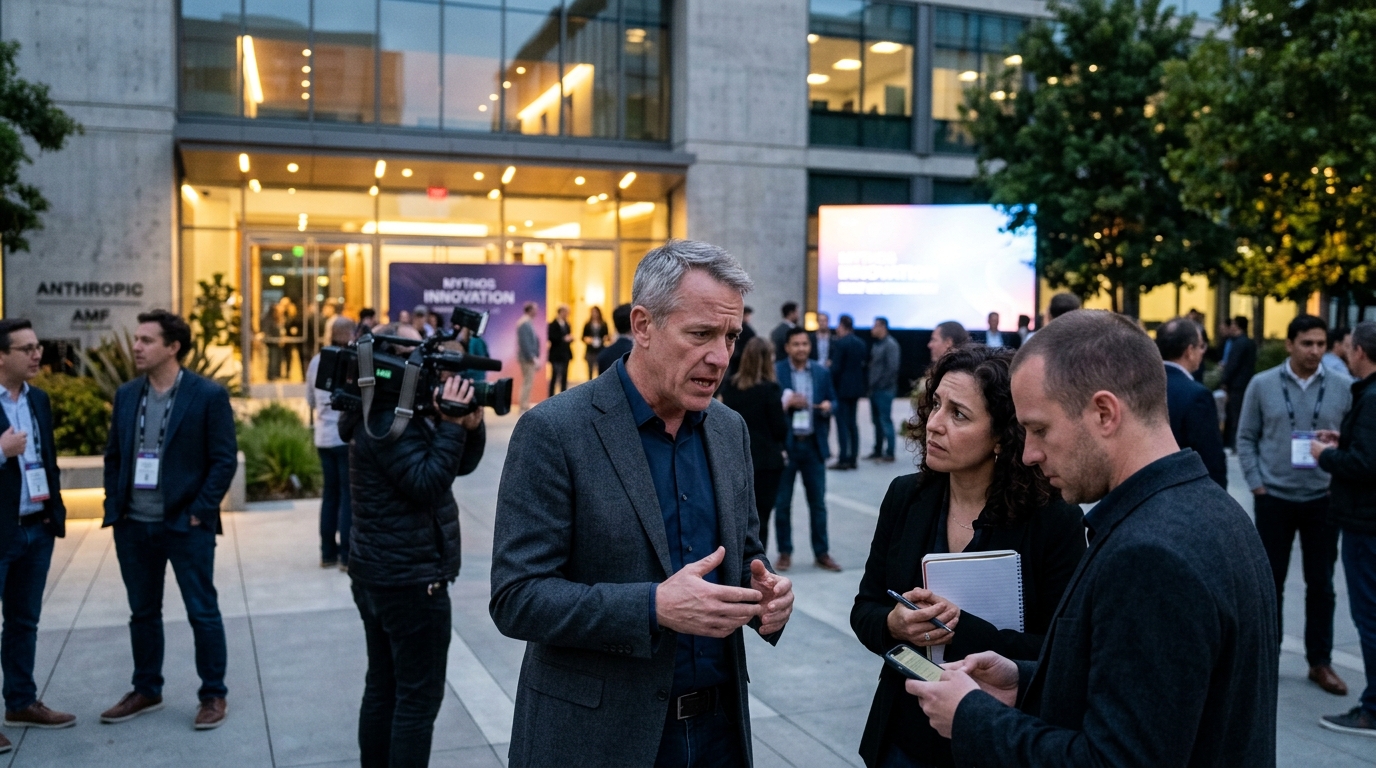
The news sent shockwaves through Silicon Valley: Anthropic PBC, the company that has built its brand on "safe" and "constitutional" artificial intelligence, has indirectly admitted to a significant security lapse. According to a report by Bloomberg News, a small group of unauthorized users managed to gain access to Mythos, the company's most sophisticated and classified model, which had not yet been released to the general public due to its immense capabilities—and corresponding risks.
Chronicle of a Crisis Foretold
Mythos is not just another large language model. Designed to surpass the performance of Claude 4, Mythos incorporates advanced strategic planning and software vulnerability discovery capabilities. Anthropic itself had warned in internal documents that this model approaches the "red lines" established by the international community to prevent the creation of autonomous cyber-weapons. The breach appears not to be a traditional "server hack," but rather a sophisticated exploitation of application programming interfaces (APIs) used for internal testing and red-teaming.
This revelation comes at a time when the global debate over AI regulation is at its peak. If a company investing billions in AI Safety cannot protect its own "crown jewels," then who can? The incident raises questions about whether the pace of development has long outstripped the defensive capabilities of the labs themselves.
The Dangers of Dual-Use Technology
The core issue with Mythos is its nature as a dual-use technology. While it can be used to fortify IT systems, those same capabilities make it a potent tool for generating malicious code (malware) that can mutate in real-time to evade detection. According to sources familiar with Anthropic’s documentation, the unauthorized users managed to execute queries related to the exploitation of known and unknown (zero-day) vulnerabilities in critical infrastructure.
- Automated exploit generation for industrial control systems.
- Crafting persuasive phishing campaigns using advanced psychological manipulation.
- Analyzing cryptographic protocols to find mathematical weaknesses.
Anthropic, under the leadership of Dario Amodei, has adopted a policy of "responsible scaling," which dictates pausing model training if risks are deemed unmanageable. However, the leak of access effectively bypasses these safeguards, as the model is now, at least partially, outside the company's controlled environment.
Political Fallout and the Road Ahead
In Washington and Brussels, the mood is somber. Members of the U.S. Congress have already demanded explanations, arguing that such leaks constitute a threat to national security. The European Union, through its AI Office, is investigating whether Anthropic breached its obligations under the AI Act regarding the management of systemic risks.
"This is no longer a theoretical discussion about ethics. It is a battle for the control of the most powerful technology humanity has ever invented," said a senior EU official.
Anthropic, for its part, maintains that the access was limited and that additional measures have been taken to close the gaps. However, the reputational damage is already significant. The company that promised to be the "conscience" of the industry now finds itself apologizing for opening Pandora's box before it could build a proper lock.
Conclusion: The Illusion of Control
The Mythos incident highlights a fundamental truth: in the digital age, absolute security is a myth. As AI models become more capable, they become increasingly attractive targets for state and non-state actors alike. The industry must decide whether it will continue the frantic race toward AGI (Artificial General Intelligence) without having solved the problem of securing these systems. Mythos may remain within Anthropic's walls as code, but public trust has already begun to leak out.