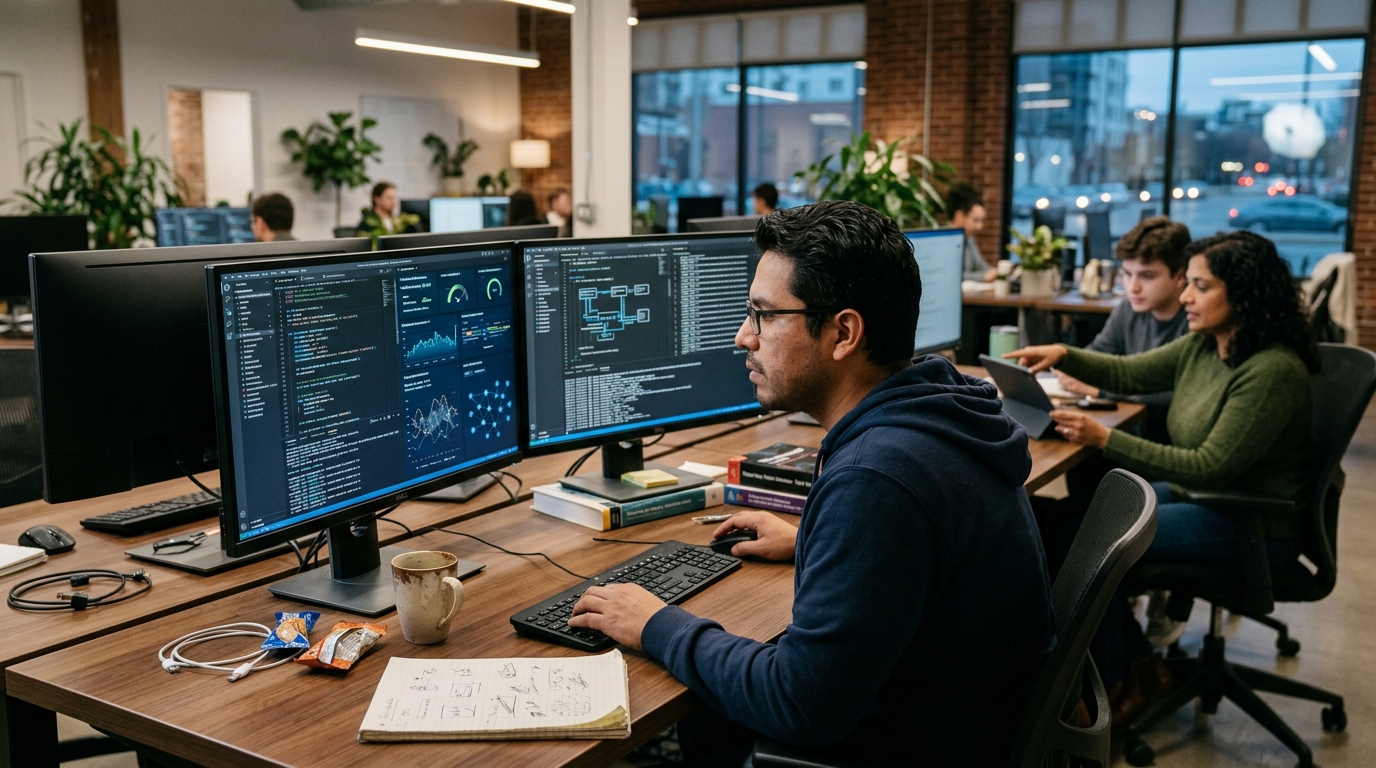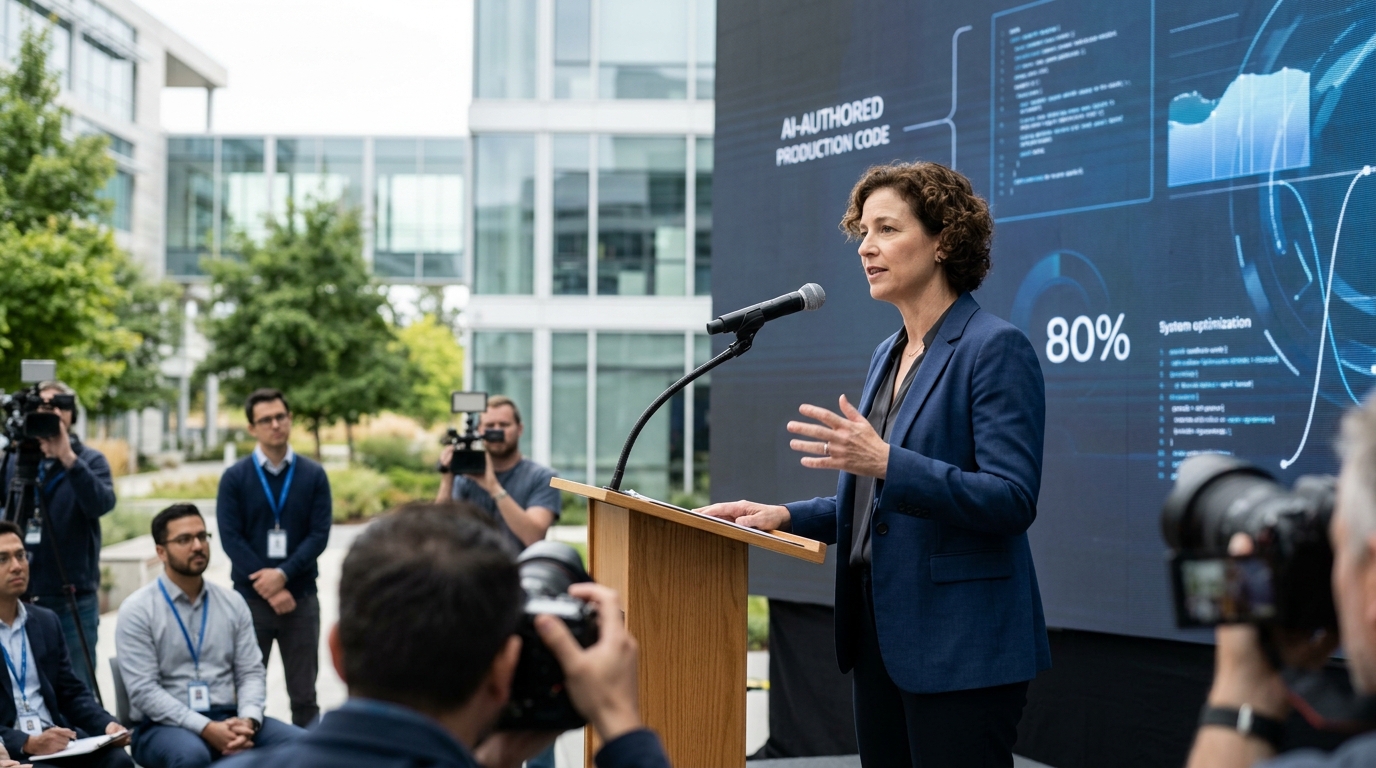
The news breaking from Anthropic’s San Francisco headquarters is more than just a technical report; it is the echo of a future that has arrived ahead of schedule. Dario Amodei, the company’s CEO, has confirmed that over 80% of the new code merged into Anthropic’s production codebase in May 2026 was not authored by human hands, but by Claude. This milestone marks a definitive transition from the era of "AI as a co-pilot" to the era of "AI as the primary creator."
The Self-Referential Nature of Technological Progress
The fact that one of the world’s leading AI labs relies on its own product to build its core infrastructure is the ultimate validation of "dogfooding." For Anthropic, this move wasn't merely a demonstration of power; it was a strategic necessity to maintain development velocity in a hyper-competitive landscape. Claude 4 (and its iterative versions) has demonstrated an unprecedented ability to grasp complex system architectures, reducing bugs and accelerating the CI/CD (Continuous Integration/Continuous Deployment) cycle by at least 40%.
However, this transition did not happen overnight. It required the construction of a rigorous oversight framework where human engineers shifted from being "code writers" to "system auditors and architects." Anthropic employs a multi-layered verification process: one Claude model writes the code, a second audits it for security vulnerabilities, and a human team provides the final approval for merging into the main branch.
How Enterprises Can Keep Up with the AI Shift
For traditional enterprises, the question is no longer "if" they should use AI in programming, but "how" to do so without losing control of their systems. Anthropic suggests three fundamental pillars for adopting this technology:
- Investment in AI-Native Workflows: Organizations must redesign their processes to match AI's speed. This includes automated testing suites capable of keeping pace with the sheer volume of AI-generated code.
- Upskilling the Workforce: Developers need training in "model steering" and risk analysis rather than just syntax and simple functions. The role is evolving toward high-level engineering.
- Governance and Transparency: Using AI for code generation carries risks of "technical debt" if documentation is neglected. Utilizing tools that capture the reasoning behind AI decisions is non-negotiable.
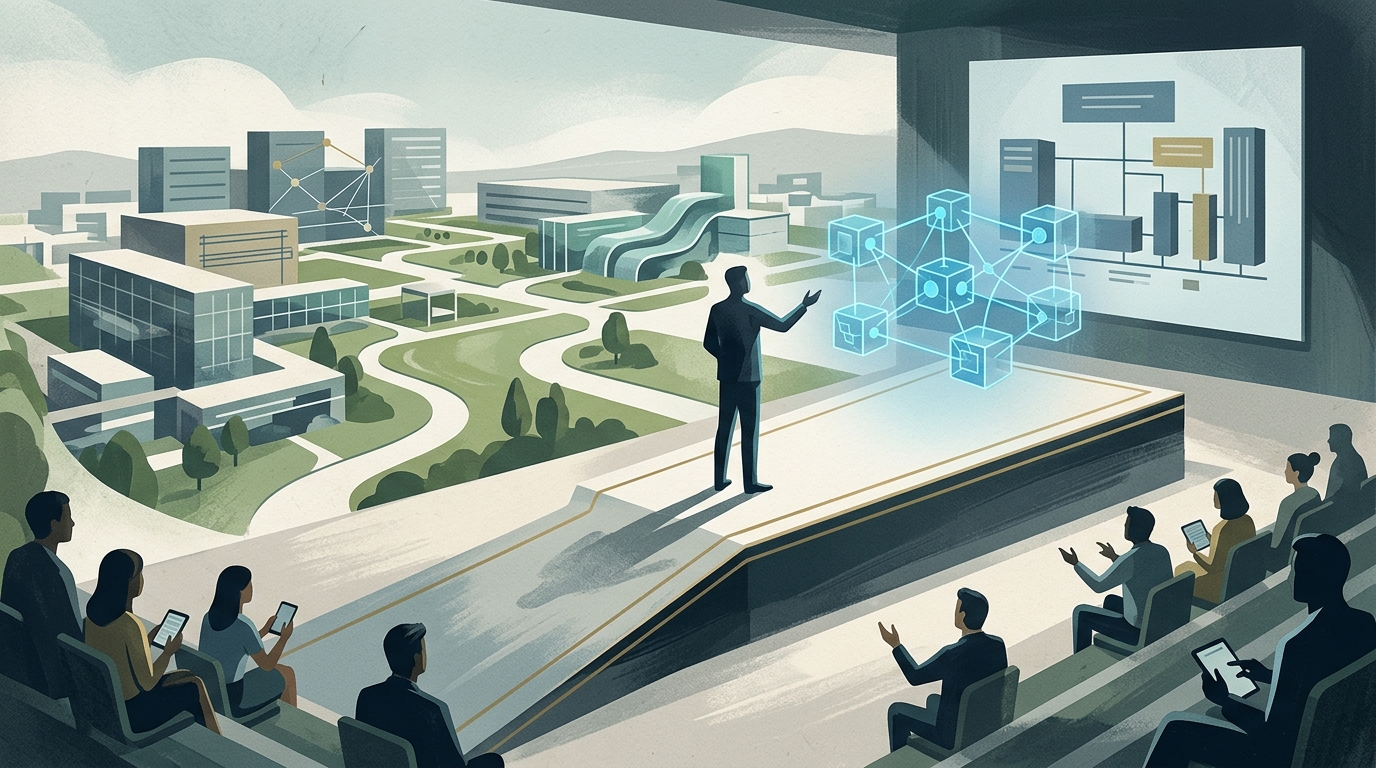
"We are no longer at the point where AI just helps us write code faster. We are at the point where AI understands the problem and designs the solution," the Anthropic report highlights.
The Challenge of Complexity and the Future of Engineering
The mass adoption of AI in coding brings a new challenge to the forefront: "system legibility." If 80% of a codebase is machine-written, there is a risk that human engineers might lose touch with the intricate details of how their software functions. This could lead to catastrophic difficulties during critical failures where human intuition and deep-system knowledge are still required.
From a global perspective, this shift is a double-edged sword. On one hand, companies can exponentially increase productivity with fewer resources. On the other, the value of "pure coding" as a commodity is plummeting. This forces the global labor market to pivot toward higher-value services such as strategic architecture, AI safety, and specialized cybersecurity.
In conclusion, Anthropic’s announcement serves as a wake-up call. The era of programming as a manual labor of the mind is drawing to a close. The new era demands a symbiotic relationship with machine intelligence, where human judgment remains the final bastion of quality, safety, and ethical responsibility. Enterprises that fail to adapt their engineering culture to this new reality risk becoming obsolete in a world where software is no longer written, but synthesized.