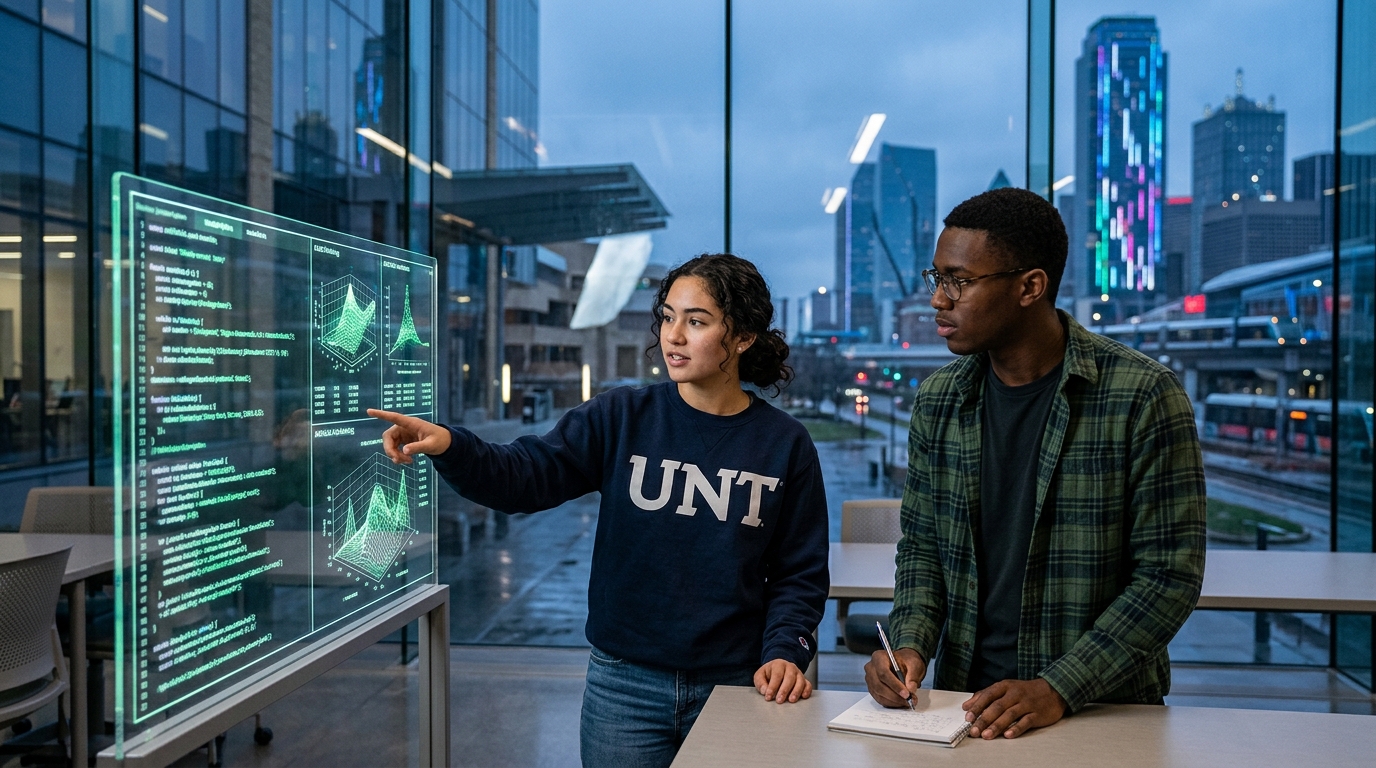
For decades, Artificial Intelligence (AI) was considered the "holy grail" of computer science, a field so complex it was reserved exclusively for PhD holders and researchers in secluded laboratories. However, 2026 marks a historic turning point. The University of North Texas (UNT), following in the footsteps of other pioneering institutions, has announced the launch of full undergraduate degree programs (Bachelor of Science) in Artificial Intelligence. This move is not merely a change in a degree title; it is a fundamental restructuring of how humanity prepares the next generation of workers for an economy built on algorithms.
From Specialization to Mass Education
The decision by UNT and other American educational institutions to offer AI degrees at the undergraduate level reflects the maturation of the technology. Until recently, a student had to complete a degree in Computer Science and then specialize in machine learning at the graduate level. Today, the need for skilled professionals is so urgent that the intermediate stage is increasingly viewed as a luxury of time. UNT's curriculum focuses on four core pillars: machine learning, natural language processing, computer vision, and robotics.
Academics argue that early exposure to AI principles allows for a deeper understanding of ethical and societal challenges. "We are no longer just teaching code," university sources suggest. "We are teaching how to build systems that make decisions, and that requires a multidisciplinary approach involving mathematics, statistics, and philosophy from day one." This approach aims to bridge the gap between theoretical science and practical application, creating "intelligence architects" rather than mere programmers.
Market Pressure and Global Competition
This movement does not occur in a vacuum. The demand for AI talent has skyrocketed, with tech companies offering six-figure salaries even to entry-level hires. Universities, often acting as pipelines for industry, are forced to adapt. UNT is located in a region (Texas) that is rapidly evolving into a major tech hub, rivaling Silicon Valley. By offering a specialized AI degree, the university attracts students who want to bypass general computer science and dive straight into the future of work.
"Artificial Intelligence is no longer a branch of Computer Science. It is the new Computer Science," state labor market analysts.
However, the speed at which these programs are being created raises questions about the quality of education. Can faculty keep pace with changes occurring weekly in the field of Large Language Models (LLMs)? The challenge for UNT will be maintaining a curriculum that isn't obsolete before the first cohort of students graduates in 2030.
Ethics and Social Responsibility in the Curriculum
One of the most interesting elements of these new degrees is the integration of AI Ethics. Unlike traditional computer science degrees, where ethics was often an elective, in UNT’s new programs, it is a structural component. Students are required to examine algorithmic bias, privacy protection, and the implications of automation on employment. This is critical, as these graduates will be the ones designing the systems that manage everything from healthcare to the administration of justice.
In conclusion, the initiative by UNT and other schools to offer a Bachelor’s in AI is a bold admission: Artificial Intelligence is now the infrastructure of our civilization. The success of these programs will be judged not only by the technical proficiency of the graduates but by their ability to navigate a world where the line between human and artificial intelligence is becoming increasingly blurred. Education is transforming, and with it, the very definition of what it means to be a scientist in the 21st century.