In the volatile landscape of 2026, cybersecurity is no longer a mere support function; it is the front line of an ongoing, invisible war. Recent analysis from CIO.com highlights a stark reality: traditional protection methods based on static signatures and human intervention are now hopelessly slow. The advent of "offensive AI" by malicious actors has forced enterprises to adopt similar weaponry just to survive.
Speed as the New Currency of Security
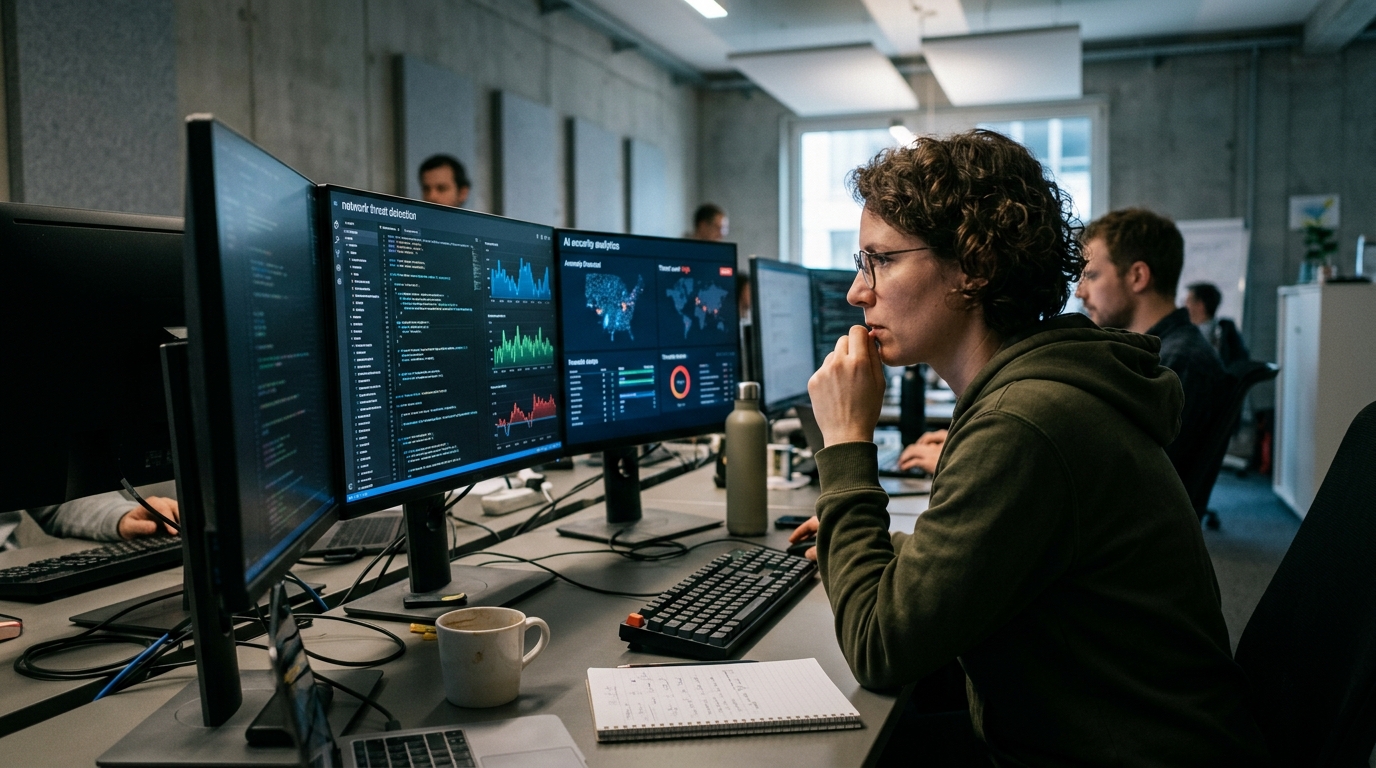
The primary argument for integrating AI into security is the drastic reduction in Mean Time to Respond (MTTR). In the past, a breach could go unnoticed for weeks. Today, with hackers utilizing automated tools, a company can lose control of its data within minutes. AI offers the capability for real-time anomaly detection, processing billions of signals that a human eye would take years to analyze.
AI-powered XDR (Extended Detection and Response) platforms do not just alert analysts. They now make autonomous decisions: isolating infected servers, closing communication ports, and revoking access rights before an attacker can move laterally through the network. This proactive stance is what separates a successful business from one that ends up in the headlines for the wrong reasons.
From Reaction to Prediction: The Rise of Predictive Defense
The greatest revolution AI brings is the shift from reactive to predictive security. Using machine learning models, security systems can now predict an attacker's next move based on historical data and global threat trends. What we call "Threat Intelligence" has been transformed from a static database into a living, evolving entity.
- Behavioral Analysis: Instead of looking for known viruses, AI monitors the "normal" behavior of users. If an accountant suddenly starts downloading encrypted files at 3 a.m., the system intervenes immediately.
- Automated Threat Hunting: AI constantly scans the Dark Web and hacker forums to identify mentions of vulnerabilities affecting a specific enterprise.
- Noise Reduction: One of the biggest problems for SOCs (Security Operations Centers) is the massive volume of false positive alerts. AI filters the noise, allowing humans to focus on truly critical threats.
The Talent Gap and the Human Role
Despite the dominance of algorithms, humans remain necessary, but their role is changing. There is a global deficit of millions of cybersecurity professionals. AI is not here to replace these experts but to act as a "force multiplier." By allowing the machine to handle repetitive, low-level tasks, analysts can focus on strategy, digital forensics, and ethical governance.
"Cybersecurity in 2026 is an arms race. If your opponent is using a supercomputer to attack you and you are defending with a paper shield and a human with a manual, you have already lost."
However, adopting AI also carries risks. Over-reliance on algorithmic "black boxes" can lead to blind spots. Furthermore, attackers are using "Adversarial AI" techniques to poison the training models of defense systems. Protecting the AI itself is now the next big challenge for CISOs (Chief Information Security Officers).
Conclusion: Inertia is the Greatest Threat
For modern enterprises, the question is not whether to invest in AI for their security, but how quickly they can do it. Delaying the adoption of these technologies creates a "security debt" that will eventually be paid dearly. Digital resilience requires a culture where technology and human judgment work in harmony to face an enemy that never sleeps.