In the heart of June 2026, the Chinese tech landscape is undergoing a seismic shift that redefines the relationship between artificial intelligence and daily consumption. Alibaba Cloud has officially announced that its Qwen app (based on the Tongyi Qianwen model) is now opening its gates to third-party agents, integrating catering giants such as KFC, Luckin Coffee, and Mixue Bingcheng. This move is not merely a technical upgrade but the dawn of a new era where Large Language Models (LLMs) cease to be mere conversationalists and become the central hubs of the digital economy.
From Conversation to Action: The Agent Strategy
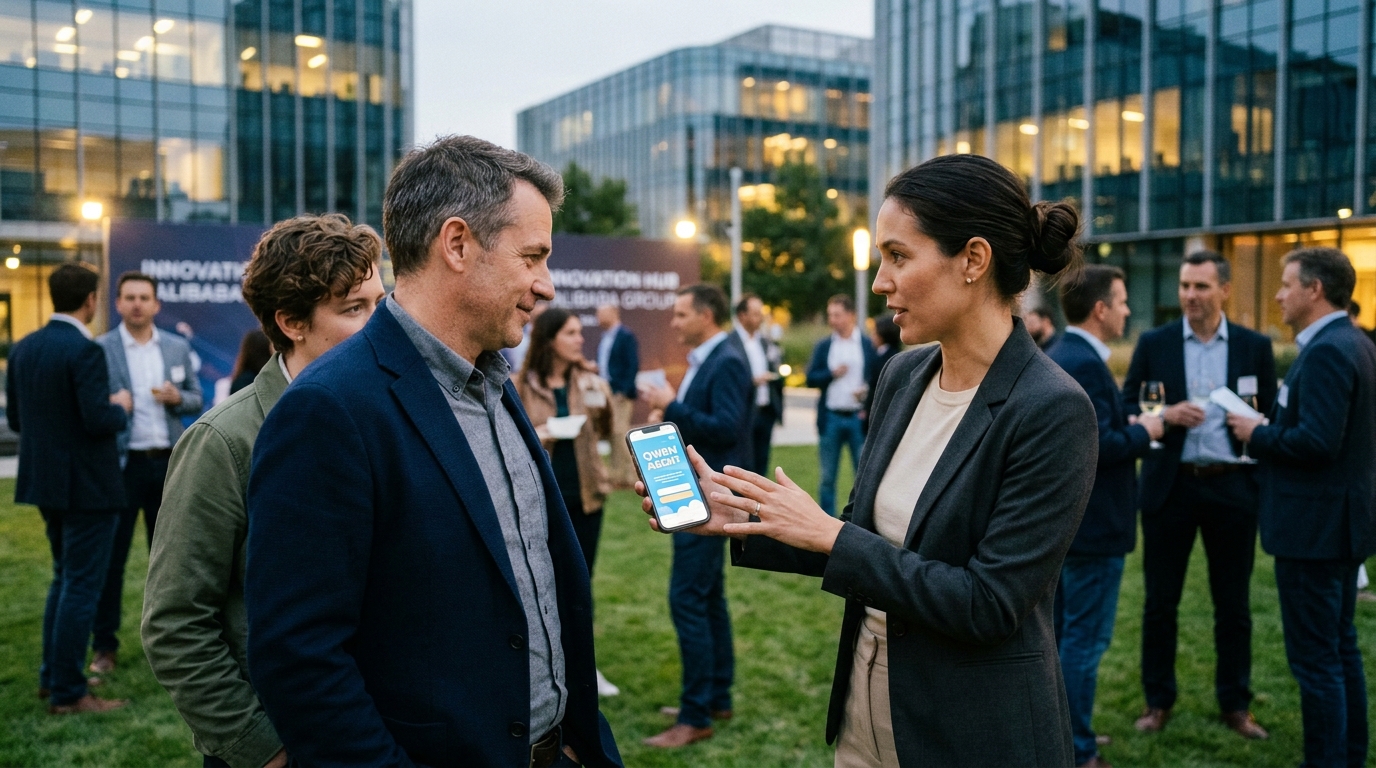
Until recently, interaction with AI chatbots was limited to information exchange, text generation, or coding. However, Alibaba is seeking to bridge the gap between intent and action. By integrating "agents" from companies like KFC and Luckin Coffee, users no longer need to exit the Qwen app to order their meal or coffee. Through natural language, the AI can understand preferences, suggest deals, and complete transactions using the Alipay payment ecosystem.
The choice of initial partners is strategic. KFC China (operated by Yum China), Luckin Coffee (the leader of the Chinese coffee market), and Mixue (the world's largest tea/ice cream chain by store count) represent high-frequency transactions. This allows Alibaba to collect vast amounts of data on consumer habits while simultaneously improving Qwen's ability to handle complex, real-world tasks.
The Battle for the Next-Generation 'Super-App'
The Chinese market has long been dominated by Tencent's WeChat, which created the first in-app operating system through "Mini Programs." Alibaba, with Qwen, is attempting to create the AI version of this model. If WeChat was the "OS of icons," Qwen aspires to be the "OS of voice and text."
- Service Unification: Instead of dozens of individual apps, the user has a single assistant that knows their history.
- Friction Reduction: The ordering process happens through dialogue, eliminating the need to navigate complex app menus.
- Personalization at Scale: The AI can remember that a user prefers their coffee unsweetened or always orders a specific menu on Saturdays.
This development positions Alibaba strongly against competitors like Baidu's Ernie Bot and ByteDance's Doubao. While others focus on raw compute and creativity, Alibaba leverages its deep roots in e-commerce and logistics to offer immediate utility.
Challenges: Data, Privacy, and Monopolies
Despite the potential, the integration of third-party agents raises serious questions. The concentration of so much information on a single platform creates concerns regarding personal data protection. How can it be ensured that order data from KFC won't be used unfairly to target ads in other Alibaba services? Furthermore, Chinese regulators, who have shown strictness toward tech giants in recent years, are closely monitoring the development of these "closed" ecosystems.
"Artificial intelligence is no longer a search tool, but an active participant in the economy. Whoever controls the interface between the user and the service, controls the market itself," say industry analysts in Beijing.
In conclusion, Alibaba's move to open Qwen to external partners marks the end of the "experimental chatbot" period and the beginning of the "agent economy." For the consumer, this means greater convenience. For businesses, a new opportunity to reach customers. For the tech world, it is confirmation that the future of AI lies in its ability to "do" and not just "say.".