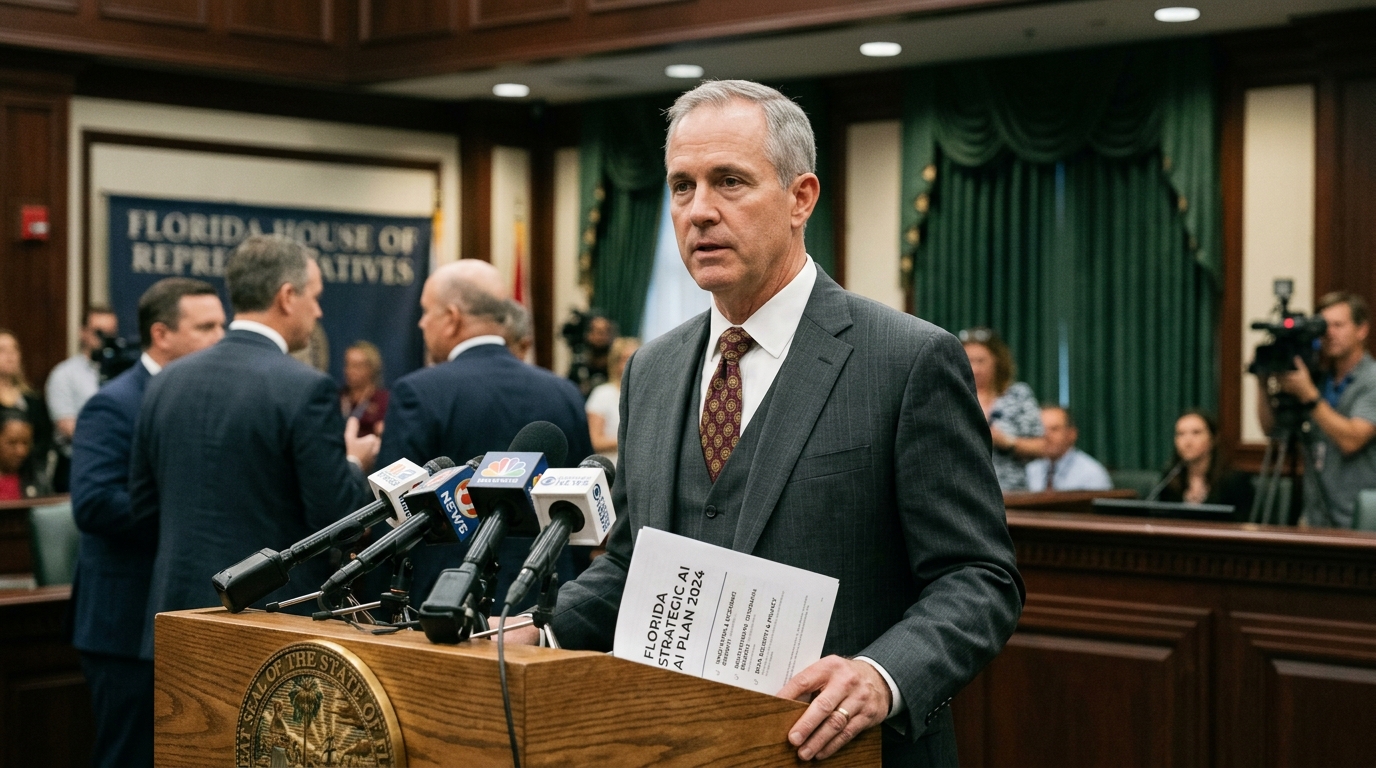
In the rapidly shifting landscape of global technology, the State of Florida is attempting a bold realignment. While the U.S. federal government in Washington grapples with sluggish bureaucracy and California sinks into internal strife over the strict regulation of algorithms, Florida is carving its own path. The recent emphasis on promoting Advanced Artificial Intelligence (AI) innovation coupled with a rigorous security framework is not merely a local policy choice; it is a signal to the global market: innovation can thrive where freedom meets responsibility.
The Florida Model: Innovation Without Suffocation
Florida's approach focuses on creating an ecosystem that attracts capital and talent by avoiding what many conservative politicians call "regulatory strangulation." The strategy is built on three pillars: tax incentives for high-tech companies, investments in education through the state's top universities, and the creation of "regulatory sandboxes" for testing new technologies. This model aims to transform the state from a tourism destination into a hub of technological excellence, directly competing with Texas and California.
However, innovation does not come without costs or risks. State leadership recognizes that unchecked AI growth could undermine social cohesion. Therefore, new initiatives include clear guidelines for the transparency of algorithms used in public services, ensuring that automation does not lead to arbitrary discrimination against citizens. The goal is to foster an environment where AI serves the public interest while remaining a potent engine for economic growth.
Security and Protection from Digital Manipulation
One of the most critical issues addressed by Florida's legislation is security. In an era where deepfakes and misinformation threaten the democratic process, the state has taken drastic measures. "Promoting Security in AI" is not just about the cybersecurity of infrastructure, but also about the protection of individual identity. Florida is leading the way in criminalizing the use of AI to create deceptive content intended to defraud voters or defame individuals.
- Stricter penalties for AI-assisted cyberattacks on state infrastructure.
- Mandatory labeling for AI-generated content in political campaigns to prevent voter manipulation.
- Enhanced protection of minors' personal data from predatory social media algorithms.
These security measures act as safeguards that, according to their proponents, enhance consumer and investor confidence. The logic is simple: no one wants to invest in a technology that is perceived as dangerous or unreliable. By setting high standards for safety, Florida hopes to become the gold standard for ethical AI deployment.
The Clash of Models: Florida vs. California
The comparison with California is inevitable. While California's SB 1047 bill sparked a firestorm in Silicon Valley due to requirements for "kill switches" in large AI models, Florida proposes a more libertarian approach. Florida's philosophy is that responsibility should lie with the user and the application, not the research and development of the model itself. This distinction is fundamental, as it allows researchers to experiment without the fear of legal sanctions for unforeseen behaviors of their models.
"We cannot allow the fear of the future to stop the progress that will save lives and create wealth today," is a sentiment frequently echoed in Tallahassee's political circles.
This stance has piqued the interest of many startups looking for a friendlier environment. However, critics warn that the lack of centralized control could turn the state into a "testing ground" for dangerous technologies, with citizens acting as guinea pigs. The debate centers on whether the risks of under-regulation outweigh the benefits of rapid technological advancement.
Conclusion and Future Outlook
Florida's strategy for Artificial Intelligence represents a significant experiment in technological governance. If successful, it will prove that decentralized, state-level regulation can be more effective than broad federal mandates. If it fails, it will highlight the risks of a "race to the bottom" regarding safety standards. What is certain is that Florida is no longer just the Sunshine State; it is a state that aspires to define America's digital future. As the 2026 elections approach, the effectiveness of these policies in curbing AI-driven misinformation will be the ultimate test of this ambitious legislative framework.