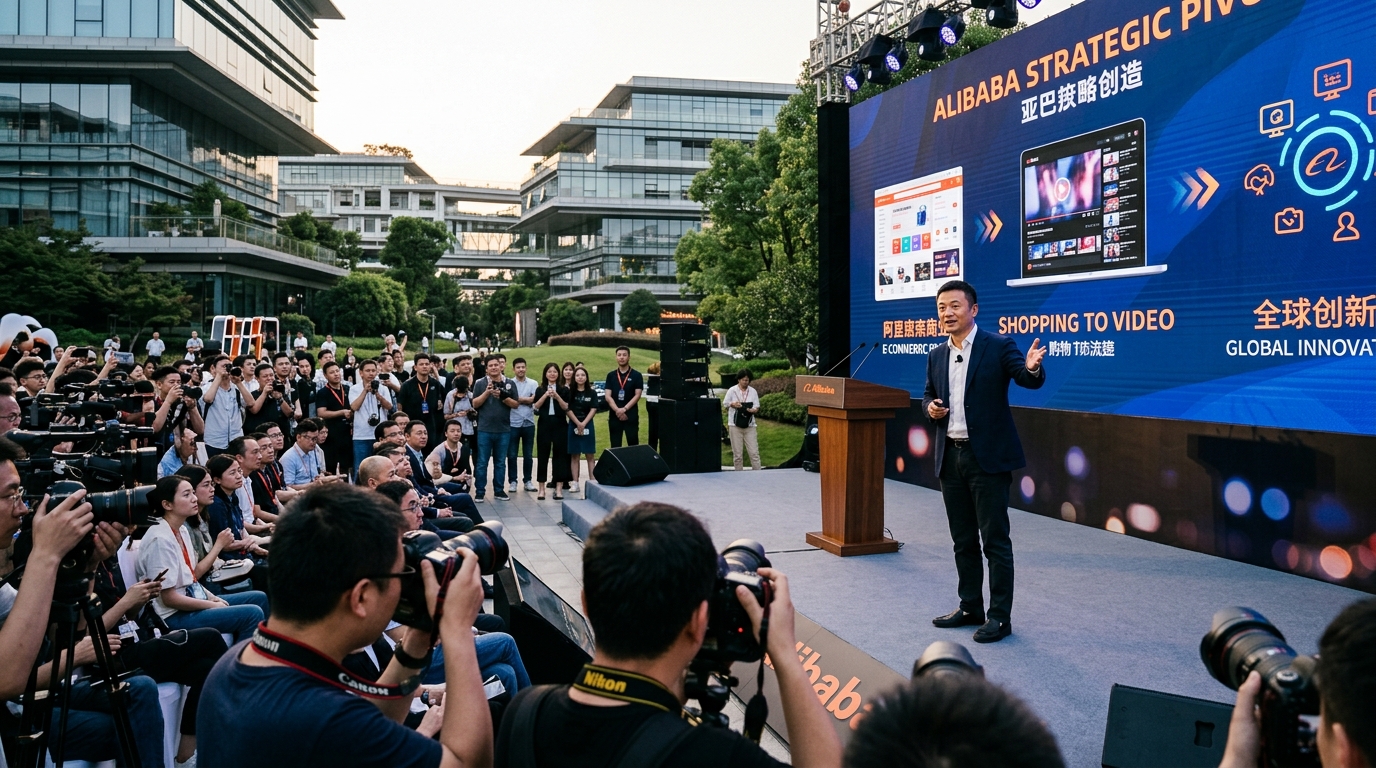
In the ever-shifting landscape of Chinese technology, Alibaba Group Holding Ltd. stands at a pivotal crossroads. After a period of intense regulatory scrutiny and internal restructuring, the e-commerce giant appears to be regaining its footing, this time with Artificial Intelligence (AI) at the very core of its strategy. According to recent analyses and reports, such as those from CNBC TV18, the company's investments in AI-driven shopping and video tools are not mere experiments; they are a direct response to the urgent demands of the market and investors alike.
The AI Revolution in E-commerce
The heart of Alibaba remains retail, but its form is undergoing a radical transformation. The company is integrating Large Language Models (LLMs) into its flagship platforms, such as Taobao and Tmall, to create a more personalized and intuitive user experience. It is no longer just about searching for products; it is an interactive process where AI acts as a sophisticated personal shopping assistant.
- Quark: Alibaba's intelligent search engine that leverages AI to provide instant answers and tailored product recommendations.
- AI-Driven Customer Service: The deployment of digital assistants capable of resolving complex queries without human intervention, reducing overhead while boosting satisfaction.
- Supply Chain Optimization: AI models predict market trends, allowing merchants to manage inventory with surgical precision and minimize waste.
Analysts emphasize that these investments are vital for Alibaba to counter the rising competition from PDD Holdings (Pinduoduo) and ByteDance (TikTok/Douyin). The ability of AI to convert browsing data into concrete sales is the 'holy grail' of the new retail era.
Video and Generative AI: The New Frontier
Beyond traditional retail, Alibaba is betting heavily on video. Generative AI enables the creation of high-quality video content at a fraction of the traditional cost. This is particularly crucial for live-streaming commerce, a multi-billion dollar market in China. Through AI tools, merchants can create digital 'hosts' (avatars) that operate 24/7, promoting products in live broadcasts without the need for a physical studio or human presenters.
"AI is no longer an add-on feature for Alibaba; it is the backbone upon which every new service is being built," the CNBC report highlights.
In the cloud computing sector, Alibaba Cloud (Aliyun) is now offering specialized infrastructure for training AI models, attracting startups and large enterprises looking to develop their own proprietary solutions. The synergy between cloud infrastructure and video AI creates an ecosystem that is increasingly difficult for competitors to replicate.
Challenges and the Geopolitical Context
Despite the optimism from analysts, the path forward is fraught with obstacles. US-led restrictions on the export of advanced semiconductors (such as Nvidia's H100 chips) directly impact Alibaba's ability to train the most powerful AI models. Consequently, the company is forced to pivot toward domestic hardware solutions or optimize existing systems with unprecedented creativity.
Furthermore, China's domestic economy is showing signs of a slowdown, which inherently limits consumer spending power. Alibaba must prove that AI can not only enhance the user experience but also drive real profitability in a low-margin environment. CEO Wu Yongming's strategy focuses on 'simplifying' the corporate structure and focusing on high-growth sectors, shedding non-core assets to remain lean and agile.
The Future: A Reimagined Alibaba
In conclusion, Alibaba appears to have received the market's message loud and clear. Its aggressive investments in AI shopping and video demonstrate a company unafraid to disrupt itself to survive. If it can successfully bridge the gap between technological innovation and commercial application, it will maintain its leadership in the global digital economy. The stakes are high, but Alibaba possesses the capital, the talent, and the data to win this high-tech gamble.