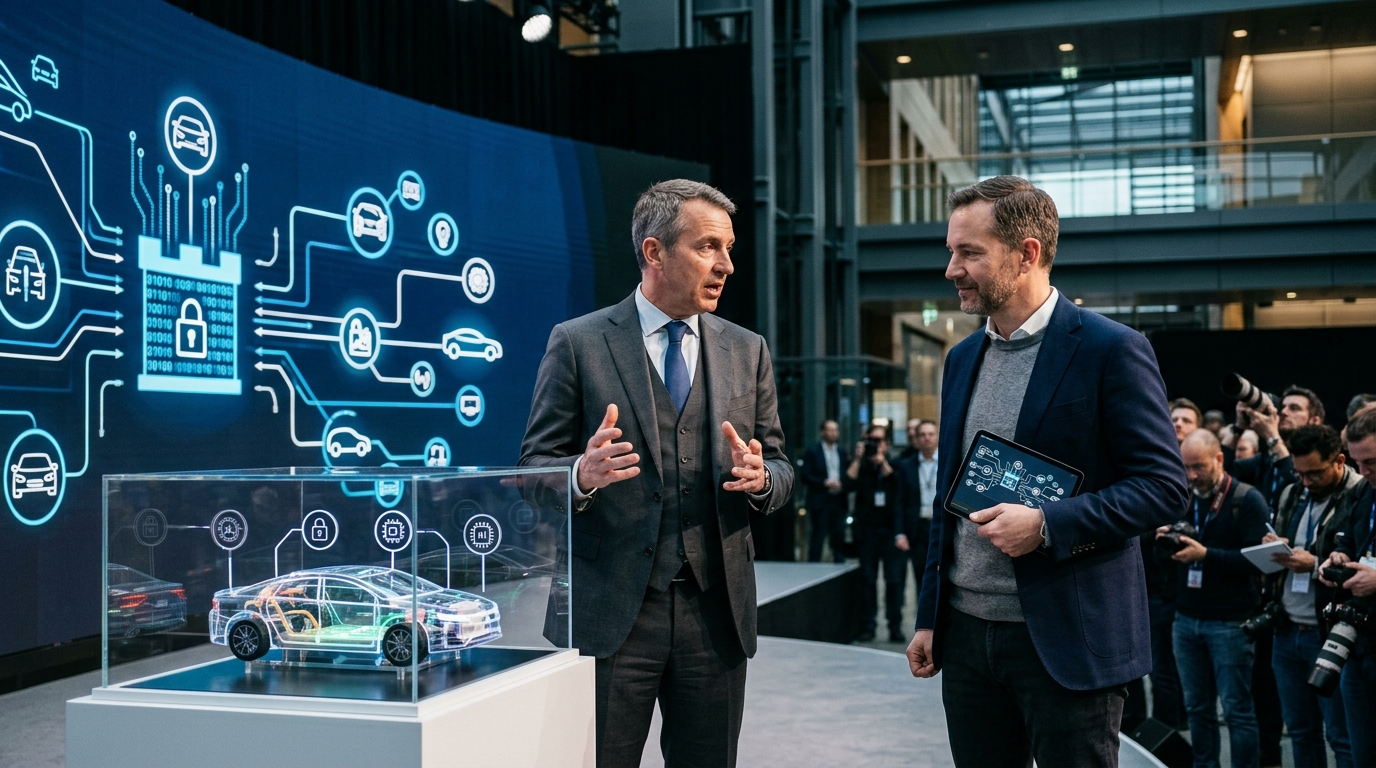
In an era where the automobile is no longer defined solely by its internal combustion engine but has transformed into a sophisticated "computer on wheels," data security and protection against cyberattacks have emerged as existential imperatives. Stellantis, the global giant housing iconic brands such as Peugeot, Fiat, Chrysler, and Jeep, has announced a strategic partnership with Microsoft to leverage Artificial Intelligence (AI) to fortify its vehicles against modern digital threats.
The Shift to the Software-Defined Vehicle (SDV)
The automotive industry is undergoing its most radical transformation since the days of Henry Ford. Modern vehicles now rely on millions of lines of code to control everything from braking systems and energy consumption to infotainment and autonomous driving features. This pivot toward the Software-Defined Vehicle (SDV) offers incredible possibilities, such as Over-the-Air (OTA) updates, but simultaneously expands the "attack surface" for malicious actors. A compromised vehicle is not just a risk to driver privacy; it is a direct threat to the physical safety of passengers and pedestrians alike.
The Microsoft Synergy: AI at the Forefront
The partnership with Microsoft is a calculated move. Stellantis intends to integrate Microsoft’s AI tools, powered by the Azure cloud platform, to create a dynamic protection ecosystem. Instead of static firewalls, AI will act as a "vigilant guardian," analyzing vast amounts of data from vehicle fleets in real-time. Through Machine Learning, the system will be able to identify anomalous behavior within the car's software—such as an unauthorized attempt to access steering controls—and react instantaneously, isolating the threat before it can cause harm.
- Real-time Threat Detection: Continuous monitoring of vehicle networks to identify suspicious patterns.
- Automated Response: Automated mitigation of attacks, reducing reaction time from minutes to milliseconds.
- Predictive Maintenance: Identifying software vulnerabilities before they can be exploited by hackers.
Strategic Goal: Dare Forward 2030
This initiative is a core component of Stellantis's "Dare Forward 2030" strategic plan, which aims to transition the company into a "sustainable mobility tech company." With projections of millions of connected Stellantis vehicles on the road by the end of the decade, cybersecurity is the foundation upon which new revenue streams, such as subscription services and in-car applications, will be built. Consumer trust is the currency of the future, and Stellantis recognizes that a single major security breach could tarnish a brand’s reputation irreparably within minutes.
Regulatory Landscapes and Future Challenges
The European Union and international bodies (such as the UN R155 regulation) are now enforcing stringent standards for vehicle cybersecurity. Manufacturers are legally responsible for the security of their software throughout the vehicle's entire lifecycle. Utilizing Microsoft’s AI allows Stellantis to comply with these regulations more efficiently, reducing the cost of manual audits and increasing the precision of security testing. However, the challenge persists: as defensive mechanisms become smarter, so do the tools used by hackers, who are also employing AI to find cracks in the code.
"Cybersecurity is no longer an optional feature; it is the critical element that will determine the survival of automakers in the 21st century," industry analysts suggest.
In conclusion, the Stellantis-Microsoft alliance sends a clear message to the market: the battle for dominance on the roads will be fought not just on the asphalt, but in the cloud and through algorithms. The security of the future will be proactive, intelligent, and, above all, invisible to the driver, ensuring that the freedom of mobility is not sacrificed at the altar of connectivity.