
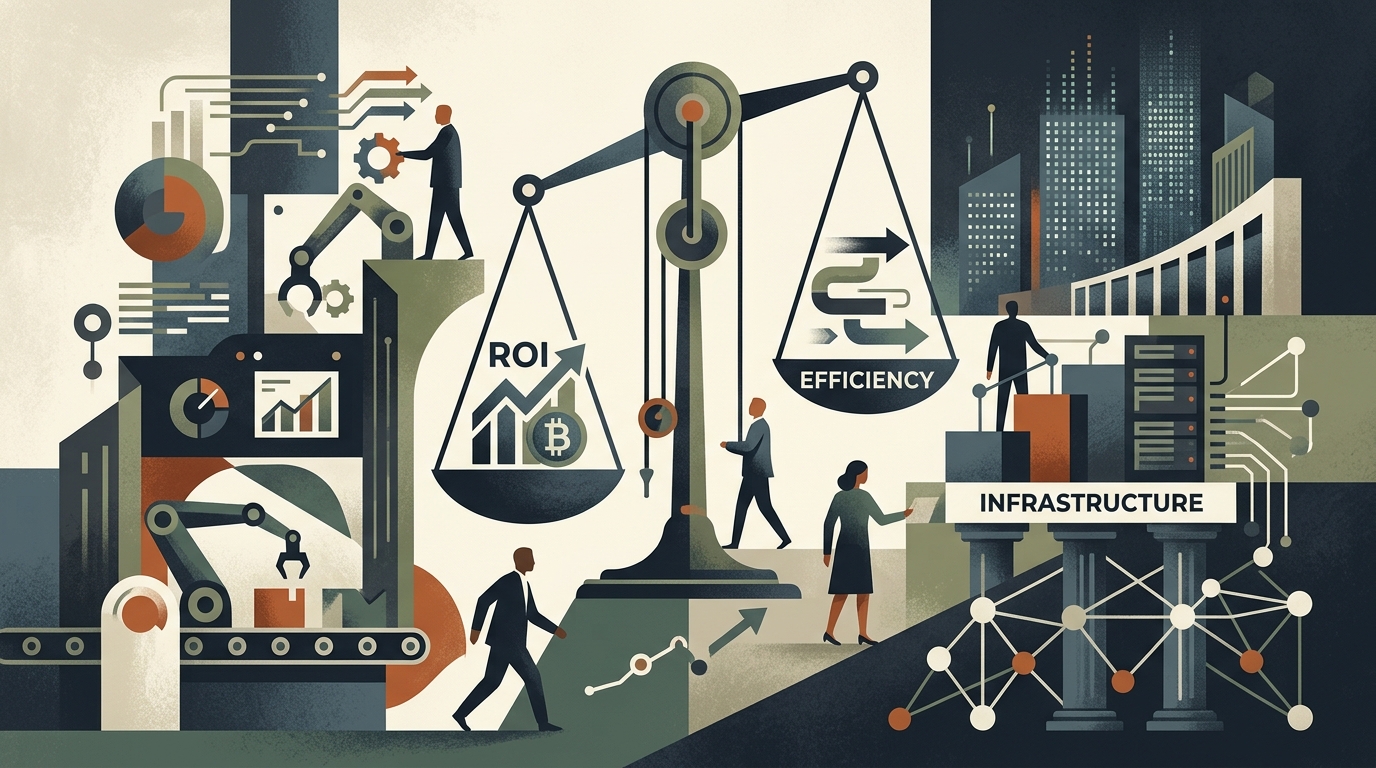
As we navigate the second quarter of 2026, the global financial landscape is witnessing a profound maturation. The speculative fever that characterized the initial AI boom has been replaced by a rigorous, data-driven pragmatism. Wall Street’s recent ascent to the 7,900 milestone on the S&P 500 is not merely a momentum play; it is a reflection of a market that has finally begun to decouple 'AI hype' from 'AI ROI'.
The DeepSeek Lesson and the Efficiency Pivot
The most significant market driver this month has been the so-called 'Efficiency Pivot.' For two years, Big Tech’s playbook was defined by a $700 billion 'arms race' in compute and massive LLM training. However, the emergence of DeepSeek’s lean architectural model—achieving comparable results at a fraction of the cost—has sent a shockwave through Silicon Valley and equity valuations. Investors are no longer rewarding high CapEx as a sign of dominance; they are scrutinizing the 'Plumbing of Profits.'
"In 2024, we bought the dream; in 2026, we are buying the margin. The shift from brute-force scaling to agentic efficiency, as seen in Alibaba’s integration of Qwen into Taobao, marks the dawn of conversational commerce where AI is a revenue generator, not just a cost center."
Alibaba’s move to embed Agentic AI directly into the Taobao ecosystem serves as a benchmark for the retail sector. By moving away from simple chatbots to autonomous agents capable of managing the entire transaction lifecycle, they are proving that AI can fundamentally lower the cost of customer acquisition while increasing lifetime value.
Systemic Risks and Central Bank Vigilance
However, this optimism is tempered by a chorus of caution from the world’s most influential monetary authorities. Both the Federal Reserve and the European Central Bank (ECB) have issued stark warnings regarding AI as a systemic risk. The concern is two-fold: first, the 'black box' nature of automated trading strategies could lead to flash-liquidity crises; second, the concentration of AI infrastructure in the hands of a few providers creates a single point of failure for the global credit market.
For the astute investor, these warnings are not a signal to exit, but a mandate for diversification. We are seeing a shift in capital toward 'defensive AI'—technologies that enhance market resilience and regulatory compliance rather than just speed.
The Greek Context: Infrastructure as the Real Alpha
Closer to home, the Greek economy is demonstrating how this global shift toward infrastructure-led growth is manifesting in emerging markets. Greece’s record $12.8 billion in Foreign Direct Investment (FDI) is increasingly concentrated in the 'physicality' of the digital age. It is not just about software; it is about the energy and water required to sustain it.
EYDAP’s €2.5 billion strategic investment to secure Attica’s water future is a prime example of what I call 'The Great Realignment.' In an era where data centers and high-tech manufacturing (like the iPhone hubs in India) demand unprecedented resources, water and energy security are now core business metrics. For the Athens Stock Exchange, the message is clear: the winners of 2026 will be the companies that provide the essential infrastructure—the 'plumbing'—that allows the AI economy to function.
Market Implications and Strategy
- Focus on Capital Efficiency: Prioritize tech equities that demonstrate a clear path to margin expansion through AI, rather than those merely increasing spend.
- Infrastructure is Defensive: Utilities and connectivity providers (like the 'Gigafactory' projects in Europe) are becoming the new 'gold' as they provide the necessary physical foundation for digital sovereignty.
- Watch the Labor Shift: As Marc Rowan of Apollo recently noted, the 'Blue-Collar Renaissance' is real. Industries with high physical moats are proving more resilient to AI disruption than traditional white-collar services.
In conclusion, the market in May 2026 is rewarding realism. The 'cathedrals in the desert'—expensive, unproven AI projects—are being abandoned in favor of integrated, efficient, and infrastructure-backed business models. For Greece and the wider EU, the opportunity lies in becoming the stable, resource-secure hub for this next phase of the industrial revolution.