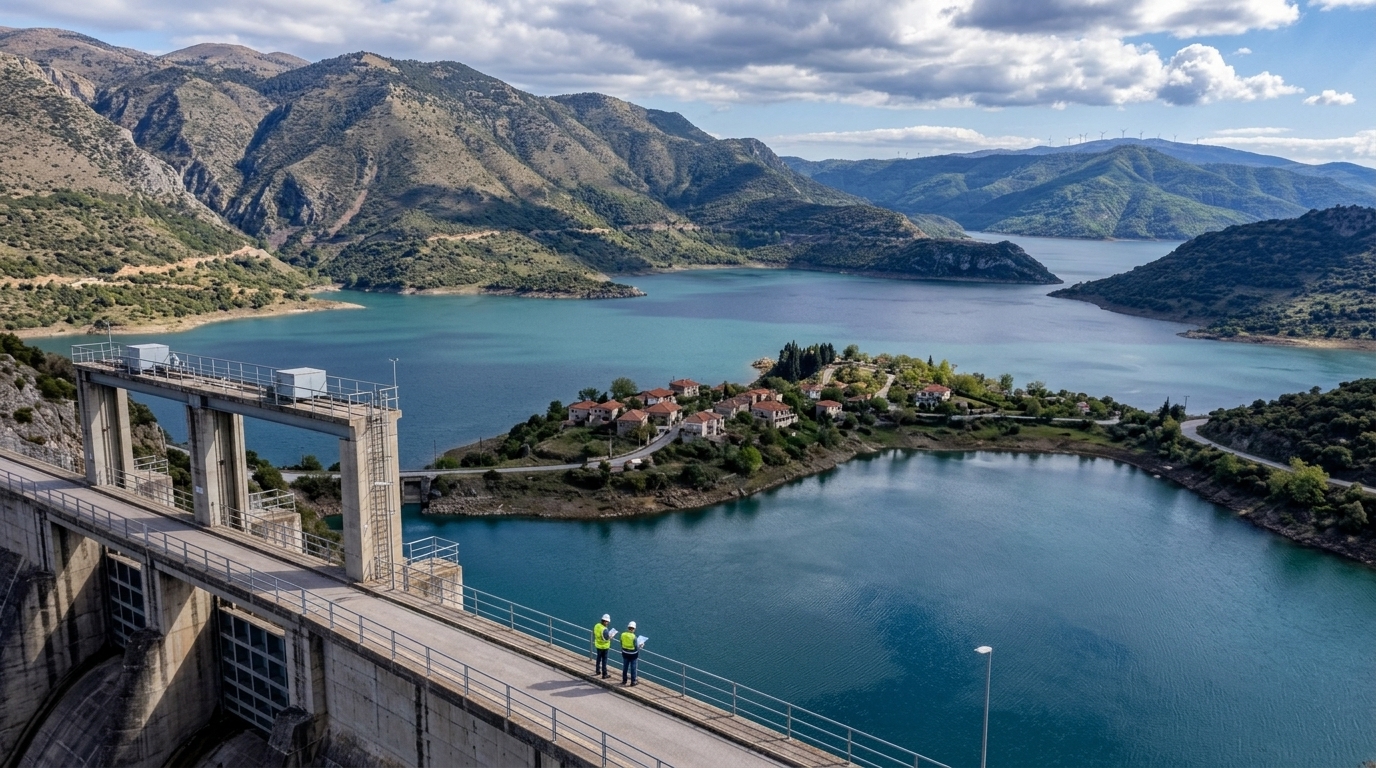
Water management in Attica is entering a new, critical phase. In an era where the climate crisis is no longer a distant threat but a daily reality, EYDAP is taking the initiative with a mammoth investment program of €2.5 billion, spanning until 2034. This plan is not merely about maintaining existing infrastructure; it represents a radical transformation of how the capital perceives and utilizes its 'blue gold.'
The Architecture of Investment: Infrastructure and Resilience
EYDAP’s investment plan is built on three central pillars: network upgrades, digitalization, and circular resource management. Of the total amount, a significant portion will be allocated to replacing aging water supply networks. Reducing non-revenue water (NRW) is a top priority, as every drop lost underground is a missed opportunity to bolster Attica’s reserves.
According to the strategic plan, EYDAP aims to accelerate pipe replacement using next-generation materials that offer greater durability and fewer failures. Simultaneously, the construction of new sewerage networks in Eastern Attica—a vital project pending for decades—is progressing rapidly, finally addressing the issue of illegal sewage discharge and protecting the groundwater table.
"The transition from a linear consumption model to a circular management model is no longer an option, but an imperative for the survival of the urban fabric," company sources state.
Digitalization: The 'Smart' Water
The introduction of 'smart' water meters is the spearhead of digital transformation. Replacing millions of analog meters with digital devices will allow for real-time consumption monitoring. This means that leaks within households will be detected immediately, protecting consumers from exorbitant bills and the company from unnecessary resource waste.
Furthermore, EYDAP is investing in telemetry and remote control systems throughout its network. The use of Artificial Intelligence to predict demand and identify potential faults before they occur places the company among the global elite of water management organizations. Digitalization is not just modernization; it is the tool that will enable optimal water distribution during prolonged droughts.
Circular Economy: Water as a Reusable Resource
Perhaps the most innovative aspect of the new program is the emphasis on the circular economy. EYDAP plans for the extensive reuse of treated water from Wastewater Treatment Plants (WWTPs). This water, instead of being discharged into the sea, will be used for irrigating large green spaces, industrial use, and even groundwater recharge.
- Water reuse from the Psyttalia WWTP for industrial zones.
- Utilization of sludge for energy and fertilizer production.
- Creation of local 'water recovery units' for urban irrigation.
This approach changes the paradigm: wastewater ceases to be seen as waste and is transformed into a valuable raw material. In this context, EYDAP is also examining the possibility of desalination, not as a primary source, but as a security reserve for extreme water scarcity scenarios, ensuring that Attica never goes thirsty.
Economic Strategy and Sustainability
Funding such an ambitious plan requires a solid economic foundation. The recent agreement on the regulatory framework and the setting of the WACC (Weighted Average Cost of Capital) provides EYDAP with the necessary visibility to raise capital. The company aims to leverage European funds, such as the Recovery and Resilience Facility (RRF) and NSRF, to minimize the burden on consumers.
However, the challenge remains: how to balance the need for massive investment with maintaining the social character of water as a public good? EYDAP’s management argues that the efficiency resulting from modernization will lead to long-term tariff stability, avoiding the drastic increases that a future water shortage crisis would impose. The battle for water in Athens has just begun, and €2.5 billion is the city's most powerful weapon.