
The financial landscape of May 2026 is defined by a profound transition. We are moving away from the 'AI-as-a-feature' era into an era of integrated structural efficiency. For investors and business leaders, the signals are clear: the winners of this quarter are those who control the intersection of hardware, energy-efficient architecture, and capital liquidity.
The Hardware Renaissance: Beyond the GPU Monoculture
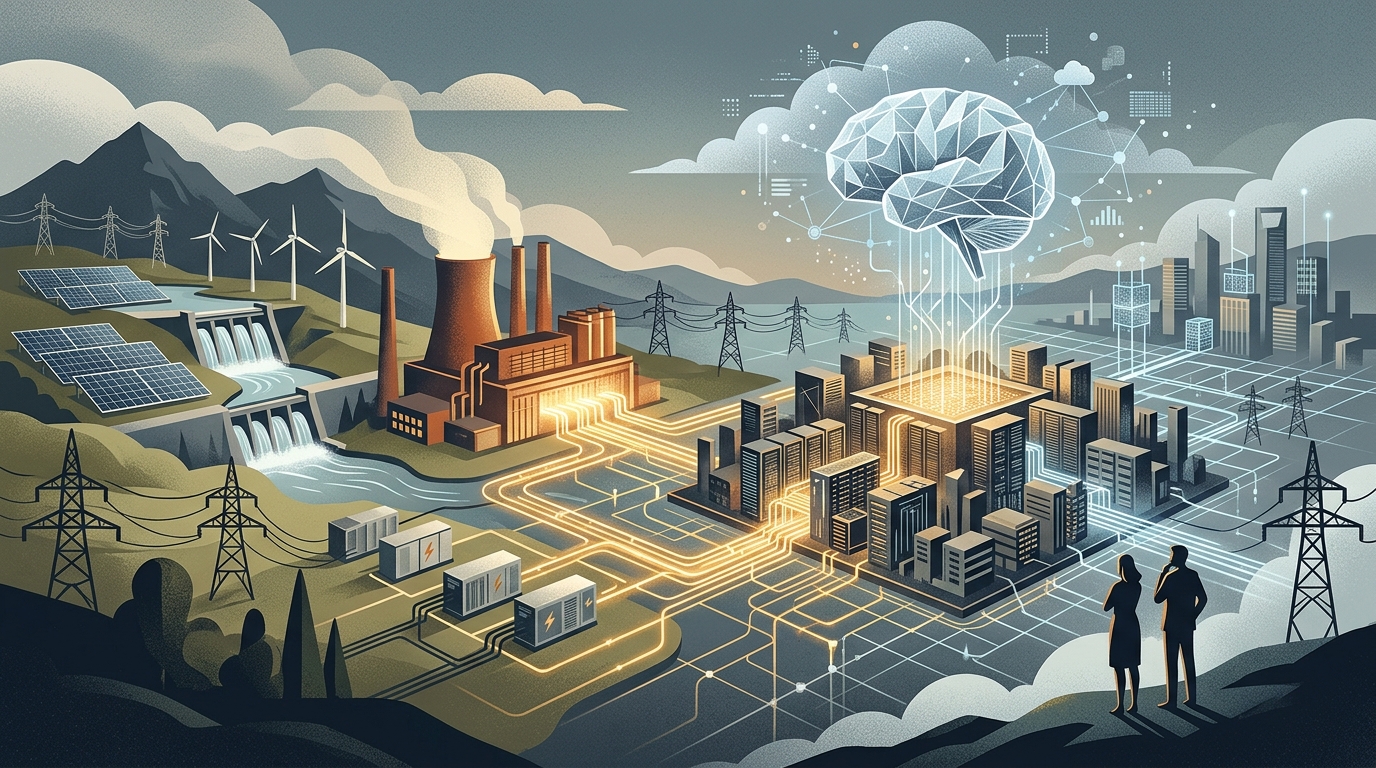
The recent performance of legacy giants like IBM and Lenovo underscores a critical market pivot. IBM’s 12.48% surge and Lenovo’s historic $21.6 billion revenue explosion are not accidents of the cycle; they represent the 'Post-GPU' shift. As the industry hits the limits of traditional silicon, the market is rewarding companies that can integrate Quantum computing with AI architecture. Investors are no longer satisfied with software promises; they are looking for the 'Efficiency Hedge'—systems that can sustain the 2026 energy shocks while delivering agentic AI capabilities.
"The market is no longer pricing in potential; it is pricing in the ability to scale without collapsing the power grid."
This architectural maturity is also visible in the 'Galactic IPO' rumors surrounding the SpaceX-Anthropic alliance. This potential market event serves as a ultimate signal: the fusion of physical infrastructure (Starlink/SpaceX) with high-level intelligence (Anthropic) is the new gold standard for valuation.
The Deregulation Catalyst and the Global Competitive Map
The decision by the Trump administration to rescind the AI Executive Order—reportedly influenced by a rare consensus between figures like Elon Musk and Mark Zuckerberg—marks a radical shift toward deregulation. From a market perspective, this is a double-edged sword. In the short term, it lowers compliance costs and accelerates the deployment of 'Agentic' systems, potentially boosting US tech equities. However, for European markets, it creates a strategic vacuum. While the US moves toward a 'Wild West' of rapid innovation, the EU must decide whether to maintain its stringent regulatory framework or pivot to remain competitive in the face of Chinese brands capturing 15% of the European EV market through superior AI integration.
The Greek Context: Stability and the Insurance Gap
Locally, the Greek market faces its own set of structural challenges that impact investor confidence. Errikos Moatsos’s recent highlights on the insurance gap in Greece reveal a critical business vulnerability: as climate change accelerates, the lack of adequate coverage for SMEs represents a systemic risk. Furthermore, the aggressive crackdown on IPTV piracy and the focus on institutional integrity are essential steps. For Greece to attract the next wave of AI-driven foreign direct investment, the 'rule of law' and 'risk mitigation' must be as robust as the digital infrastructure we are building. The journey toward press freedom and institutional transparency, as noted by Akis Skertsos, is not just a social goal—it is a prerequisite for a stable, high-trust business environment.
Market Implications for Q3 2026
- Hardware over Hype: Focus on companies providing the 'plumbing' of AI—cooling systems, quantum-ready chips, and edge computing.
- Energy as a Moat: Logistics and manufacturing firms that have successfully implemented 'AI Efficiency Hedges' will outperform in a high-energy-cost environment.
- Liquidity Events: Watch the private markets; the SpaceX-Anthropic signal suggests a reopening of the IPO window for 'Real-World AI' applications.