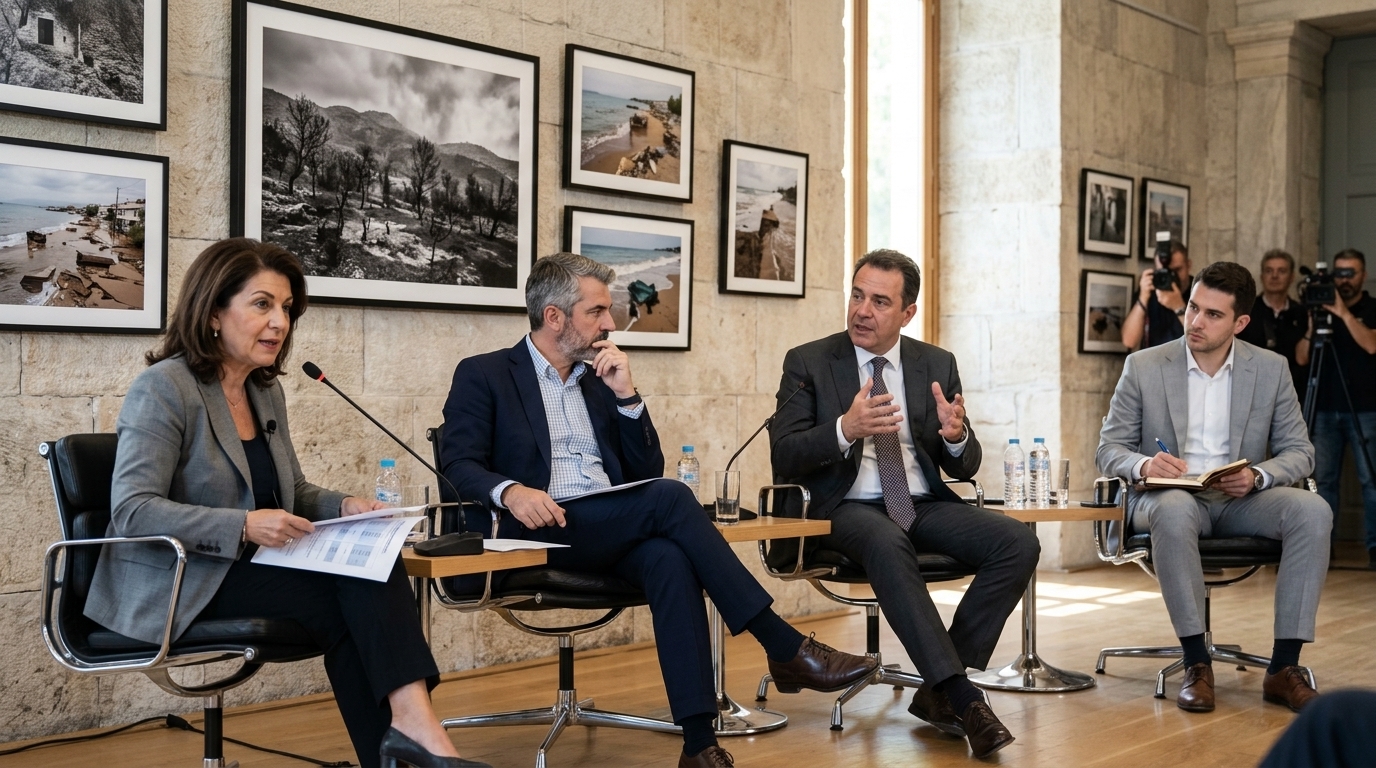
Greece stands at a critical crossroads where traditional perceptions of property protection are violently clashing with the new reality of the climate crisis. Errikos Moatsos, a seasoned executive in the insurance market, has brought a harsh truth to the forefront: the insurance protection gap for residences against natural disasters exceeds 80%. In a country with one of the highest homeownership rates in Europe, the vast majority of households remain exposed to risks that are no longer hypothetical but painfully frequent.
The Illusion of State Omnipotence
For decades, Greek citizens have been conditioned to the idea that the state serves as the "insurer of last resort." Every time a fire or flood destroys property, the political system rushes to promise compensation through state aid. However, as Mr. Moatsos emphasized, this model is no longer sustainable. Fiscal resources are finite, and the frequency of extreme phenomena—such as Storm Daniel—is draining state coffers, diverting funds from other critical social needs like healthcare and education.
The paradox is striking: while Greeks consider their home their most valuable asset and the foundation of family security, they often refuse to allocate a minimal percentage of their income to protect it. The culture of private insurance in Greece remains in an embryonic stage, frequently misunderstood as an additional "tax" rather than an investment in peace of mind and life continuity.
Climate Change: The Catalyst for Disruption
The discussion regarding the insurance gap is no longer just for insurance company actuaries. It is a matter of national security and economic resilience. Climate change has altered the risk landscape. Areas once considered "safe" are now at the epicenter of catastrophic events. Global reinsurance giants are closely monitoring the Mediterranean region, and the lack of domestic insurance coverage makes the Greek economy more vulnerable to external shocks.
- The frequency of forest fires has increased by 30% over the last decade.
- "Daniel-type" floods are now estimated to occur every 20-30 years instead of every 100.
- Seismic activity remains a permanent, unpredictable risk factor.
Mr. Moatsos pointed out that private insurance can function as a complementary pillar to the state. This is not about the complete withdrawal of public assistance, but about a fair distribution of risk. When the private sector takes on the burden of compensation, the state can focus on infrastructure restoration and protecting the most vulnerable social groups who truly cannot afford insurance.
Incentives and Institutional Interventions
The recent legislative initiative to reduce the ENFIA (Unified Property Tax) by 10% for insured homes is a step in the right direction, but it is judged by the market as insufficient to radically change the status quo. The insurance market proposes bolder interventions, such as mandatory insurance for specific high-risk zones or the provision of stronger tax incentives that would make the cost of insurance almost negligible for the average household.
"Insurance is not a luxury for the few, but a necessity for the many. The 80% gap is a time bomb at the foundation of social cohesion," market sources state.
At the European level, countries like France and Spain have established public-private partnership (PPP) systems that ensure universal residential coverage. In Greece, this discussion has begun, but implementation often faces political costs and a lack of public awareness. The need for a national risk management strategy is more urgent than ever.
Conclusion: From Reaction to Prevention
Errikos Moatsos's message is clear: Greece cannot continue to move forward with hope as its only protection strategy. The transition from a model of passive waiting for state aid to a model of active risk management through insurance is the only way forward. Protecting private property is, ultimately, protecting the national economy itself. If the insurance gap is not closed, the next major natural disaster will not only leave ruins behind but also a permanent fiscal wound that future generations will be forced to pay for.