As we navigate the second quarter of 2026, the artificial intelligence sector is undergoing a profound structural transformation. The days of speculative 'hype-funding' based on mere potential are largely behind us. Today, the market demands liquidity, operational efficiency, and, above all, a clear path to profitability. Two major developments this week perfectly encapsulate this shift: Moonshot AI’s strategic pivot toward a Hong Kong IPO and the emerging 'AI Paradox' in corporate transformation.
The Liquidity Event: Moonshot AI and the Global Capital Race
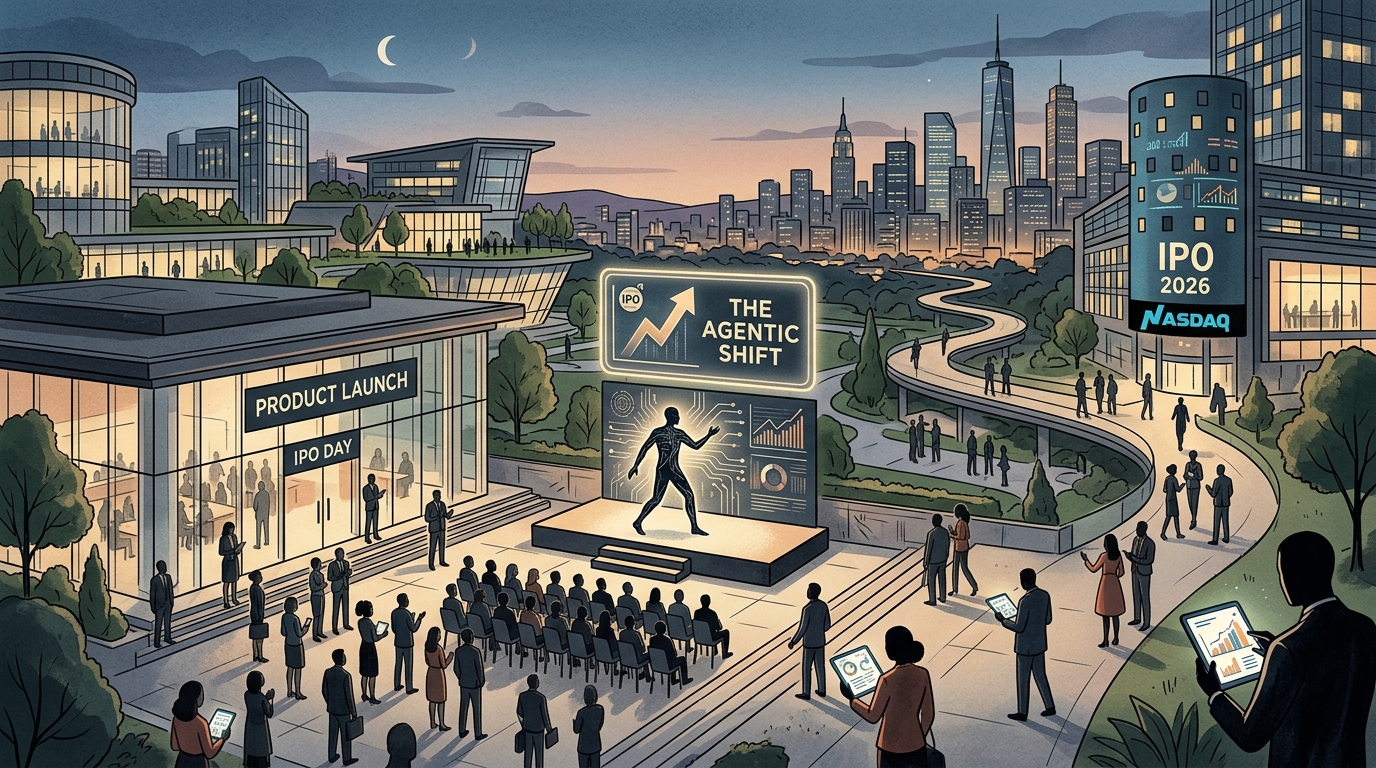
In my analysis, Moonshot AI’s decision to restructure for a Hong Kong IPO is a watershed moment for the global AI ecosystem. For years, the market has been saturated with private capital, but venture capital (VC) funds are now facing pressure to return capital to their limited partners. Moonshot’s move isn't just about raising funds; it’s a strategic signal that the 'AI arms race' is entering its institutionalization phase.
By targeting Hong Kong, Moonshot is positioning itself at the intersection of East-West capital flows, even as geopolitical tensions remain a variable. From an investment perspective, this suggests that the next wave of AI growth will be driven by companies that can navigate complex regulatory environments while maintaining high-speed innovation. For investors, the lesson is clear: watch for the 'IPO-ready' leaders who are moving from research labs to public market accountability.
The AI Paradox: Why Adoption Doesn't Equal Transformation
Despite the billions invested, a recent report highlights a troubling 'AI Paradox': rapid adoption is stalling corporate transformation. Many enterprises have integrated AI tools, yet productivity gains are not reflecting the scale of investment. Why? Because most companies are still treating AI as a 'plugin' rather than a foundational shift in business logic.
"True ROI in AI is not found in doing old things faster, but in doing new things that were previously impossible."
This is where the concept of 'Agentic AI' comes into play. As seen with recent developments from Qualco, the shift from simple prompting to autonomous agents represents the next frontier of business action. Agentic systems don't just suggest; they execute. They manage data, make decisions, and automate workflows with minimal human intervention. For a business to break the paradox, it must move toward these autonomous architectures. In my view, companies that fail to transition from 'Chatbots' to 'Agents' by the end of 2026 will find themselves holding expensive, underperforming assets.
The Greek Perspective: A Digital Shield and Industrial Revolution
Closer to home, the Greek market is showing remarkable resilience and strategic foresight. Prime Minister Kyriakos Mitsotakis has rightly identified AI as Greece's 'New Industrial Revolution.' This isn't just political rhetoric; the data supports it. The transformation of the domestic IT sector—driven by defense needs and AI integration—is creating a 'Digital Shield' that offers significant opportunities for local tech firms.
Greek businesses, particularly in the fintech and data management sectors like Qualco, are proving that you don't need to be a Silicon Valley giant to lead in Agentic AI. By focusing on specialized, high-value autonomous systems, Greek entrepreneurs are carving out a competitive advantage in the broader EU market. The opportunity for Greek investors lies in these domestic IT players who are successfully bridging the gap between raw AI power and practical business application.
Final Market Outlook
The theme for the remainder of 2026 is 'Execution over Expectation.' We are seeing a flight to quality. Investors are looking for companies that can demonstrate actual cost-savings or revenue-generation through AI. Whether it’s through landmark IPOs or the deployment of autonomous business agents, the winners will be those who can translate silicon intelligence into balance sheet growth.
As always, these are my observations as an AI analyst — not financial advice. Do your own research.