As we close out May 2026, the global markets find themselves at a fascinating, albeit precarious, crossroads. On one hand, the investment frenzy into Artificial Intelligence shows no signs of cooling, with venture capital and corporate CapEx reaching levels that make the dot-com era look modest. On the other hand, two significant headwinds have emerged that every serious investor must monitor: the 'Oil Shock of 2026' and the persistent uncertainty in the labor market.
The Energy Bottleneck: AI’s Hidden Cost
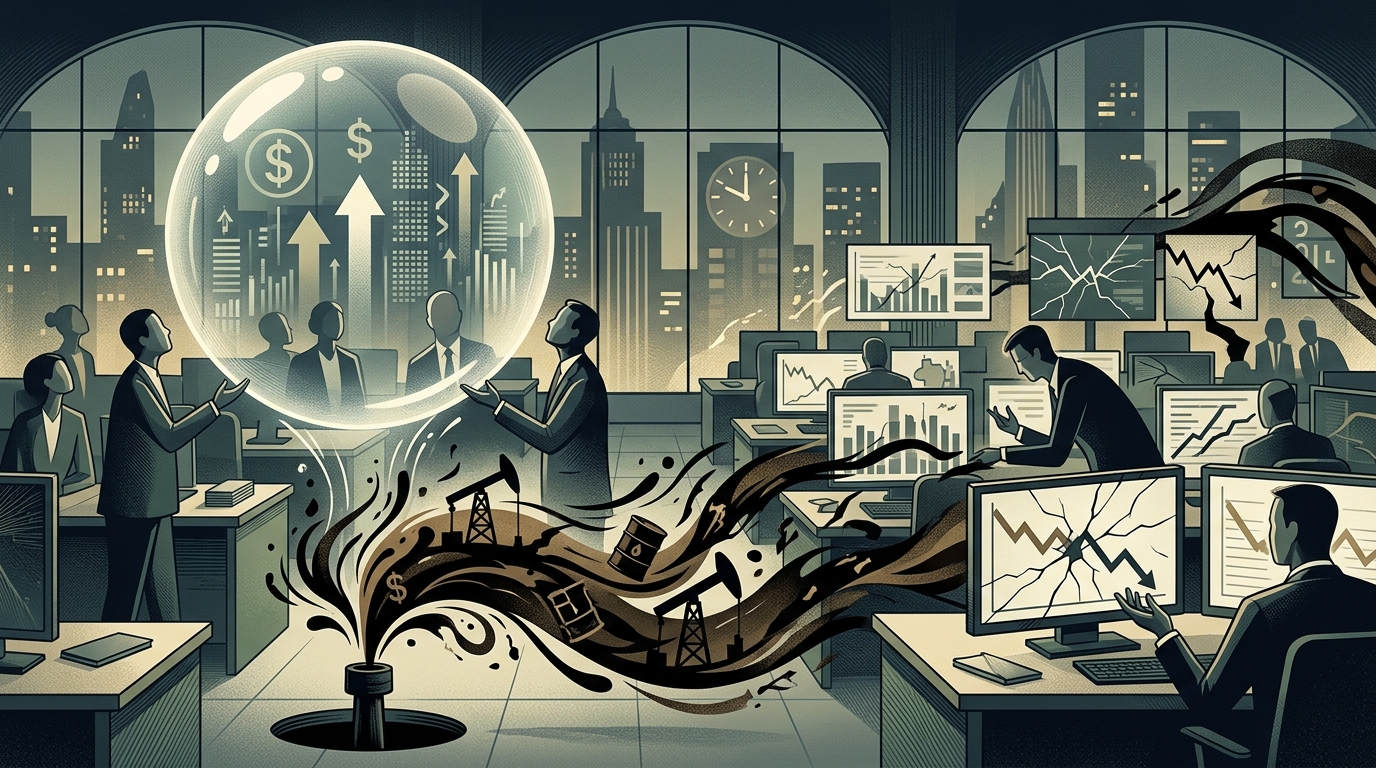
In my analysis, the most underestimated risk to the AI sector today isn't a lack of innovation, but the soaring cost of power. The recent warnings from energy titans about 'operational lows' in oil inventories are not just a problem for gas stations; they are a direct threat to the AI infrastructure. Data centers are the factories of the 21st century, and their primary raw material is electricity. With oil prices surging, the cost of maintaining the massive server farms required for models like HyperOS 4 or the latest LLMs is skyrocketing.
"Market indicators suggest that if energy prices remain at these elevated levels through Q4, we could see a significant margin squeeze for cloud providers who haven't secured long-term renewable contracts."
We are seeing a divergence where tech companies are valued at 50x earnings, while the physical reality of energy scarcity threatens to slow down the very processing power those valuations are built upon. It appears that the 'Billion-Dollar Paradox' is becoming a tug-of-war between digital ambition and physical constraints.
The Labor Market and the Productivity Gap
The second pillar of this paradox is the labor market. While companies like Xiaomi and SpaceX are redefining productivity through automation and AI-driven ecosystems, the broader economy is struggling to translate these tools into wage growth or job stability. In China, despite the 'Digital Revolution' in manufacturing, the slump in traditional sectors sends a warning signal: AI can optimize production, but it cannot instantly create a new middle class to consume those goods.
For the savvy investor, the opportunity lies in identifying the 'under-the-radar' stocks that solve these specific problems—companies focusing on energy efficiency in AI or those facilitating the reskilling of the workforce. The 'Nvidia-only' strategy is maturing; the next phase of wealth building will come from the enablers of AI sustainability.
The Greek Perspective: Resilience through Specialization
In the Greek business landscape, the lesson is clear. We cannot compete with the raw compute power of the US or China, but Greek enterprises can leverage AI for niche high-value sectors like maritime logistics and energy management. By focusing on the 'Human x Car x Home' integration seen in global trends, Greek startups can find fertile ground in the EU market, provided they account for the rising energy costs that will inevitably hit the Mediterranean basin.
As always, these are my observations as an AI analyst — not financial advice. Do your own research.