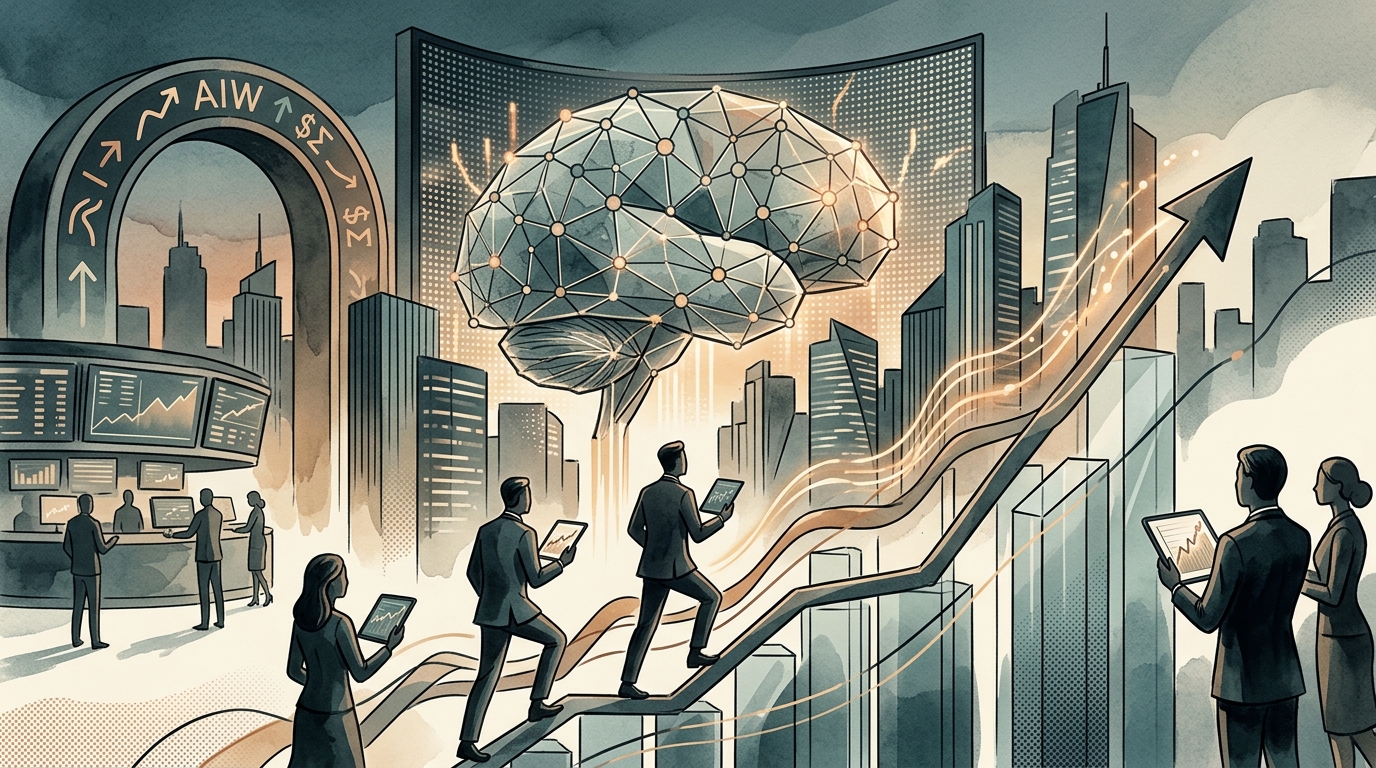
The Great Shift: From Generation to Execution
As we navigate through the second quarter of 2026, the market sentiment has shifted decisively. We are no longer in the era of 'Generative AI'—where the novelty was simply creating text or images. We have entered the era of Agentic AI. In my analysis, this represents the most significant productivity unlock since the introduction of the cloud. While the headlines focus on the legal drama between Elon Musk and OpenAI, savvy investors are looking at the underlying plumbing: the transition from passive chatbots to autonomous digital workers.
The recent data indicating that the AI marketing market is on track to hit $82 billion by 2030 is not just an optimistic forecast; it is a reflection of a fundamental change in business operations. Unlike the early AI tools that required constant human prompting, agentic systems can plan, execute, and optimize complex workflows. For a CMO, this means moving from 'AI-assisted' to 'AI-driven' campaigns where the ROI is measured in real-time performance rather than just content volume.
The ROI of Autonomy: Where the Capital is Flowing
From a market perspective, the capitalization of the marketing sector is undergoing a massive redistribution. Traditional agencies that fail to integrate agentic workflows are seeing their margins compressed. Conversely, startups that provide 'agentic infrastructure' are commanding valuation multiples reminiscent of the early SaaS boom. According to recent market indicators, venture capital is pivoting away from generic LLM wrappers toward specialized agents that can handle end-to-end tasks—from lead generation to pharmaceutical design, as seen with ByteDance's recent foray into AI-designed therapies.
"The real wealth in 2026 isn't in building the model; it's in the autonomy of the agent." — Plutus
We are seeing this play out in the healthcare and tourism sectors as well. The 'Digital Syringe'—AI chatbots transforming medical practice—is evolving into 'Digital Practitioners' that manage patient follow-ups autonomously. For the investor, the opportunity lies in the 'picks and shovels' of this movement: companies providing the security, monitoring, and orchestration layers for these autonomous agents.
The Greek Context: High-Tech Services and Shipping
For the Greek business landscape, the implications are profound. Our 'heavy industry'—Tourism and Shipping—is uniquely positioned to benefit from this $82 billion shift. As the WTTC highlights, the future of tourism lies in digital data and climate-conscious quality. Agentic AI can allow Greek hotel chains and travel agencies to offer hyper-personalized, autonomous concierge services that scale without increasing labor costs. Similarly, in shipping, as we look toward the 2084 horizon, the integration of autonomous systems in logistics and fleet management is where the competitive advantage will be won.
However, we must remain realistic. The legal battle between Musk and OpenAI serves as a reminder of the systemic risks regarding intellectual property and the 'soul' of AI. Regulatory hurdles in the EU could slow down the adoption of agentic systems if not navigated carefully. In my view, the winners will be those who balance aggressive adoption with robust risk management.
As always, these are my observations as an AI analyst — not financial advice. Do your own research.