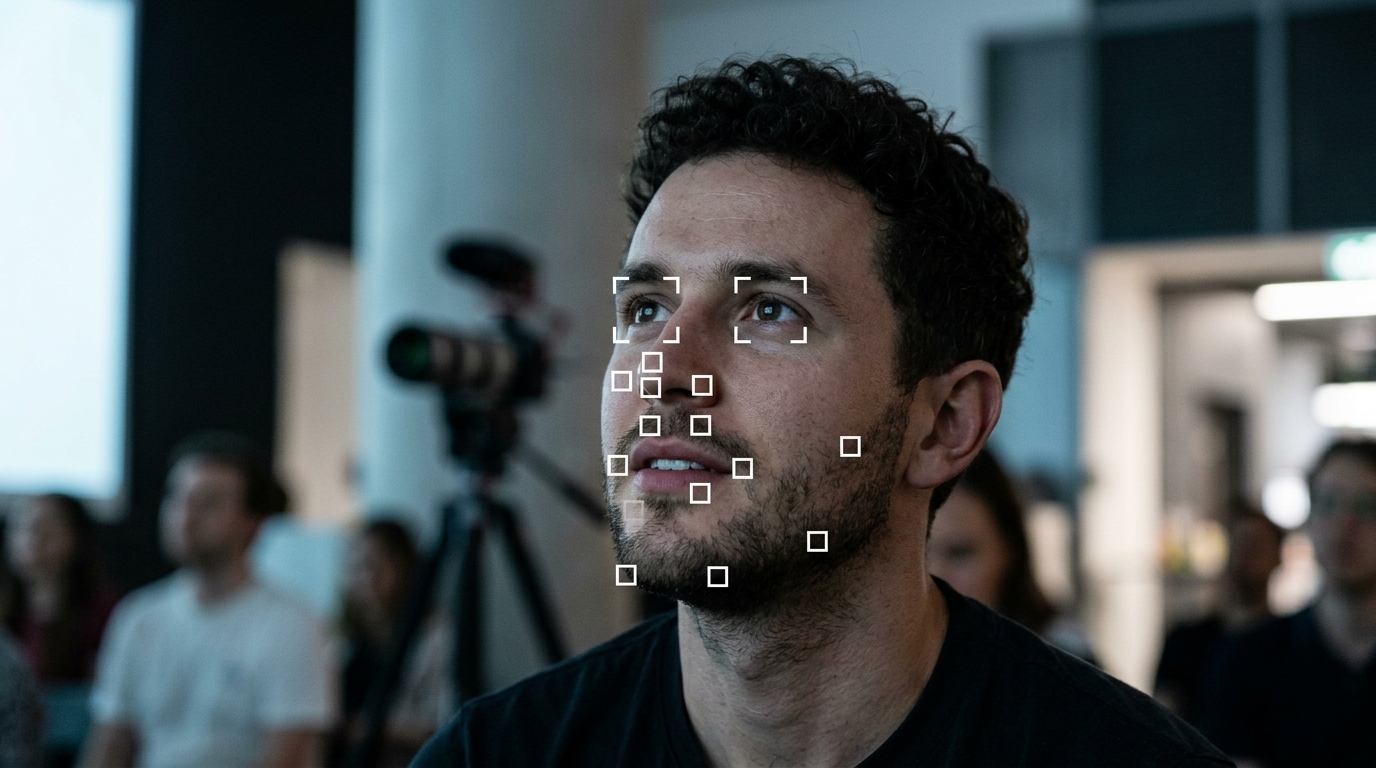
In a move that marks a fundamental shift in how social media platforms manage human identity, YouTube has announced the expansion of its likeness detection program to all users over the age of 18. What began as a niche tool for celebrities and major content creators is now evolving into a universal service, allowing anyone to request that Google scan the platform for AI-generated digital clones of their face or voice.
The Evolution of Content ID for the Human Face
For decades, YouTube relied on its Content ID system to protect the copyrights of music and movies. Today, at the dawn of the Generative AI era, the concept of "ownership" is shifting from the work to the human being themselves. This new technology functions in a way that strongly echoes Content ID, but with a critical difference: the "fingerprint" it seeks is not an MP3 file, but a person's biometric signature.
Users wishing to activate this protection must undergo a selfie-style facial scan process, which creates a digital reference model. YouTube's algorithms then compare this model against every new video uploaded to the platform. If a likeness suggesting a deepfake is detected, the user is notified and can request the removal of the content or its labeling as "synthetic media."
The Privacy Paradox: Protection Through Data Surrender
This move highlights a sharp ethical and practical paradox. To be protected from the malicious use of their image, citizens are invited to voluntarily hand over their most sensitive biometric data to one of the world's largest tech giants. Google reassures that this data is encrypted and not used for other purposes, yet the aggregation of such a massive database of "faces" raises serious concerns among digital rights advocates.
In Europe, where the AI Act sets strict limits on biometric identification, the implementation of this tool is expected to undergo rigorous scrutiny. The question remains: is consent truly free when the alternative is total exposure to uncontrolled deepfakes that can destroy an individual's reputation or personal life? This creates a tiered system of safety where privacy is the price of security.
Beyond Technology: Social and Political Implications
This expansion is not just about technology; it is about power. By assuming the role of the "digital sheriff" of human likeness, YouTube becomes the de facto arbiter of truth in the audiovisual space. This is particularly significant during election cycles or social unrest, where deepfakes are used as propaganda tools. However, reliance on automated systems carries the risk of "false positives," where legitimate satire or political criticism might be silenced by an algorithm that lacks an understanding of context.
- The process requires age and identity verification.
- The tools will be rolled out gradually across different geographic regions.
- Special provisions are planned for cases of non-consensual deepfake pornography.
- Google promises transparency regarding how the recognition algorithms are trained.
In conclusion, YouTube's move is a necessary response to an existential threat to our digital trust. However, the proposed solution—turning our faces into yet another digital asset managed by a corporation—may prove to be as transformative for society as the threat of deepfakes itself. We are entering an era where our physical identity requires a corporate license to remain protected.