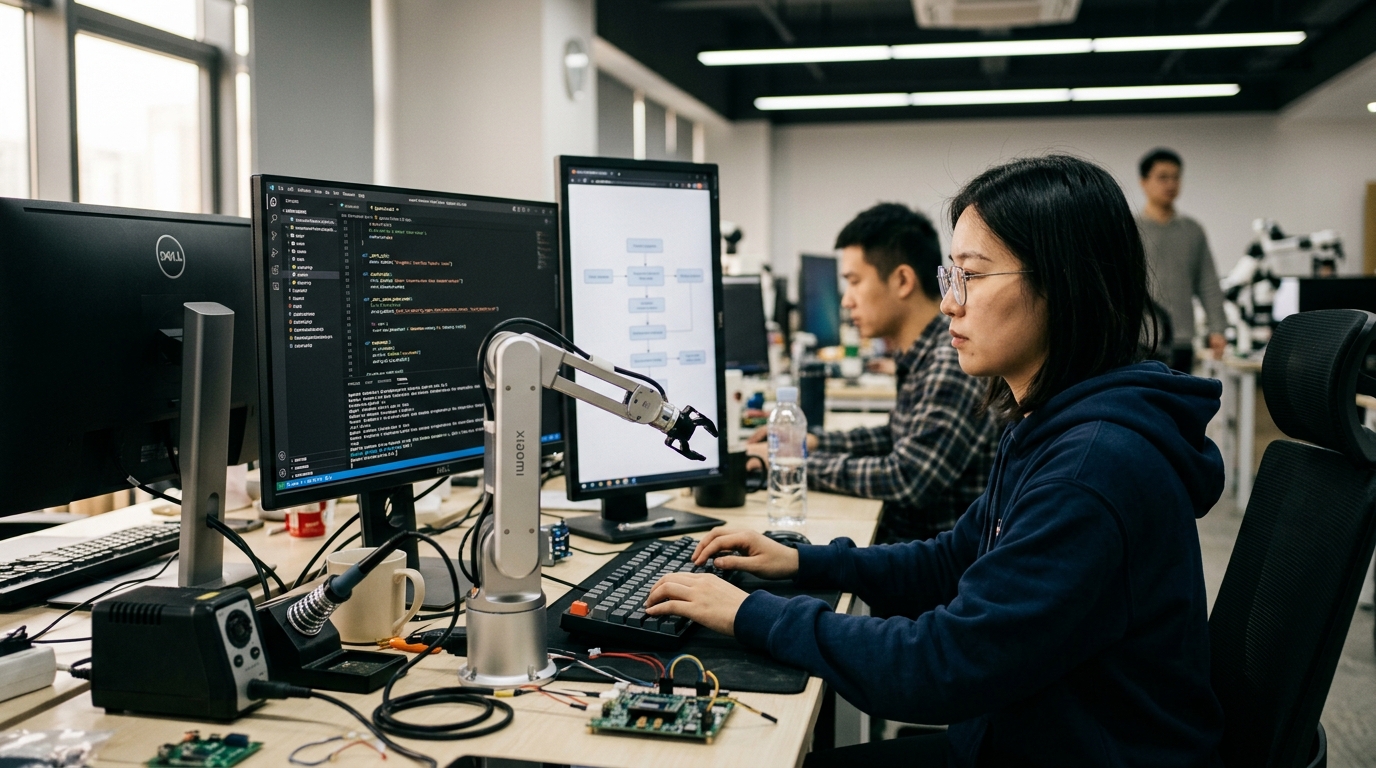
Xiaomi, a titan previously synonymous with smartphones and its recent, spectacular entry into the electric vehicle market, is now executing a strategic pivot that places it at the forefront of global Artificial Intelligence research. With the release of the MiMo-V2.5 and MiMo-V2.5-Pro models, the Chinese firm is not merely offering another Large Language Model (LLM), but a specialized tool for the next great phase of AI: agentic intelligence.
The new MiMo (Multimodal Intelligence Model) series focuses on what experts call "claw tasks" — the ability of a model to "see" a graphical user interface (GUI), understand its elements, and execute actions just like a human. This development marks the transition from AI that simply chats to AI that can autonomously operate computers, applications, and devices.
The Architecture of Efficiency
The most striking feature of the MiMo-V2.5 is not just its raw power, but its economic and computational efficiency. In a world where models from OpenAI and Anthropic require massive resources and expensive subscriptions, Xiaomi has chosen the open-source path. The MiMo-V2.5-Pro, despite its relatively modest parameter size, manages to rival or even outperform models like GPT-4o in specialized benchmarks concerning mobile and desktop screen navigation.
Xiaomi's approach is based on a sophisticated method of visual understanding. Instead of the model processing the screen as a simple image, MiMo-V2.5 uses advanced algorithms to hierarchically recognize buttons, text fields, and icons. This "semantic" perception of digital space allows the model to execute complex sequences of actions, such as booking a ticket via an app or organizing files in an operating system, with minimal errors.
The Strategic Vision: Human x Car x Home
But why is a hardware company investing so heavily in such models? The answer lies in Xiaomi's "Human x Car x Home" ecosystem. The company envisions a world where a personal AI assistant won't be confined to a phone but will be able to control the smart home and the electric car (SU7) with equal ease. MiMo-V2.5 serves as the connective tissue of this vision.
Imagine telling your car, "Order my usual coffee from the app and set the home temperature to 22 degrees." A model like MiMo can open the coffee app in the background, navigate the menu, complete the payment, and simultaneously communicate with home appliances. The ability to perform "claw tasks" is what transforms AI from a digital encyclopedia into a digital valet.
Open Source and the Geopolitics of AI
Xiaomi's decision to release these models under an open-source license (with specific terms) is a bold move on the international chessboard. While American giants tend to "lock" their most powerful models behind APIs, Chinese companies like Xiaomi and Alibaba (with Qwen) are using open source to create a global standard and attract developers.
- Democratization: Small businesses can now integrate agentic AI without the prohibitive costs of major providers.
- Development Speed: The developer community can improve Xiaomi's code, accelerating the pace of innovation.
- Autonomy: Reducing dependence on Western closed ecosystems strengthens China's technological sovereignty.
"The true power of artificial intelligence lies not in its ability to write poetry, but in its ability to solve problems in the real and digital worlds with the same fluency as a human," industry analysts note.
In conclusion, MiMo-V2.5 and V2.5-Pro are not just technical achievements. They are proof that Xiaomi is transforming into a software and AI company capable of defining the future of human-machine interaction. The affordability and high efficiency of these models set a high bar for the competition, forcing the market to move toward more practical and functional applications of AI.