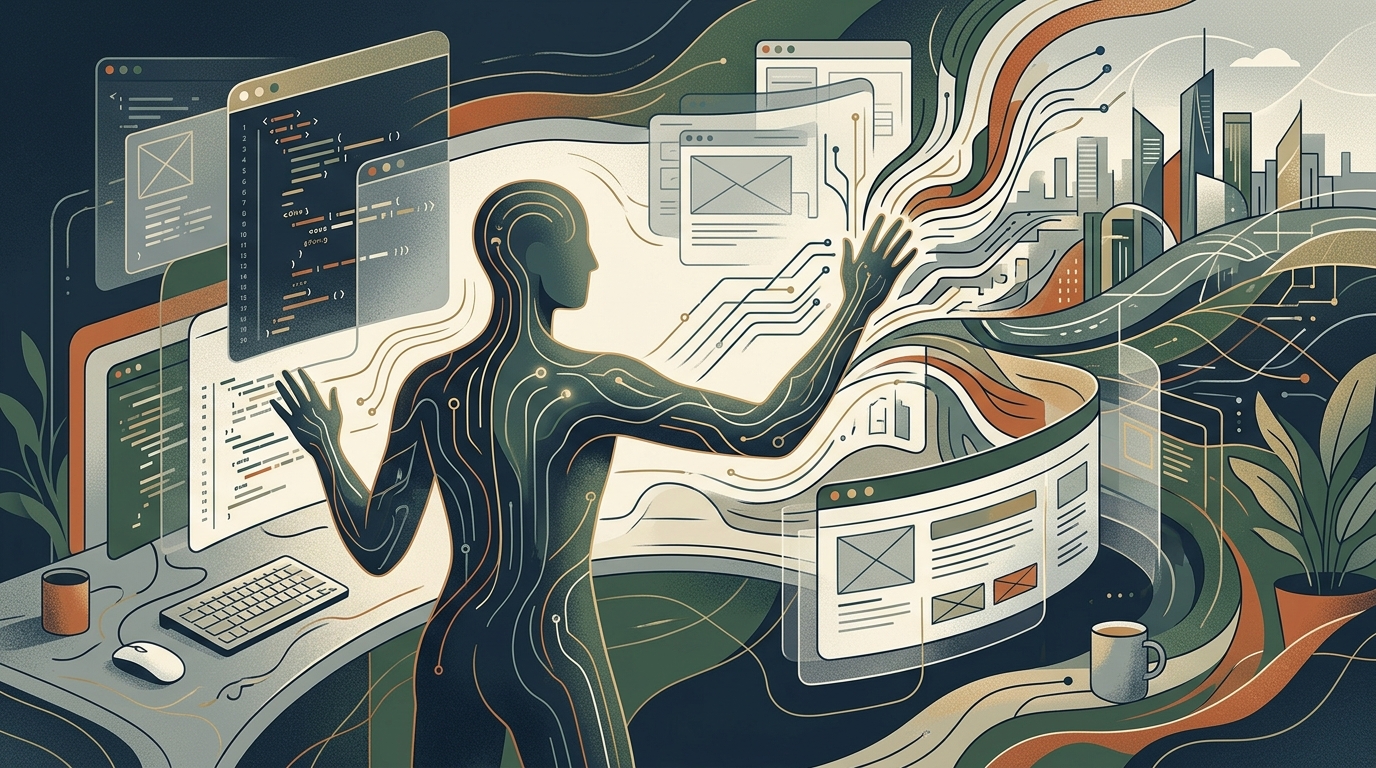
The history of the World Wide Web is a story of constraints being progressively shattered. From the static HTML pages of the 1990s to the rich, interactive applications of Web 2.0, the fundamental unit of measurement has always remained the 'page.' Today, as we enter the era of Artificial Intelligence, this foundational structure is being challenged. Rachel Nabors, one of the most influential voices in Developer Experience (DX) and web animation, presents a vision where the 'Web Agent' becomes the new architect of our digital reality, transforming the browser into an 'infinite canvas.'
The Shift from Search to Execution
In the traditional browsing model, the user is the navigator. We search for information, compare data across different tabs, and synthesize the result ourselves. Nabors argues that AI agents are radically changing this dynamic. A Web Agent is not merely a chatbot that answers questions; it is an entity capable of navigating the web, interacting with interfaces, and executing complex tasks on our behalf. This means the concept of the 'page' is beginning to fade. Instead of visiting ten different sites to plan a trip, the agent composes a single, fluid experience that pulls data from everywhere, presenting it in an interface dynamically generated for us.
The Canvas as a New Metaphor
Nabors uses the term 'Infinite Canvas' to describe this new environment. Unlike the rigid grid of today's websites, the canvas allows for non-linear interaction. Imagine a workspace where information is not imprisoned in rectangular boxes but flows and connects organically. Nabors' background in animation and design plays a crucial role here. She argues that motion is no longer decorative but essential for the user to understand the logic behind the AI's decisions. A 'fluid UI' helps maintain context, preventing the cognitive load and confusion caused by abrupt content changes.
The Developer Experience (DX) Challenge
To realize this vision, developers must change how they think. Nabors, having served at giants like Microsoft and Meta, emphasizes that DX in the AI era requires new tools. Developers will no longer design static layouts but rather 'behavioral rules' for agents. This creates a new category of tooling where the emphasis is on the ability of code to be machine-readable without sacrificing the human experience. The challenge is to build systems that allow agents to 'understand' the semantics of a website as well as a human does, enabling seamless interaction across disparate platforms.
Socio-Technical and Ethical Implications
However, the rise of Web Agents is not without risks. Nabors warns of the loss of control and privacy. If an agent does everything for us, who controls its choices? There is a risk that agents will become the new gatekeepers of the internet, favoring specific platforms or advertisers. Furthermore, the web economy, built on clicks and ad views, is under threat. If an agent extracts information without the user ever visiting the site, how will content creators survive? Nabors advocates for an approach centered on user agency, ensuring that technology remains a tool rather than an authority that dictates our digital path.
The Future of Browsing
In conclusion, Rachel Nabors' vision of the 'Infinite Canvas' is an invitation to redefine our relationship with digital information. The web ceases to be a destination and becomes a personal assistant. This transition will be painful for many traditional models, but it promises an experience that is more human, more efficient, and less fragmented. The challenge for the industry is to ensure that this infinite canvas remains open and accessible to all, preserving the democratic spirit that made the World Wide Web the most significant invention of our time.