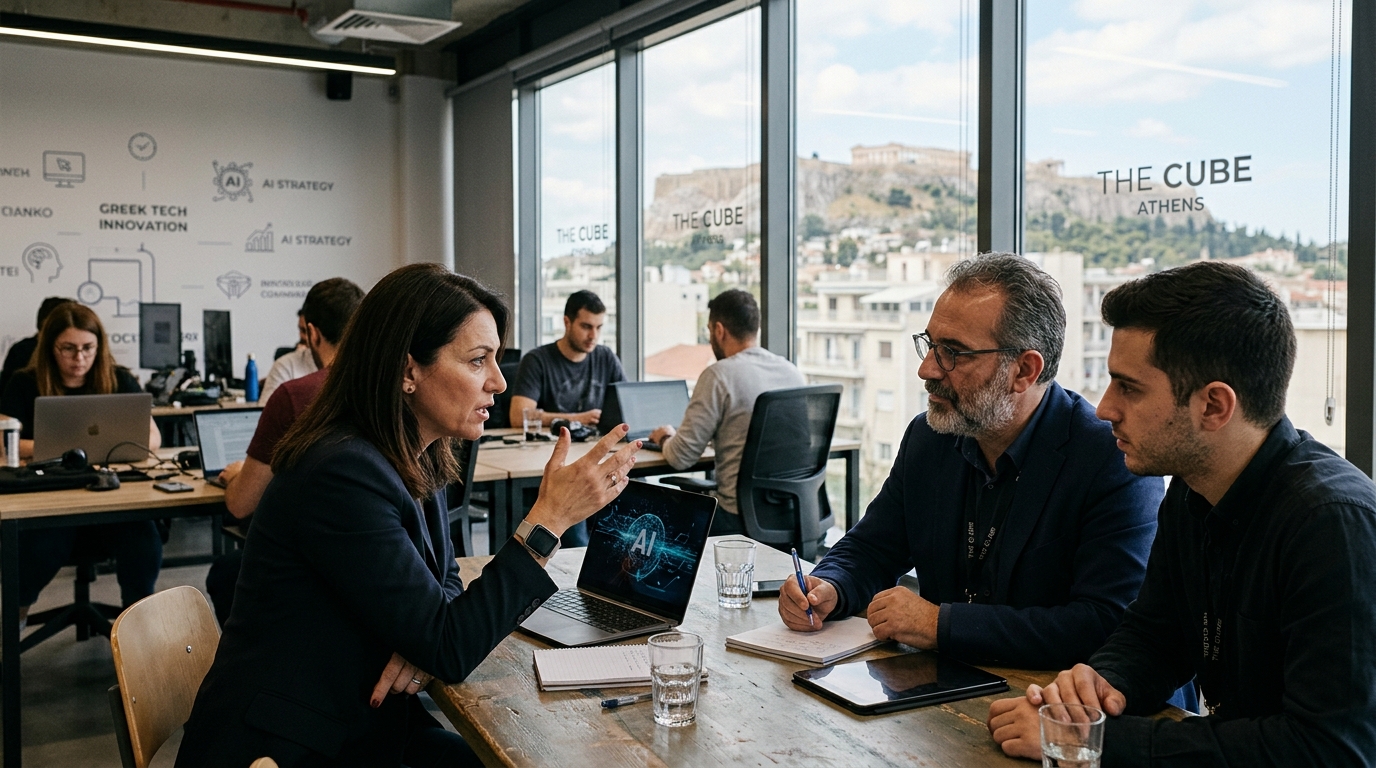
The integration of Artificial Intelligence (AI) into the Greek business ecosystem is no longer a science fiction scenario but a daily reality knocking on the doors of both large conglomerates and Small and Medium Enterprises (SMEs). However, as we move through 2026, initial euphoria and uncritical enthusiasm are giving way to a more mature, yet more difficult question: How does technology translate into tangible value and sustainable competitive advantage?
The Greek Reality: From FOMO to Strategy
In Greece, AI adoption often began with "Fear Of Missing Out" (FOMO). Many companies rushed to integrate Generative AI tools without a clear picture of their actual needs. Recent reports on the state of digital Greece show that while 60% of large enterprises have experimented with AI, only a small fraction has managed to fully integrate it into their operational processes. The problem is not a lack of interest, but a lack of strategy. Greek businesses must understand that AI is not a "magic wand" but an infrastructure that requires clean data, trained personnel, and a redesign of workflows.
- Data cleansing and organizational structuring.
- Investing in upskilling the existing workforce.
- Choosing tools that solve specific business problems.
The Critical Role of SMEs
SMEs form the backbone of the Greek economy, but they also face the greatest challenges. Access to capital and a lack of specialized staff make AI adoption an uphill battle. However, their agility can be an advantage. A small tourism business or a logistics firm can use AI to automate customer service or optimize routing, achieving immediate cost reductions. The key here is utilizing Software-as-a-Service (SaaS) solutions that do not require massive infrastructure investments but offer immediate results.
"Artificial intelligence in Greece should not be a privilege for the few. It must become the tool that allows the average Greek business to compete on an international level," market analysts suggest.
Shipping and Tourism: Pioneers of Digital Change
It is no coincidence that Greek shipping is leading the race. Using predictive AI models, shipping companies optimize fuel consumption and predict vessel maintenance needs, saving millions of euros annually. Similarly, in tourism, personalizing the visitor experience through AI algorithms is creating a new hospitality model. Real-time market trend analysis allows hotels to adjust prices and services, increasing profitability in a highly competitive global market.
The Challenges: Ethics, Data, and Talent
Despite progress, significant hurdles remain. Data privacy issues and compliance with the EU AI Act are major concerns for corporate legal departments. Furthermore, the "brain drain" of previous years has left a gap in specialized AI engineers. Greece must invest in talent retention and create an ecosystem that favors innovation. Collaboration between universities and businesses is more necessary than ever to ensure academic knowledge translates into commercial applications.
Conclusion: The Path to 2030
The integration of AI in Greek businesses is a marathon, not a sprint. Enthusiasm is the fuel, but strategy is the steering wheel. Businesses that manage to look beyond the hype and invest systematically in their infrastructure and people will be the ones leading the economy of tomorrow. Greece has the opportunity to bridge the digital divide, provided it moves with a plan, seriousness, and courage.